Rethinking AI: From Job Threat to Productivity Supercharger
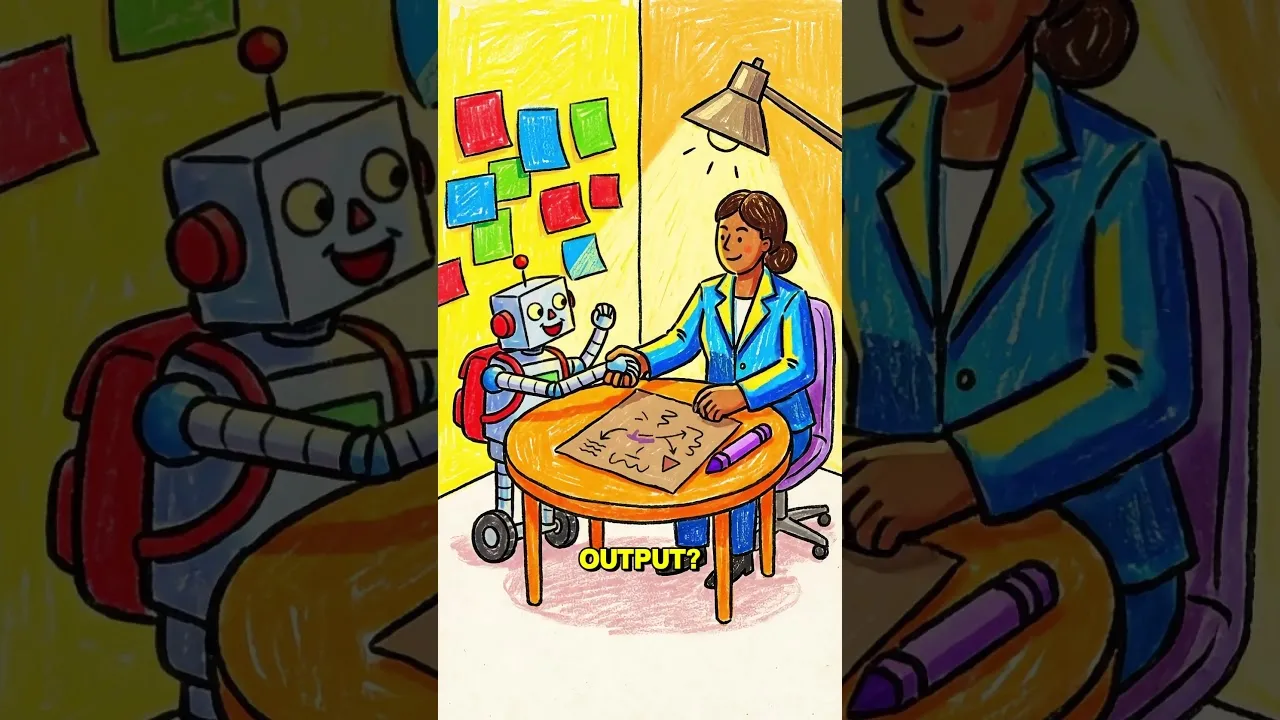
The narrative surrounding Artificial Intelligence often paints a picture of impending job displacement and existential threat. However, a new perspective suggests this fear-driven outlook is fundamentally misguided. Instead of viewing AI as a competitor, experts are urging a paradigm shift: embrace AI as the ultimate collaborative tool, akin to an unparalleled intern who continuously improves and amplifies human capabilities.
The AI Intern: Tireless, Scalable, and Ever-Improving
Imagine an employee who requires no sleep, never complains about workload, and demonstrably enhances their skills month after month. This is the essence of modern AI – a tireless, scalable resource capable of performing a vast array of tasks. This perspective reframes the conversation from one of fear to one of opportunity, focusing on how individuals and organizations can leverage AI to multiply their output and achieve unprecedented levels of productivity.
Managerial Mindset: Directing Talent or Feeling Threatened?
The critical question then becomes: are you positioned to be the manager who effectively directs this powerful new talent, or are you the one who feels threatened by its rapid advancement? Those who understand how to harness AI’s capabilities will find themselves leading teams and projects with significantly amplified results. Conversely, those who perceive AI merely as a rival risk being left behind as the landscape of work evolves. The core message is clear: AI is not here to replace you; it’s here to make your existing role, and potentially entirely new roles, impossible to perform without it.
The Evolution of Work: Beyond Hiding Behind Inefficiency
Historically, many roles have allowed individuals to operate within certain inefficiencies, perhaps relying on manual processes or slower methods that masked a lack of deeper engagement or skill. AI fundamentally disrupts this status quo. It automates routine tasks, analyzes data at speeds previously unimaginable, and generates content with remarkable fluency. This means that the ‘hiding places’ – the aspects of a job that were previously shielded from scrutiny due to their tedious or time-consuming nature – are rapidly disappearing. Success in the AI era hinges on adapting to these new realities and proactively integrating AI into workflows, rather than resisting its inevitable influence.
Why This Matters: Navigating the AI Revolution
The implications of this mindset shift are profound. For individuals, it means focusing on developing skills that complement AI, such as critical thinking, creativity, emotional intelligence, and strategic oversight. It’s about learning to prompt AI effectively, interpret its outputs critically, and integrate its capabilities into complex problem-solving. For businesses, it translates to a competitive imperative. Companies that adopt AI early and integrate it thoughtfully across their operations are likely to see significant gains in efficiency, innovation, and market share. Those that hesitate risk falling behind competitors who are already leveraging AI to streamline processes, personalize customer experiences, and develop new products and services faster.
The Practicalities of AI Integration
While the transcript doesn’t delve into specific AI models, pricing, or benchmarks, the underlying principle applies across the rapidly evolving AI landscape. Tools ranging from large language models (LLMs) like OpenAI’s GPT series, Google’s Gemini, and Anthropic’s Claude, to specialized AI applications for image generation, coding assistance, and data analysis, are becoming increasingly accessible. The ‘manager’ in this new era needs to understand the capabilities of these tools, identify the most relevant ones for their specific needs, and train themselves and their teams on how to use them effectively. This involves understanding concepts like model parameters (which influence an AI’s complexity and capability) and benchmarks (which measure AI performance against specific tasks), not necessarily to become AI engineers, but to become informed users and directors of AI talent.
Embracing the Future of Collaboration
The transition to an AI-augmented workforce is not a distant future scenario; it is happening now. The mindset required to thrive is one of curiosity, adaptability, and a willingness to learn. By reframing AI from a perceived threat to an indispensable collaborator, individuals and organizations can unlock new levels of potential and navigate the ongoing technological revolution with confidence and success.
Source: This Mindset Wins in the AI Era (YouTube)