AI Models Gain Personality With Advanced Prompting Techniques
The quest for more nuanced and effective artificial intelligence interactions has taken a significant turn with the popularization of advanced prompting techniques. While AI models have demonstrated remarkable capabilities in generating text, code, and even creative content, their output can often feel generic or lacking in specific voice. A new approach, focusing on assigning ‘personas’ to AI chatbots, is emerging as a powerful method to imbue AI-generated content with personality, professionalism, and a targeted tone.
The ‘Persona’ Prompting Revolution
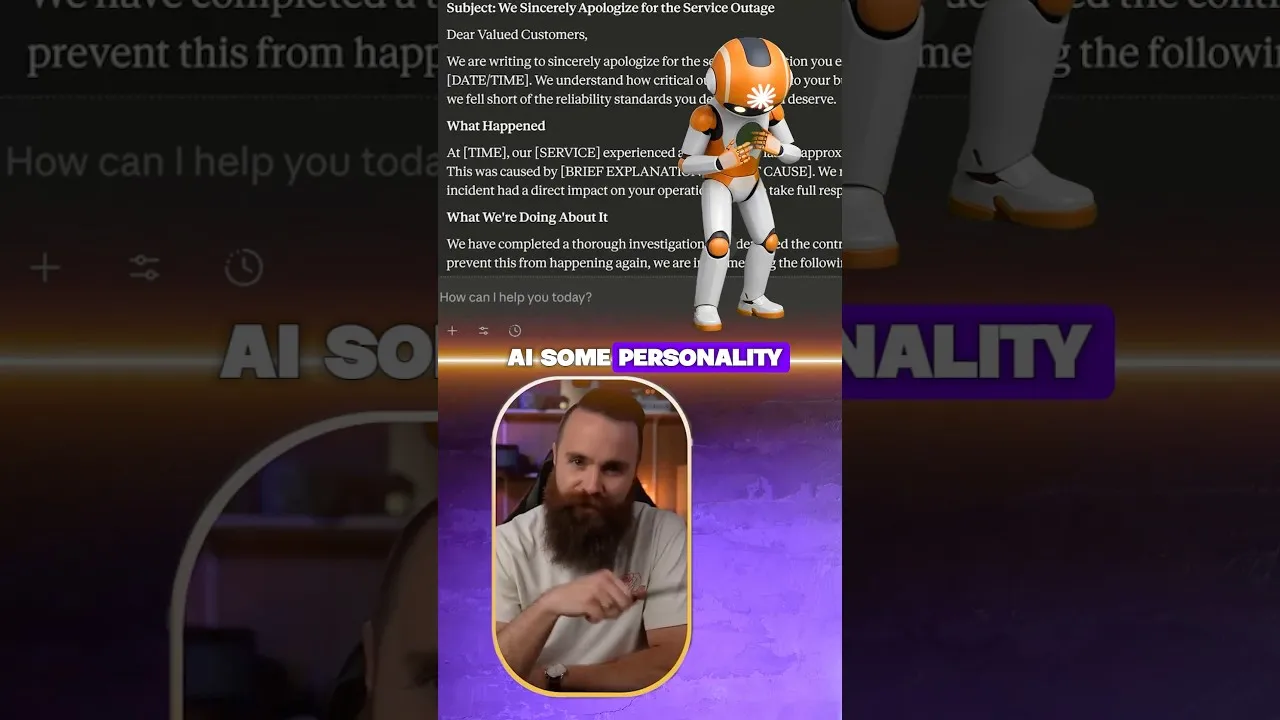
At its core, this technique involves instructing the AI to adopt a specific role or identity before it generates a response. Instead of a general request like ‘write an email,’ users are now being taught to preface their prompts with detailed character descriptions. For instance, instructing an AI to act as a ‘senior site reliability engineer for Cloudflare’ who is writing to ‘both customers and engineers’ to draft an ‘apology letter’ yields a dramatically different and more appropriate result.
The rationale behind this method is simple yet profound. AI models, particularly large language models (LLMs), are trained on vast datasets that encompass a wide spectrum of human communication. Without specific guidance, they tend to default to a generalized, often neutral, output. By assigning a persona, users are effectively narrowing the AI’s focus, providing it with context and a framework from which to generate its response. This allows the AI to better ‘guess’ the appropriate tone, vocabulary, and perspective needed for a given task.
From Generic to Professional: A Case Study
Consider the difference between a standard AI-generated apology email and one crafted with a persona. A generic request might produce a bland, formulaic message that fails to resonate with the intended audience. However, when the AI is told to embody a specific professional role, the output immediately becomes more tailored. The language shifts from generic pleasantries to industry-specific terminology, the tone becomes more authoritative or empathetic depending on the persona, and the overall message gains a level of credibility that is often missing in unguided AI outputs.
This technique is not limited to professional contexts. Personas can be assigned for creative writing, marketing copy, customer service interactions, and even educational content. For example, an AI could be asked to act as a historian explaining a complex event, a travel blogger describing a destination, or a friendly tutor guiding a student through a difficult concept. Each persona provides the AI with a unique lens through which to process information and construct its response.
Why This Matters
The ability to control the ‘personality’ of AI output has significant real-world implications:
- Enhanced Communication: Businesses can ensure their AI-generated customer communications maintain brand voice and professionalism, fostering better customer relationships.
- Improved Efficiency: Professionals can save time by generating more accurate and relevant initial drafts for reports, emails, and presentations, reducing the need for extensive editing.
- Personalized Experiences: In fields like education and entertainment, AI can be used to create more engaging and tailored content by adopting specific teaching or storytelling styles.
- Reduced AI Errors: By providing clear context and role-playing instructions, users can help AI avoid misinterpretations and generate more contextually appropriate responses, thereby reducing the likelihood of errors or nonsensical output.
The Future of AI Interaction
The ‘persona’ prompting technique highlights a crucial evolution in how we interact with AI. It moves beyond simply asking questions to actively guiding and shaping the AI’s generative process. As AI models become more sophisticated, the ability to effectively communicate our intent through detailed prompts will become an increasingly valuable skill. This approach democratizes the control over AI output, allowing users to harness the power of these tools with greater precision and effectiveness. While specific companies and pricing models for AI tools are constantly evolving, the underlying principle of persona-based prompting is a fundamental shift in user-AI collaboration, promising more intelligent, nuanced, and human-like interactions in the future.
Source: the prompting trick nobody teaches you (YouTube)