AI Revolutionizes Coding: From Zeroes to Intelligent Assistants
The landscape of software development is undergoing a seismic shift, driven by the rapid advancement of artificial intelligence. Once a realm of complex, human-crafted instructions, programming is now being augmented and, in some cases, automated by AI-powered tools. This evolution, stretching from the earliest binary systems to today’s sophisticated code-generation models, marks a profound change in how we build the digital world.
From Binary to High-Level Languages: A Brief History
The journey of programming began with the fundamental concepts of ‘on’ and ‘off,’ represented by ones and zeros. This binary language formed the bedrock of early computing. The concept of a ‘bit’ (binary digit) and later a ‘byte’ (an eight-bit unit) emerged as a way to represent data and instructions for machines. However, the painstaking process of writing in pure binary proved cumbersome.
The mid-20th century saw the introduction of assembly language, offering a slightly more human-readable way to program by using mnemonics instead of raw binary. A pivotal moment arrived with the invention of compilers, pioneered by figures like Grace Hopper. Compilers act as translators, converting human-readable source code into machine code (ones and zeros) that computers can execute. This innovation paved the way for the first high-level programming languages, such as FORTRAN for scientists and COBOL for business and government.
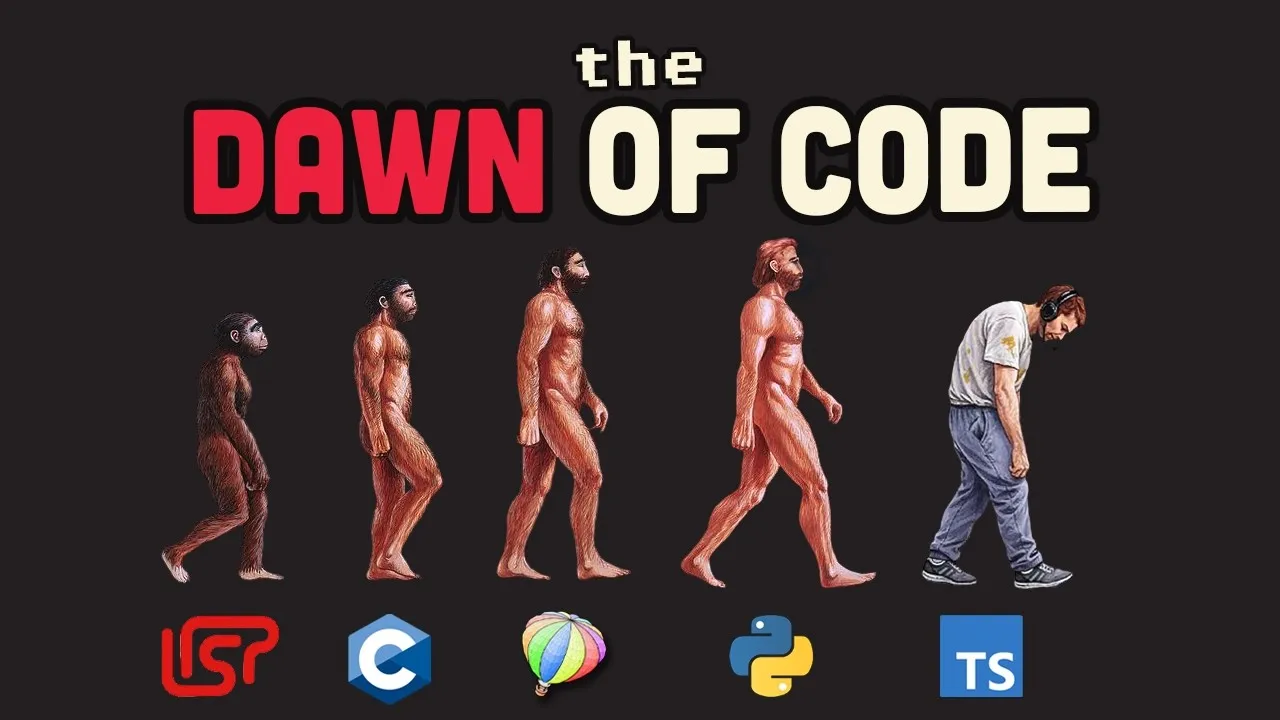
Further advancements included Lisp, known for its unique approach to code and data manipulation and its introduction of ‘garbage collection’ for automatic memory management. The development of languages like C in the 1970s offered unparalleled speed and power, allowing direct memory access and forming the basis for the influential Unix operating system. The subsequent creation of C++ introduced object-oriented programming concepts, enabling more complex software development for applications like games and browsers.
The 1980s and 1990s witnessed the rise of languages like BASIC, Pascal, Java, and Python, each bringing new paradigms and philosophies. Python emphasized readability and simplicity, while Java focused on platform independence with its revolutionary Java Virtual Machine. JavaScript, initially conceived for simple browser animations, unexpectedly grew to power dynamic web experiences and even server-side applications.
The AI Infusion: Code Generation and Intelligent Assistance
The most recent chapter in this history is the integration of AI into the programming workflow. What began as intelligent code completion and linters has rapidly evolved into powerful AI coding assistants capable of generating entire functions and even full-stack applications. This new wave of tools leverages large language models (LLMs) trained on vast amounts of code.
Tools like JetBrains’ AI Assistant, named Juny, represent this cutting-edge development. Integrated directly into popular Integrated Development Environments (IDEs), Juny can understand the context and history of an entire codebase. This allows it to provide more accurate and contextually relevant code suggestions and generations compared to standalone tools. While some AI code generation tools might offer raw speed, Juny’s strength lies in its deep understanding of the project’s structure, making it particularly adept at handling complex tasks, such as working with intricate waveform data in a custom voice recorder project.
Juny also offers an integrated AI chat feature, enabling developers to ask deeper questions about the generated code and the logic behind it. This conversational approach facilitates a better understanding of the AI’s output and can aid in debugging and learning. Furthermore, Juny’s support for multiple major coding models, including Grok and Gemini, provides flexibility and access to different AI capabilities.
Why This Matters
The rise of AI in programming is not about replacing developers but about augmenting their capabilities. By automating repetitive tasks, generating boilerplate code, and offering intelligent suggestions, AI coding assistants free up developers to focus on higher-level problem-solving, architectural design, and innovation. This can significantly accelerate development cycles, reduce the time spent on mundane coding tasks, and potentially lower the barrier to entry for aspiring programmers.
The ability of AI to understand and generate code based on natural language prompts or contextual clues means that the core skill of programming is shifting. While syntax and logic remain crucial, the emphasis is increasingly moving towards clear problem definition, effective communication with AI tools, and critical evaluation of AI-generated output. The ‘job’ of programming is evolving from meticulous typing to intelligent direction and oversight.
Availability and Future Outlook
AI coding assistants like JetBrains’ Juny are becoming increasingly accessible. Many offer free trials, allowing developers to experience the benefits firsthand. As these tools continue to mature, we can expect even more sophisticated capabilities, further blurring the lines between human and artificial intelligence in the creation of software. The history of programming is a testament to continuous innovation, and AI is undoubtedly the next transformative force shaping its future.
Source: A brief history of programming… (YouTube)