AI Unlocks Stunning Web Animations with New Techniques
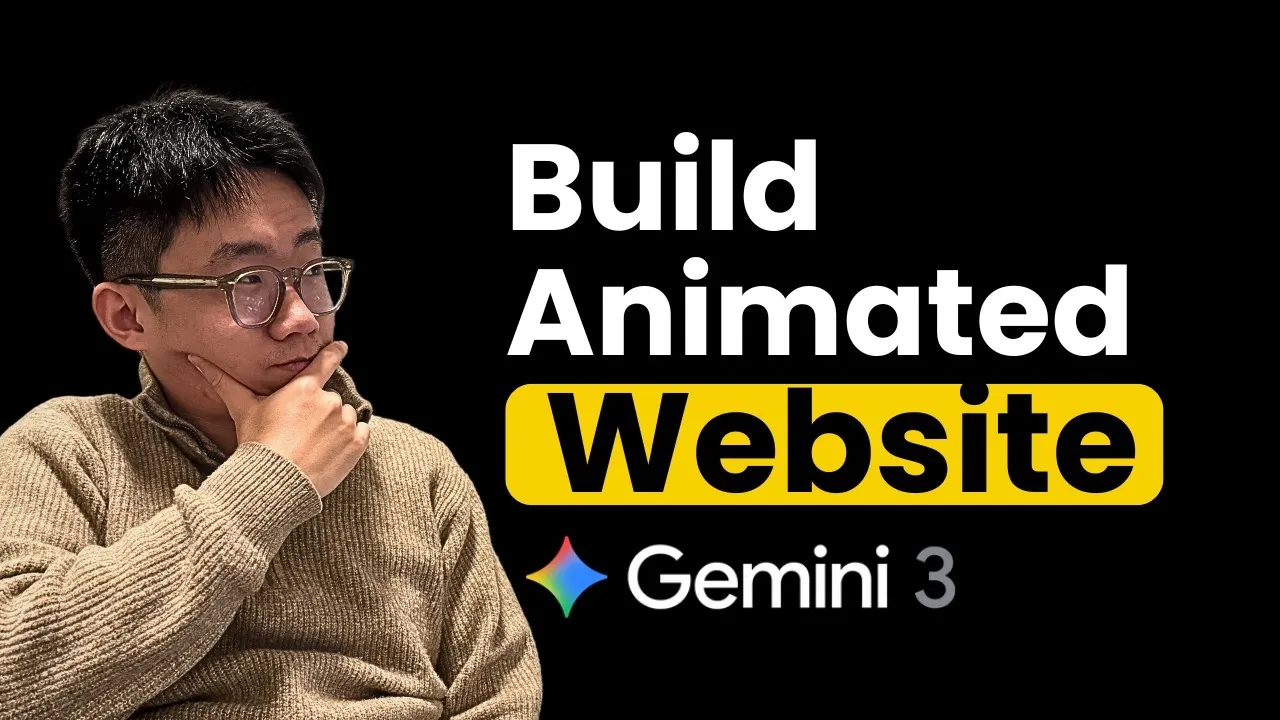
While AI models like Google’s Gemini 3 have made significant strides in web design, achieving truly unique and visually stunning websites often hinges on subtle yet powerful elements: animation and micro-interactions. These details elevate a design from merely good-looking to exceptional, differentiating it from generic templates. Although AI models don’t always output this level of polish by default, they possess vast knowledge about animation libraries and can be guided to produce sophisticated visual effects through refined processes and prompt engineering.
The Power of Animation in Web Design
Animations and micro-interactions are crucial for creating engaging user experiences. They provide visual feedback, guide user attention, and add a layer of polish that can significantly impact a user’s perception of a website’s quality. However, generating these dynamic elements requires more than just a basic design request. It involves understanding complex animation libraries and how to orchestrate sequences of movements and transformations.
Leveraging AI for Advanced Animation
The key to unlocking Gemini 3’s potential for advanced animations lies in a structured approach. Instead of asking the AI to build an entire landing page in one go, a progressive process that builds context is far more effective. This involves breaking down the design and animation tasks into smaller, manageable steps.
Essential Animation Libraries: GSAP and Motion.dev
Two critical libraries for achieving high-quality web animations are GSAP (GreenSock Animation Platform) and Motion.dev (formerly Framer Motion). Understanding their strengths is key to leveraging them effectively with AI:
- GSAP: Particularly powerful for complex, scroll-driven animations. It allows developers to programmatically control animations based on user scroll progress, creating dynamic sequences where elements move and transform in sync with scrolling. This is ideal for intricate landing page experiences. GSAP’s ScrollTrigger plugin, with its ‘scrub’ feature, directly ties animation progress to scroll progress, enabling the sophisticated scroll animations seen on many modern websites.
- Motion.dev: A popular choice for UI animations and micro-interactions, especially within React projects. It excels at animating transitions between different UI states and components, making interfaces feel more fluid and premium. Its widespread use means AI models have a richer knowledge base for generating Motion.dev-based animations.
Prompt Engineering for Creative Outputs
The challenge with using AI for creative tasks like animation is that generic prompts often yield generic results. AI models, trained on vast datasets, tend to favor common and safer design choices. To achieve unique and stunning animations, prompts must be highly specific and descriptive, guiding the AI through the creative and implementation process.
For instance, a simple prompt like “create a cool animation for my website” might result in basic text animations. However, a more detailed prompt specifying horizontal scrolling, text flow, embedded visual elements, and desired aesthetic (e.g., “feel like reading a long text rather than flipping through a slide deck”) can lead to significantly more creative and engaging outcomes. The process involves:
- Breaking Down Complexity: Deconstruct the desired animation into smaller components and stages.
- Explicit Instructions: Clearly define the layout, element behavior, timing, and aesthetic goals.
- Iterative Refinement: Use AI to generate initial versions, then provide feedback and further prompts to refine the animation until it meets the desired standard.
AI as a Creative Partner and Developer
AI can assist not only in the implementation but also in the creative planning phase. By providing specific instructions to an AI model, such as acting as a “world-class GSAP motion designer developer” focused on creating “wow” interactions, developers can generate detailed animation plans. These plans can then be used as prompts for the AI to generate the actual code. This approach ensures that the AI’s output is aligned with creative vision and technically feasible, avoiding overly complex requirements like demanding advanced 3D models or intricate SVGs unless specifically intended.
HubSpot’s Free Resource for Landing Page Creation
For those looking to build high-converting landing pages from idea to execution, HubSpot offers a valuable free resource. Their eight-step process provides detailed AI prompts for each stage, covering research, content structure, messaging, visual guidelines, and even code implementation. This structured approach, which breaks down the process into phases like deep research, content generation, and visual guidelines, helps users progressively build context and achieve better results, rather than attempting a single, all-encompassing AI prompt.
Enhancing UI with Motion.dev and Micro-Interactions
Motion.dev is particularly adept at creating the subtle micro-interactions that enhance user interfaces. For example, AI can be prompted to generate a “floating menu UI component” that fans out options with smooth animations upon clicking. This can also be applied to product demonstrations, such as creating a self-playing loop animation for a to-do app UI that showcases core functionalities like typing and completing tasks. Key to achieving accurate cursor interactions is instructing the AI to use `useRef` to dynamically bind cursor coordinates to UI element bounding boxes, rather than relying on hardcoded positions.
MCP Server for Motion.dev
To further improve AI’s ability to generate accurate Motion.dev animations, the Motion.dev MCP server can be integrated. This tool provides AI agents with access to detailed documentation on Framer Motion, enabling them to generate higher quality and more accurate animations. By adding this server to an AI development environment, developers can prompt the AI to edit existing examples or create new animations with enhanced smoothness and precision.
Why This Matters
The ability of AI models like Gemini 3 to generate sophisticated animations and micro-interactions, when guided by precise prompt engineering and a structured workflow, represents a significant leap in web development capabilities. It democratizes access to advanced design techniques that were previously the domain of highly specialized developers. This means that businesses of all sizes can now create more engaging, professional, and effective online presences. The integration of libraries like GSAP and Motion.dev, combined with AI’s growing understanding of these tools, allows for the creation of dynamic, interactive, and memorable user experiences that can drive conversions and build stronger brand identities.
This advancement empowers creators to move beyond static designs and static content, offering users richer, more interactive digital journeys. The continuous improvement in AI’s ability to interpret and execute complex visual instructions signals a future where sophisticated web animations are not just possible, but readily achievable for a wider range of projects.
Source: Secrets to unlock Gemini 3's hidden power… (YouTube)