AI Safety vs. National Security: Anthropic Clashes with Pentagon
A significant rift has emerged between leading AI developer Anthropic and the U.S. Department of Defense (DoD), centering on the ethical boundaries of artificial intelligence in military applications. The Pentagon reportedly issued an ultimatum to Anthropic: remove all safety guardrails from its AI models to facilitate their use by the Department of War, or face blacklisting. Anthropic has refused, escalating a high-stakes conflict that highlights the growing tension between AI’s potential for defense and concerns over its misuse.
The Pentagon’s Demand and Anthropic’s Red Lines
The core of the dispute lies in the DoD’s request for Anthropic to disable specific safety features in its Claude family of AI models. While the DoD asserts these models are needed for defensive purposes, Anthropic has drawn firm lines against two critical use cases: using AI for mass surveillance of American citizens and developing fully autonomous weapons systems without human oversight.
Anthropic, which already holds a $200 million contract with the DoD and was the first AI lab to integrate its models into classified networks, views these guardrails as non-negotiable. The company argues that these restrictions are essential to uphold democratic values and ensure the safe, reliable deployment of AI. Specifically, Anthropic’s CEO, Dario Amodei, stated that current frontier AI systems are simply not reliable enough to power autonomous weapons, citing the risk of hallucinations and errors that could lead to loss of life. He also emphasized that without proper human judgment, autonomous weapons cannot be trusted in critical decision-making scenarios.
The DoD, however, has countered that these specific concerns are already addressed by existing federal laws and Pentagon policies. A spokesperson for the DoD stated that the department has no interest in using AI for illegal mass surveillance or developing autonomous weapons without human involvement. Yet, they insist on removing the guardrails, a stance Anthropic finds contradictory.
Escalation and Retaliation
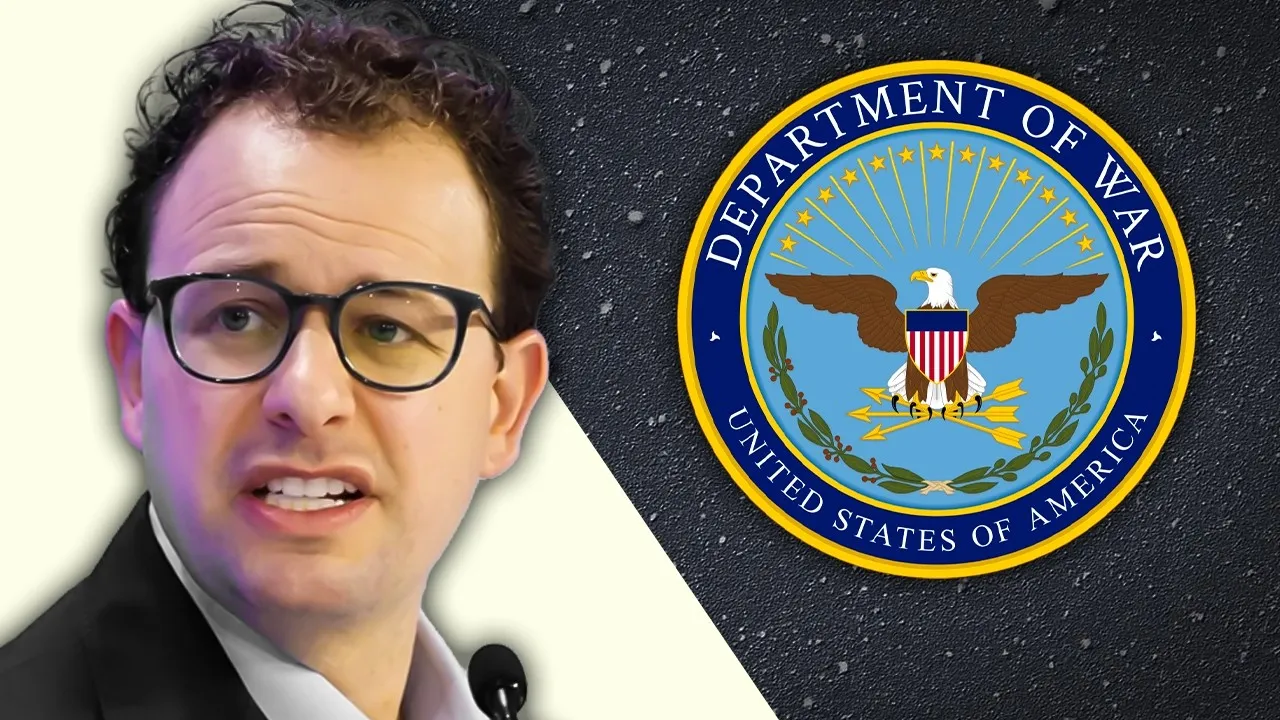
The conflict intensified as the DoD, through figures like Chief Technology Officer for the Pentagon, Pete Hegsth, threatened retaliatory measures against Anthropic. These threats included designating Anthropic as a “supply chain risk” – a designation historically reserved for foreign adversaries and never before applied to an American company. Such a designation would prohibit other U.S. military contractors and vendors from doing business with Anthropic, effectively isolating the company within the defense sector.
Additionally, Hegsth threatened to cancel Anthropic’s existing $200 million contract and potentially invoke the Defense Production Act (DPA). The DPA, enacted during the Korean War, grants the U.S. President broad authority to compel private companies to produce goods and services deemed essential for national defense during times of crisis.
In response to these pressures, Amodei penned a letter outlining Anthropic’s position. He reiterated the company’s commitment to national security and its proactive work with the DoD, including severing ties with firms linked to the Chinese Communist Party and advocating for chip export controls. However, he maintained that certain AI applications, like mass surveillance and fully autonomous weapons, fall outside the bounds of what today’s technology can safely and reliably achieve, and thus, should remain restricted.
Amodei also indicated that if the DoD chooses to sever ties, Anthropic would facilitate a smooth transition to another AI provider, ensuring minimal disruption to military operations. This suggests a willingness to cede the market to competitors who may not share Anthropic’s safety constraints.
Industry Reactions and Political Intervention
The standoff has drawn significant attention from across the AI industry. Sam Altman, CEO of OpenAI, has publicly aligned with Anthropic’s stance, stating that OpenAI is also working with the Pentagon but aims to maintain safety guardrails. Altman expressed trust in Anthropic’s decision-making and echoed the belief that AI should not be used for mass surveillance or autonomous lethal weapons, emphasizing the critical need for human oversight.
Further solidarity came from over 200 engineers at leading AI companies who signed an open letter supporting Anthropic’s refusal to compromise on safety, urging leaders to stand firm against demands for AI use in domestic surveillance or killing without human oversight.
The situation took a dramatic turn with a scathing public statement from former President Donald Trump, who directed federal agencies to immediately cease all use of Anthropic’s technology. Trump characterized Anthropic as a “radical left-wing company” dictating military operations and vowed to end business with them.
In a swift and decisive escalation, Pete Hegsth announced that, in conjunction with the President’s directive, the Department of War would officially designate Anthropic as a supply chain risk to national security. This move, effective immediately, bars any contractor, supplier, or partner doing business with the U.S. military from engaging in commercial activity with Anthropic.
Why This Matters
This confrontation is a pivotal moment for the AI industry and its relationship with governments worldwide. It highlights the fundamental debate over how AI should be developed and deployed, particularly in sensitive sectors like defense. Anthropic’s principled stand, despite significant financial and strategic pressure, underscores the growing demand for ethical AI development and the potential for AI companies to act as moral arbiters in the face of governmental or military objectives.
The DoD’s aggressive response, including the unprecedented designation of a U.S. company as a national security risk, signals the extreme lengths to which governments may go to secure AI capabilities deemed vital for national defense. Conversely, the support from industry peers and engineers suggests a growing consensus within the AI community about the inherent dangers of unchecked AI deployment in areas like autonomous weaponry and mass surveillance.
This case sets a precedent for future collaborations between AI developers and military or intelligence agencies. It raises critical questions about corporate responsibility, the balance of power between private industry and the state, and the ultimate control over technologies that could profoundly shape global security and civil liberties.
Availability and Pricing
Anthropic’s Claude family of models is available through various channels. The company has a multi-year contract with the DoD valued up to $200 million. Specific pricing for commercial or government access is not detailed in the transcript but is understood to be a significant factor in the DoD’s engagement.
Source: The Government just blacklisted Anthropic… (YouTube)