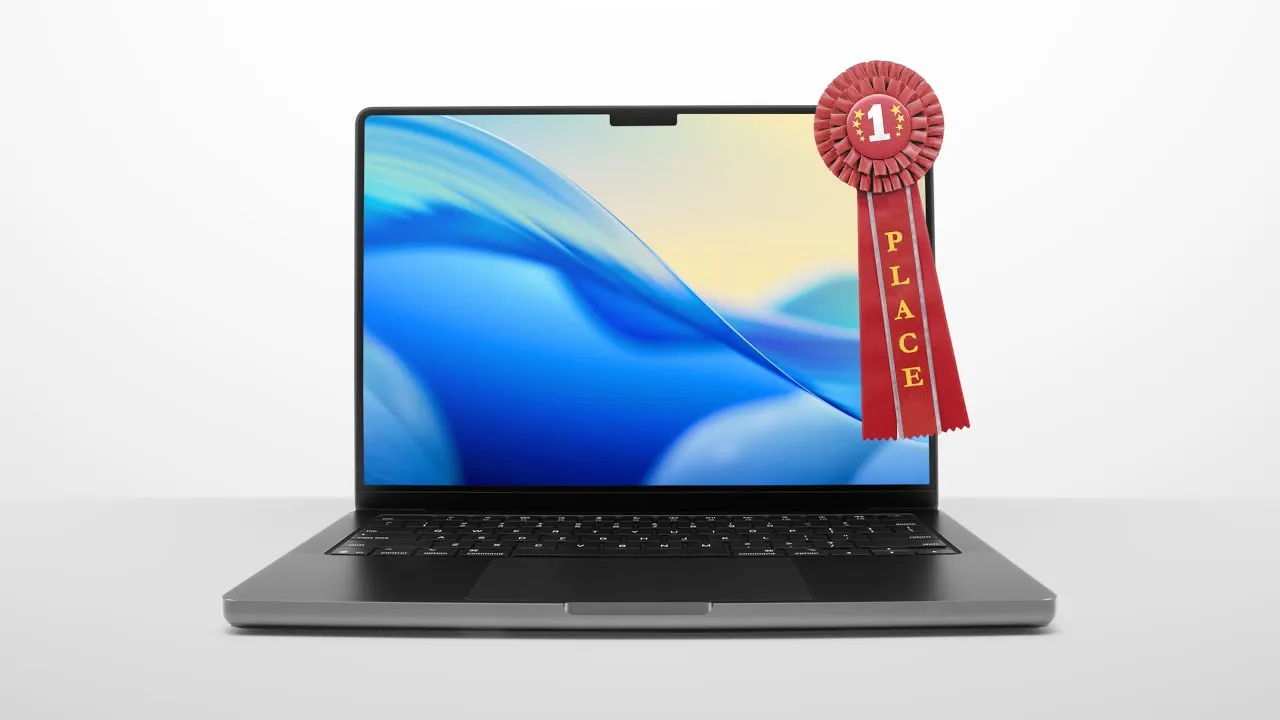
Apple Ditches Fanfare for M5 Chip Rollout
In a move that has left tech enthusiasts buzzing, Apple has quietly updated its website, introducing the new M5 chip across three of its key products: the 14-inch MacBook Pro, the iPad Pro, and the Vision Pro. Notably absent were the usual splashy launch events or announcement videos, signaling a shift in Apple’s strategy or perhaps a testament to the maturity of its silicon development. This initial rollout focuses exclusively on the base M5 chip, with no M5 Pro or M5 Max variants announced yet, suggesting those may arrive in future iterations.
M5 Chip: A Performance Leap in Stealth
Apple claims significant year-on-year performance gains with the M5 chip, stating it offers over double the performance of the original M1 chip. The company highlights the M5’s industry-leading single-core performance, all achieved within the same power envelope. This understated approach is a stark contrast to how other tech giants might celebrate such an achievement. Imagine Intel or Qualcomm releasing a chip with the fastest single-core performance in the industry; it would undoubtedly be met with widespread marketing campaigns and self-congratulatory announcements. Apple, however, has opted for a more subdued website update, delivering a 15% CPU bump and a 30% GPU increase with minimal fanfare. This has led some observers to joke that Apple might be ‘bored of winning’.
While Apple undoubtedly aims to sell millions of these devices, the company may also recognize that the exceptional performance of previous Apple Silicon chips, like the M1, means fewer users are compelled to upgrade as frequently. Nevertheless, the M5 represents a tangible improvement over its predecessor, the M4. Performance gains are evident across various scenarios, with some being more substantial than others. A significant contributor to this boost is the M5’s 25% higher memory bandwidth compared to the base M4. Users will also notice improved performance in GPU-bound tasks, such as gaming and 3D applications, though the extent of these gains can be program-specific.
AI Workflows and Connectivity: The M5 Advantage
The most noticeable improvements with the M5 chip are seen in AI workflows. While Macs have gained popularity for their energy and cost efficiency, the M5 chip further enhances their capability for local AI tasks. However, it’s important to note that the M5 chip supports up to 32GB of RAM, meaning users requiring more extensive AI capabilities might need to look at chips from different product lines or future releases. Additionally, the M5 MacBook Pros feature faster SSDs, which contribute to overall system responsiveness.
In terms of connectivity, the M5 MacBook Pros stick with Wi-Fi 6E, not the latest Wi-Fi 7. The three USB-C ports are Thunderbolt 4, a standard that, while robust, is a step down from the Thunderbolt 5 support found in MacBook Pros equipped with M4 Pro and M4 Max chips. However, for the vast majority of users, Thunderbolt 4 offers more than sufficient bandwidth.
Buying Advice: RAM Over Raw Power?
For those considering a new MacBook, a crucial piece of advice remains: avoid yearly upgrades. Such frequent upgrades are generally unnecessary and not cost-effective. When faced with the decision between more RAM, storage, or a more powerful chip, the recommendation leans heavily towards RAM. It’s rare for users to be significantly bottlenecked by CPU or GPU power; RAM limitations are far more common. Therefore, if the budget allows, prioritizing RAM is often the wiser choice.
Currently, the sweet spot for price-to-performance in the MacBook lineup appears to be M2 and M3 models, which often see the most significant discounts. The M5 models, being the latest and most expensive, offer substantial gains primarily for users engaged in intensive local AI tasks. For the average user, the performance leap might not justify the premium price tag.
iPad Pro: A Tablet Powerhouse Gets an Upgrade
The iPad Pro, specifically the 13.3-inch model, also benefits from the M5 chip. This upgrade translates to faster app performance, more consistent frame rates in games, and improved multitasking capabilities. The M5 iPad Pro boasts higher memory bandwidth, with options for 12GB or 16GB of RAM depending on storage configuration, and faster internal storage. Connectivity includes Wi-Fi 7 and fast charging, which is noticeably quicker than on the M4 iPad Pro models.
Despite these improvements, the review notes that modern iPads, even those with M1 chips and above, are already exceptionally powerful for most tasks. The M5 chip, while an enhancement, may be overkill for many users. However, for power users who edit videos or engage in music production directly on their tablets, the M5 iPad Pro presents a compelling upgrade.
Vision Pro Gen 2: Enhanced Immersion and Comfort
The Vision Pro also receives the M5 chip, promising higher memory bandwidth and a more capable GPU. This results in higher refresh rates, increased pixel density, and an overall more immersive visual experience. The M5 chip’s efficiency also contributes to longer battery life for video playback.
While the reviewer isn’t a regular Vision Pro user, citing limitations for professional tasks like video editing and the solitary nature of the experience, they acknowledge the impressive spatial photo capabilities. The M5 chip enhances the speed at which 2D photos are converted into spatial formats. A significant upgrade, however, is the new dual-knit strap, which is lauded as a major improvement in comfort and fit over the original solo-knit strap. The addition of a counterweight and a top strap (though it may affect hairstyles) makes the device far more usable for extended periods. Encouragingly, this new strap is backward compatible with the first-generation Vision Pro.
Specs & Key Features
- M5 Chip: Up to double the performance of M1, industry-leading single-core performance.
- CPU/GPU Gains: 15% CPU bump, 30% GPU bump over M4 base.
- Memory Bandwidth: 25% higher on M5 compared to M4 base.
- AI Capabilities: Enhanced local AI workflows (up to 32GB RAM on M5 MacBook Pro).
- MacBook Pro (14-inch): Faster SSD, Wi-Fi 6E, Thunderbolt 4 ports.
- iPad Pro: Available with 12GB or 16GB RAM, faster storage, Wi-Fi 7, fast charging.
- Vision Pro Gen 2: Higher refresh rates, higher pixel density, longer battery life, improved visual experience.
- Vision Pro Gen 2 Strap: New dual-knit loop for enhanced comfort and stability.
Who Should Care?
The M5 chip’s debut is most relevant to power users, developers, and early adopters who push their devices to the limit. Professionals working with demanding applications, particularly those involving AI and machine learning, will see the most significant benefits. Gamers and content creators working on the go might also appreciate the GPU and performance improvements in the MacBook Pro and iPad Pro. For the average consumer, the M5’s advantages might be subtle, and sticking with M2 or M3 models could offer better value.
Availability and Pricing
The M5-equipped MacBook Pro, iPad Pro, and Vision Pro Gen 2 are available now via Apple’s website. Pricing details would typically be found on Apple’s official store, with the M5 models representing the premium tier in their respective product lineups.
Source: Is Apple Bored of Winning? – M5 MacBook Pro (YouTube)