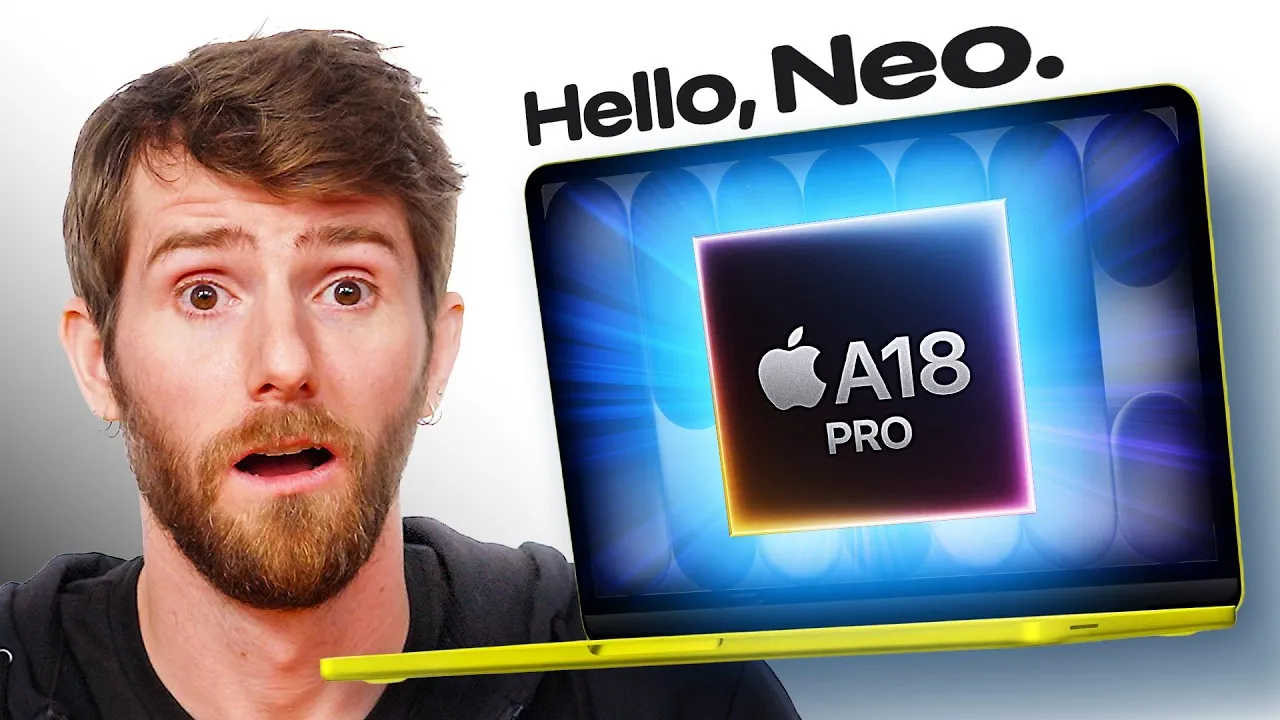
Apple Stuns Market with $600 MacBook Neo, Ushering in New Era of Value
Apple has just dropped a bombshell on the tech world, launching a new MacBook Neo for an astonishing $600. This move fundamentally shifts the landscape of affordable laptops, making it incredibly difficult for competitors and even Apple’s own previous offerings to compete on value. This isn’t just a minor update; it’s a strategic play that redefines what consumers can expect from an entry-level machine.
The $600 MacBook Neo: A Game Changer?
The immediate reaction from critics centers on the inclusion of an Apple mobile processor, with concerns about underpowered performance. However, Apple isn’t positioning the Neo as a powerhouse for demanding applications like Adobe Premiere. Instead, its marketing emphasizes everyday tasks: web browsing, messaging, and leveraging the Neural Processing Unit (NPU) for AI-powered photo editing. For these use cases, the MacBook Neo is poised to be an exceptionally capable machine.
Concerns about the 256GB of storage and 8GB of non-upgradable unified memory have also surfaced, with some labeling it as potential e-waste from the outset. Yet, the argument can be made that many users previously purchased far more powerful, and thus resource-intensive, laptops for these very same tasks. By offering a more appropriately specced machine, Apple could actually lead to more efficient use of global NAND and memory resources.
Apple’s hardware choices, particularly the integrated DRAM with the processor, may have necessitated the 8GB RAM configuration. However, the company’s commitment to long-term software support ensures that these machines will remain functional and secure for years to come, mirroring their track record with older devices that still receive updates despite dwindling user bases.
Key Features and Design
- Processor: Apple A-series silicon (mobile processor)
- Display: 13.3-inch Liquid Retina display with anti-glare, 500 nits brightness
- Storage: 256GB SSD (base configuration)
- Memory: 8GB Unified Memory (non-upgradable)
- Battery Life: Up to 11 hours mixed use, 16 hours video playback
- Chassis: Aluminum
- Keyboard: Magic Keyboard
- Trackpad: Multi-touch trackpad
- Webcam: 1080p FaceTime HD camera
- Audio: Dual speakers with Spatial Audio support
- Microphone: Dual-mic array with directional beamforming
- Connectivity: 3.5mm headphone jack, USB-C ports
- Weight: 1.23 kg (2.7 lbs)
- Charger: 20W USB-C power adapter included
Design and Portability
Despite its affordable price point, the MacBook Neo doesn’t compromise on build quality. It features an aluminum chassis, a vibrant Liquid Retina display with anti-glare coating and 500 nits of brightness, making it suitable for various environments. The inclusion of the beloved Magic Keyboard and a decent-sized multi-touch trackpad further enhances the user experience. Notably, it boasts a 1080p webcam, spatial audio from its dual speakers, and a noise-canceling microphone array, all essential for modern communication.
Portability is a key strength, with a weight of just 1.23 kg and a 36Wh battery. The efficient processor and fanless design contribute to its slim profile and quiet operation. The included 20W charger is also a welcome addition, and the low power draw means extended battery life is easily achievable with portable power banks.
Connectivity and Minor Quibbles
The primary drawback lies in its limited port selection: a 3.5mm headphone jack and USB-C ports. Users requiring USB-A devices or external display connections will need to rely on dongles, reminiscent of the controversial 12-inch MacBook from 2015. However, the ubiquity of USB-C in modern peripherals mitigates this concern for many.
Additionally, Touch ID is not available on the base 256GB model, requiring a $100 upgrade to the 512GB configuration. The lack of a backlit keyboard on the base model is another curious omission for a machine with such a modern aesthetic.
Value Proposition and Target Audience
The MacBook Neo’s true power lies in its value, especially when considering the education discount, bringing the price down to $500. Coupled with Apple’s robust buyback programs and support services, it presents a compelling alternative to Chromebooks for educational institutions. This machine is ideal for students, casual users, and anyone who needs a reliable device for everyday computing tasks without breaking the bank.
Apple Silicon M5 Pro and M5 Max: Powering the Next Generation
Beyond the Neo, Apple also unveiled refreshed MacBook Pros featuring the new M5 Pro and M5 Max chips. These processors represent a significant leap forward, building on the success of Apple Silicon. The new chips boast an enhanced Neural Engine, increased peak unified memory throughput, and improved GPU performance.
Both the M5 Pro and M5 Max feature an 18-core CPU, a notable increase from their predecessors. Apple claims these are the fastest laptop cores available, promising exceptional performance. While previous generations of Apple Silicon already offered excellent battery life, the M5 series further refines this, with Wi-Fi 7 and Bluetooth 6 connectivity enhancing network capabilities.
Quality-of-life improvements continue, with newer chips supporting HDMI 2.1 and Thunderbolt 5 (though base M5 and M5 Max models retain Thunderbolt 4). Pricing has been largely maintained, a significant achievement given the current global chip shortages and rising RAM costs. While some entry-level configurations have been removed, the overall value proposition remains strong.
M5 MacBook Air: A Solid, If Less Exciting, Update
The M5 MacBook Air sees a $100 price increase but compensates with doubled base storage, a faster SSD, and the new Wi-Fi 7 and Bluetooth 6 standards. While most users may not require the performance leap, the ability to configure it with more RAM and storage compared to the Neo makes it a more flexible option for those who need it.
New Studio Display XDR: Pro-Level Visuals at a Lower Price
Apple’s new Studio Display XDR is a revelation, significantly undercutting its predecessor in price while offering substantial improvements. It features a 5K resolution on a slightly smaller panel, resulting in an exceptionally high pixel density of over 210 pixels per inch. This display is the first desktop Mini-LED panel from Apple to offer 120Hz adaptive sync and a staggering 2300 local dimming zones.
It achieves 1000 nits of SDR brightness and 2000 nits peak HDR brightness. Connectivity has been dramatically upgraded with two Thunderbolt 5 ports (one with 140W charging) and two 10Gbps USB-C downlink ports. The display also supports 16 reference modes, the Adobe RGB color gamut, and includes the 12MP Center Stage camera and six-speaker sound system found in the Studio Display.
The non-XDR model remains at its previous $1600 price point, offering upgraded Thunderbolt and USB-C ports, though with slower charging speeds. The inclusion of the Center Stage camera with Desk View is a welcome addition. While the lack of 120Hz on the standard model is a minor disappointment, the overall package remains compelling.
iPhone 17e and iPad Air Updates
The iPhone 17e continues Apple’s strategy of offering a more affordable iPhone, now priced at $599 with double the storage of its predecessor. Key upgrades include MagSafe wireless charging, Ceramic Shield 2 glass, and the A19 chip with the C1X modem. This move directly counters the industry’s trend of increasing prices and decreasing features.
The iPad Air also receives a significant boost, now featuring the M4 chip, C1X modem, and N1 wireless chips, along with 12GB of RAM. While Apple’s marketing highlights a 50% increase in unified memory, the practical benefit is a substantial performance upgrade, especially for users coming from older iPad models. Enhanced AI capabilities are also present across the new devices, with a focus on on-device processing.
The Verdict: Apple Embraces Value
Apple’s latest product announcements signal a significant shift towards value, particularly with the groundbreaking $600 MacBook Neo. Coupled with the powerful M5-series chips, a vastly improved Studio Display XDR, and updated iPhones and iPads, Apple is making a strong case for its ecosystem. In a market grappling with affordability challenges, Apple has emerged as a surprising beacon of value, offering compelling technology at accessible price points.
Source: I Can Only Recommend Macbooks Now… (YouTube)