Bamboo Labs Printer Tackles Lasers, Cutting, and 3D Printed Shoes
The 3D printing landscape is rapidly evolving, and Bamboo Labs is pushing boundaries with its latest offering, the X2D printer. This versatile machine goes far beyond traditional filament extrusion, incorporating laser engraving, cutting capabilities, and the ambitious challenge of printing functional footwear.
Unpacking the Bamboo X2D: More Than Just a 3D Printer
The Bamboo X2D stands out with its impressive build volume, measuring 325x320x325mm, making it one of the largest 3D printers the creator has personally used. A key feature is the option for both single and dual-nozzle printing, a significant upgrade that allows for faster multi-material prints. The printer boasts a rapid nozzle speed of 1000 millimeters per second, double that of previous models, and a hotend capable of reaching 350 degrees Celsius, enabling the use of high-temperature filaments. Additionally, active chamber heating up to 65 degrees Celsius is beneficial for drying certain types of filament, a feature that proved crucial during the testing of flexible materials.
A Multi-Material Marvel: The AMS and Dual Extruders
At the heart of Bamboo Labs’ multi-material printing capability is the Automatic Material System (AMS). This system holds multiple spools of filament and automatically feeds the selected material through a single tube to the printer’s extruder. The X2D’s dual-nozzle setup, however, introduces a new dynamic. While the AMS can feed one extruder, a secondary spool can be attached directly to the side of the printer to feed the second extruder. This configuration allows for the seamless printing of objects using two different materials or colors simultaneously, as demonstrated with a Crash Bandicoot figurine printed in orange and denim PETG.
Beyond Extrusion: Lasers and Cutting Modules
Perhaps the most surprising addition to the X2D is its integrated laser capabilities. Bamboo Labs provides two laser modules: a 10-watt and a more powerful 40-watt version. These modules can be easily swapped with the print head, transforming the 3D printer into a laser engraver and cutter. The system includes safety features, such as green-tinted glass on the enclosure to protect the eyes from the powerful lasers and an automatic shut-off when the door is opened. A mandatory ventilation system is also included to manage the smoke produced during laser engraving, a critical safety and environmental consideration. The creator successfully used the laser module to engrave a logo onto a wooden plank and create a custom dog tag.
Complementing the laser module is a dedicated cutting module, which offers a mechanical alternative for slicing materials like vinyl and leather. This module also features a unique pen attachment, allowing the printer to perform drawing tasks. This dual functionality highlights the X2D’s adaptability, enabling it to not only create but also to personalize and assemble.
The Shoe Experiment: TPU and Its Challenges
The most ambitious test for the X2D was the creation of 3D printed running shoes. This required the use of TPU (Thermoplastic Polyurethane), a flexible filament that contrasts sharply with rigid materials like PLA. Unlike PLA, which is brittle, TPU offers a degree of elasticity akin to cooked spaghetti compared to raw spaghetti. Printing with TPU presented several hurdles. Due to its flexibility, it cannot be reliably fed through the standard AMS tube. The creator’s team had to manually feed the TPU filament through a bypass slot and directly into the extruder. Initial attempts resulted in bubbling and poor extrusion, indicating the nozzle temperature was too high (set at 215 degrees Celsius). Further troubleshooting involved adjusting the printer’s orientation to ensure a straight path for the filament into the extruder and utilizing the printer’s active chamber heating to dry the TPU filament, a critical step often overlooked.
The Five-Mile Test: A Grueling Reality Check
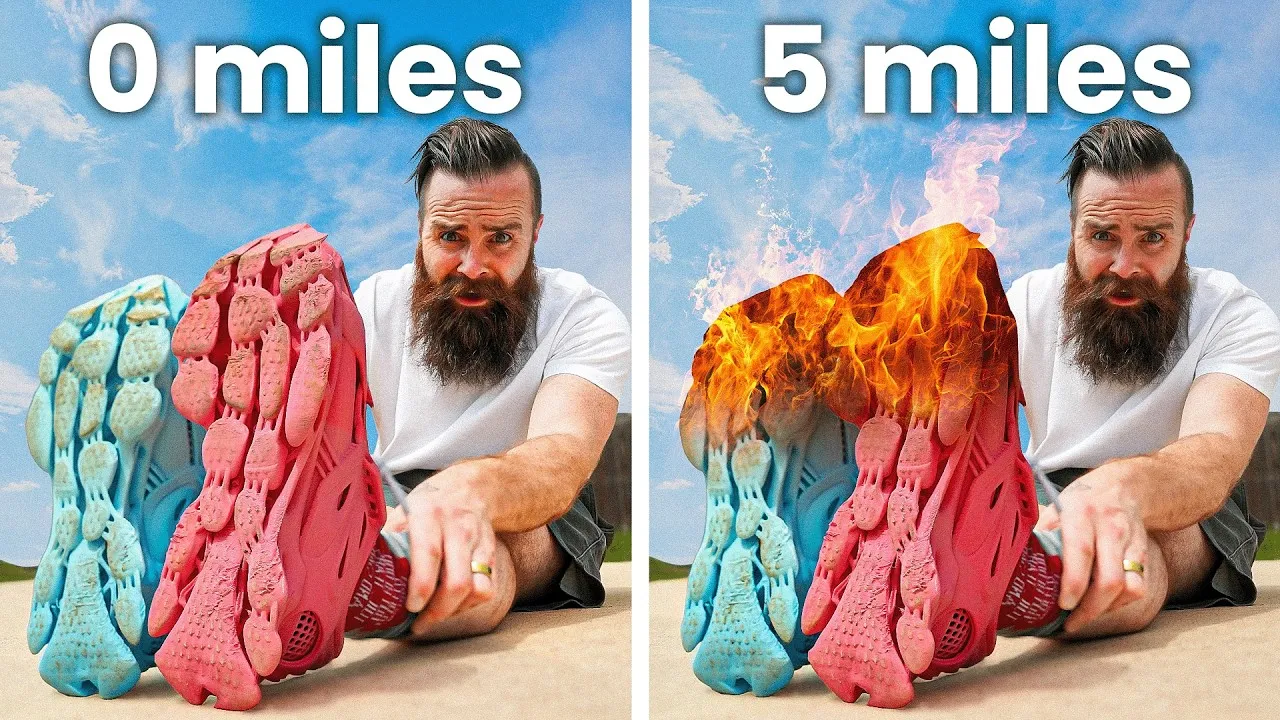
Despite overcoming the printing challenges, the resulting shoes were not a perfect fit, being too large and requiring the addition of cork soles for a semblance of wearability. The ultimate test—a five-mile run in the Texas summer heat—proved to be a brutal experience. While the shoes themselves held together surprisingly well, surviving the ordeal without significant damage, they offered little in the way of comfort or protection. The creator reported excruciating foot pain, blisters, and knee issues, concluding that 3D printed shoes are far from ready for prime time. The experiment, however, served as a compelling proof-of-concept, demonstrating the potential for 3D printing in creating complex, functional objects, with applications in areas like prosthetics holding significant promise.
Why This Matters
The Bamboo X2D represents a significant leap in the versatility of consumer-grade 3D printers. By integrating laser engraving, cutting, and advanced multi-material printing, it offers creators a powerful all-in-one tool. The shoe experiment, while painful, underscores the rapid progress in materials science and additive manufacturing. As filaments become more advanced and printing techniques refine, the possibility of printing personalized prosthetics, custom medical devices, and even everyday items like footwear moves closer to reality. The X2D’s capabilities suggest a future where personal fabrication extends far beyond hobbyist projects into practical, real-world applications.
Source: I Tried running in 3D printed shoes (YouTube)