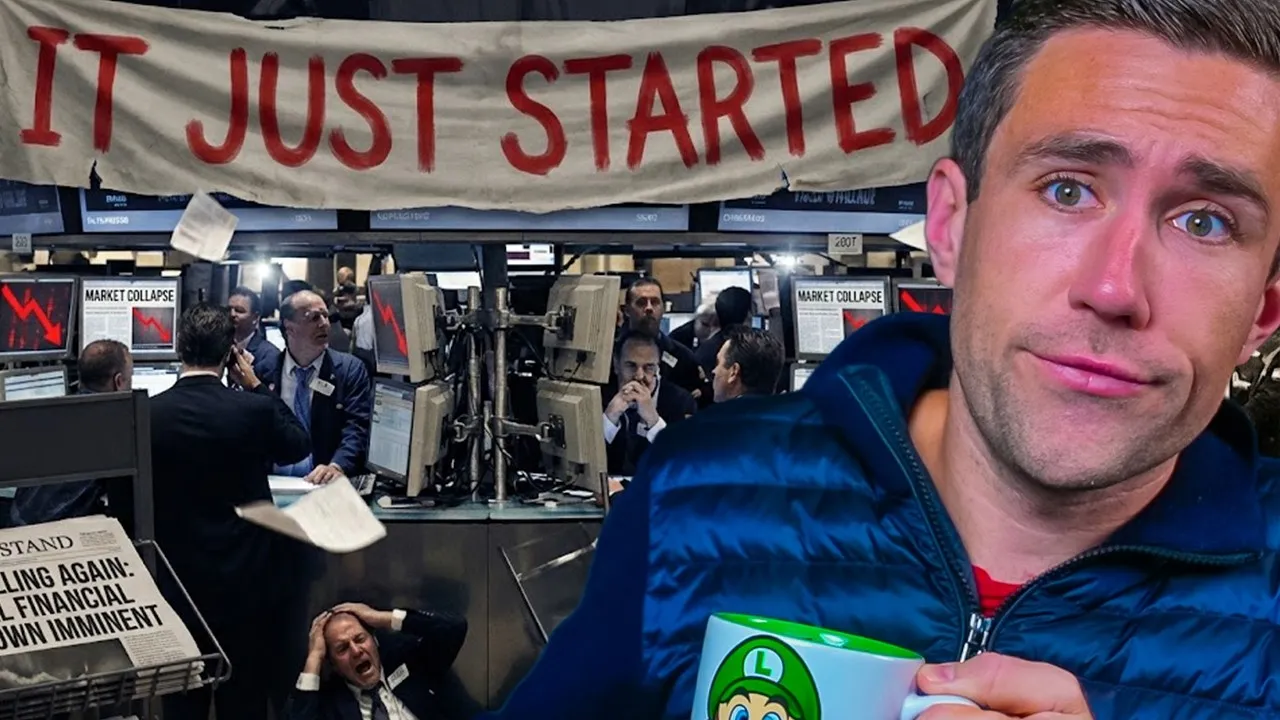
Blue Owl Halts Redemptions, Sparking Fears of 2007 Echoes
In a move that has sent ripples through the financial world, alternative asset manager Blue Owl Capital has frozen redemptions across its private credit funds, drawing parallels to the liquidity crisis of 2007. This decision, aimed at providing investors with a ‘fair and equal pro-rata opportunity to liquidate,’ has intensified scrutiny on the rapidly growing, yet increasingly opaque, private credit market.
The freeze at Blue Owl echoes the infamous August 9, 2007, event when French bank BNP Paribas halted redemptions from three of its funds due to a lack of liquidity. That incident, occurring just four months after the bankruptcy of New Century Financial, is now seen as a precursor to the broader subprime mortgage crisis. Today, similar concerns are surfacing as Blue Owl’s action follows the collapse of several entities, including Bur Brands, Renovo Home Loans, and SA Homes, within the last four months.
Price Discovery and Market Seizures
The 2007 crisis was largely characterized by a ‘price discovery failure,’ where the valuation of subprime mortgage-backed securities became impossible. This led BNP Paribas to halt redemptions, unable to determine the true worth of its holdings. Factors such as rating agency failures, potential fraud, and the widespread use of high leverage (10-30x) on subprime mortgages with ‘no income, no job, no asset’ (NINJA) loans contributed to a market seizure. This contagion eventually led to the collapse of Lehman Brothers 13 months later.
While the current situation with Blue Owl is not an exact replica, the parallels are striking. The company’s private fund freeze raises questions about the underlying health of its portfolio. Reuters reported that Blue Owl is selling $1.4 billion in assets from three credit funds to return capital to investors and pay down debt. This move has contributed to a sell-off in public markets, with Blue Owl’s publicly traded shares falling significantly from a high of $20 to around $12, experiencing another 2.5% drop following the redemption freeze news.
Investor Concerns and Blue Owl’s Defense
Blue Owl has stated that it is selling loans at ‘99.7% of par value,’ implying minimal losses and reassuring investors that the assets are performing well. The company claims these sales involve $1.4 billion across 128 companies in 27 industries, with buyers including pension funds and insurance companies, suggesting some market liquidity exists. However, this narrative clashes with the market’s reaction. Publicly traded Blue Owl funds are trading at a substantial discount, reportedly around 30%, with a net asset value (NAV) of $17.33 per share as of December 31st, while the stock hovers near $12.10.
Further complicating the picture is the failed merger of one of Blue Owl’s business development corporations (BDCs) last November. Investors reportedly balked at the prospect of taking a ‘haircut’ on their ownership, leading to further sell-offs in public Blue Owl funds. This has led some observers to question whether the market is correctly pricing the risk associated with Blue Owl’s assets, particularly in light of its involvement in large deals, such as a $27 billion data center transaction for Meta.
The Shadow of Leverage and Misleading Disclosures
A key concern is the potential for undisclosed ‘payment-in-kind’ (PIK) accruals. If a borrower, unable to make cash interest payments due to rising interest rates, accrues interest that is added to the principal, the loan’s effective value increases. For instance, a $100 million loan with $20 million in accrued interest becomes a $120 million obligation. If such loans are then sold at 99.5 cents on the dollar of the original principal, the effective discount on the total obligation could be closer to 20%. Critics also suggest Blue Owl may have ‘cherry-picked’ its best loans for sale, masking riskier exposures within its portfolio.
Adding to the intrigue, Blue Owl’s co-CEOs are reported to have pledged a significant portion of their Blue Owl stock holdings as collateral for loans, including a reported $1.8 billion acquisition of a majority stake in the NHL’s Tampa Bay Lightning. This raises questions about their incentives to accurately represent the company’s financial health, especially when the market appears to be pricing in higher risk.
Broader Market Implications and Contagion Risks
The issues at Blue Owl are not isolated. The broader private equity sector has seen significant declines, with firms like Apollo, Ares, KKR, and Carlyle experiencing notable drops in their stock prices. The International Monetary Fund (IMF) has also raised alarms about the private credit market, estimated to be worth around $3 trillion. In its ‘Global Financial Stability Report,’ the IMF warned that banks’ lending to non-bank financial intermediaries (NBFIs), including private credit funds, could pose systemic risks.
The IMF highlighted that while large banks hold significant exposure, smaller regional banks could be disproportionately affected. The report indicated that if NBFI borrowers fully draw on credit lines, up to 5% of European banks and 14% of U.S. banks (excluding bankruptcies) could face severe liquidity stress. Furthermore, the IMF noted that banks are increasingly investing directly in private credit, amplifying their exposure to potential downturns.
UBS has also warned that artificial intelligence could trigger a 13% default rate in private credit, a figure that could lead to significant loan write-downs and a rush for the exits. These concerns suggest that the current market unease might be more than just a temporary blip, potentially signaling a deeper issue within the financial system.
What Investors Should Know
- Liquidity Concerns: The freezing of redemptions by Blue Owl highlights the inherent liquidity risks in private credit markets, which are less transparent and regulated than public markets.
- Valuation Challenges: Accurately valuing private credit assets can be difficult, especially during times of market stress, potentially leading to ‘price discovery failures’ similar to 2007.
- Leverage and Accruals: High levels of leverage and the potential for undisclosed PIK interest accruals can mask the true risk and debt burden of loans, making them appear healthier than they are.
- Systemic Risk: The interconnectedness between banks and private credit funds, as highlighted by the IMF, means that distress in one sector can quickly spread to others, posing a risk to the broader financial system.
- Market Sentiment: Despite reassurances from companies like Blue Owl, the market’s reaction—evidenced by stock price declines and redemption freezes—suggests a lack of confidence and a potential repricing of risk.
While the immediate impact may not be a full-blown crisis akin to 2008, the current events serve as crucial early warnings. Investors are advised to remain vigilant, understand the underlying risks of private credit, and monitor the evolving situation closely. The ‘bread crumbs’ are visible, and while the exact timing of any significant downturn remains uncertain, the potential for contagion and market disruption is a tangible concern.
Source: WITHDRAWALS FROZEN | MAJOR PROBLEM JUST STARTED (YouTube)