Unlock Your Fitness Potential: The Unexpected Benefits of Walking
You might think that only intense, time-consuming workouts can significantly improve your fitness, but new research suggests that walking, even for short durations, offers substantial health benefits. Contrary to common beliefs, walking can be a powerful tool for enhancing cardiovascular health, improving aerobic capacity, and even slowing the natural decline of fitness with age. This article delves into the science behind walking’s effectiveness and debunks common myths surrounding exercise and calorie expenditure.
Myth Busted: Walking Is Not “Too Easy” for Fitness
A common misconception is that walking is not strenuous enough to yield meaningful fitness improvements. To test this, a two-week study involved participants walking for 30 minutes daily. One participant, Andy, who previously averaged less than 3,000 steps a day and had a below-average VO2 max score of 34, underwent rigorous testing before and after the walking regimen. VO2 max, a measure of the maximum amount of oxygen your body can use during intense exercise, is considered a strong predictor of overall fitness and longevity. After just two weeks of consistent walking, Andy’s VO2 max score increased by 3.5%, a significant improvement, especially considering that VO2 max typically declines by about 1% per year after the mid-20s. This demonstrates that even moderate walking can reverse age-related fitness decline and improve cardiovascular efficiency.
The Truth About Sweat and Fat Burn
Another prevalent myth is that more sweat equates to more fat loss. In experiments, participants exercised in both cool and hot environments. While the hotter conditions induced significantly more sweating, the calorie burn was not proportionally higher. In one instance, a participant burned 131 calories in a cool environment and only 120 calories in a hot, high-sweat environment, despite the workout feeling much harder and heart rate being consistently higher in the heat. This suggests that excessive sweating is primarily the body’s cooling mechanism and does not directly correlate with increased calorie or fat expenditure. Fitter individuals often sweat sooner and more profusely as their bodies are more efficient at thermoregulation, allowing them to sustain harder efforts.
Understanding Calorie Compensation: Don’t “Eat Back” Exercise Calories
The idea that you can freely eat back the calories burned during exercise is a dangerous oversimplification. Studies show that individuals are notoriously poor at estimating calorie intake and expenditure. People often underestimate how much they eat by 20-50% and overestimate their calorie burn from exercise by two to three times. Furthermore, after cardio exercise, the body may compensate by lowering its non-exercise activity thermogenesis (NEAT) – the calories burned from activities like fidgeting and walking around – for the rest of the day. This means that eating an equivalent number of calories burned during a workout might not lead to a calorie balance, potentially hindering weight loss efforts. It’s more beneficial to view exercise, including walking, as a contributor to overall health rather than an excuse to overindulge.
The 10,000 Steps Myth: What’s the Real Magic Number?
The popular goal of 10,000 steps per day originated from a 1960s marketing campaign and lacks a strict scientific basis. While research indicates that exceeding 2,000 steps daily significantly reduces the risk of all-cause mortality, cardiovascular disease, type 2 diabetes, and dementia, most of these benefits plateau around 7,000 steps per day. For many, achieving 7,000 steps is a more realistic and attainable target that still offers substantial health advantages.
The Japanese Walking Method: An Effective Approach
For those looking to maximize the benefits of walking, the Japanese walking method offers a structured approach. This technique involves alternating between 3 minutes of brisk walking (raising heart rate to 70% of maximum) and 3 minutes of normal walking, repeated for 30 minutes. A study comparing this interval walking protocol to simply walking over 8,000 steps daily found that the interval walkers achieved nearly a 10% jump in aerobic capacity and outperformed the other group in all measured fitness categories. This method can be particularly effective for improving cardiovascular fitness and can also be considered a form of Zone 2 training, which is beneficial for fat metabolism and endurance.
Zone 2 Training and Fat Loss: A Nuanced View
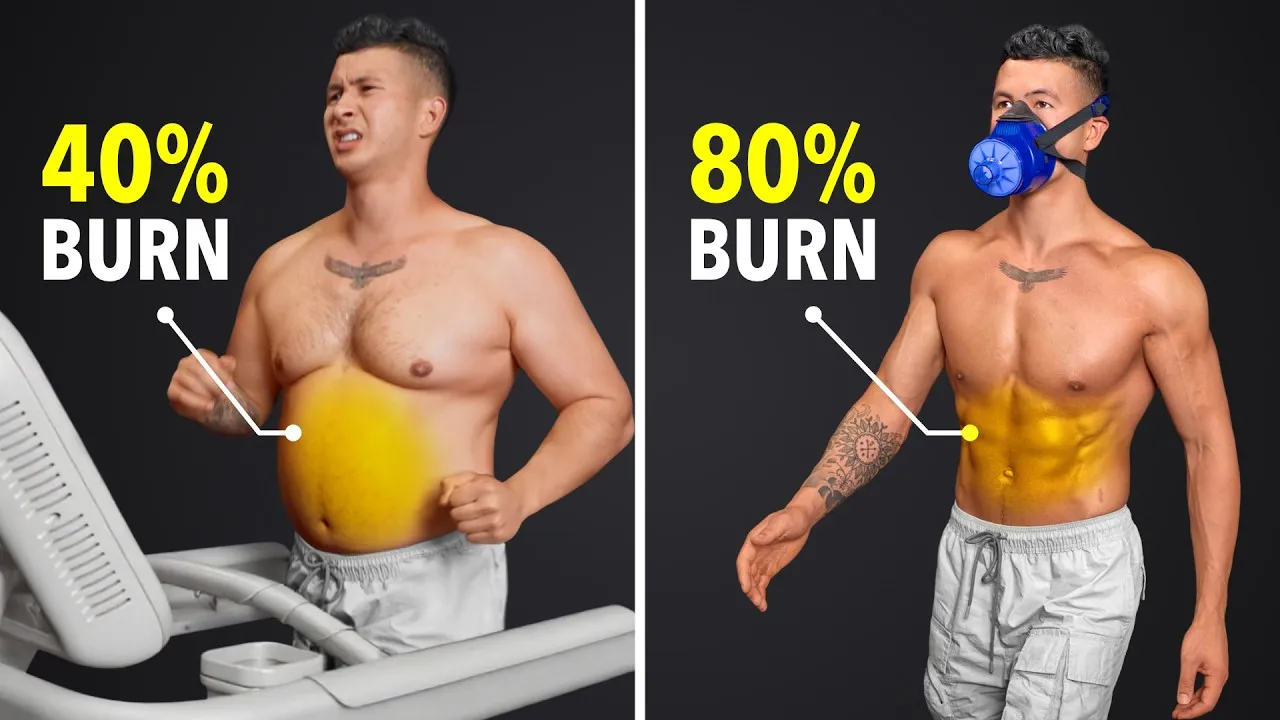
Zone 2 training, characterized by exercising at around 60% of your maximum heart rate, is often touted as the optimal zone for fat burning. While it’s true that the body relies more heavily on fat for fuel during lower-intensity activities like Zone 2 training (one study showed 75% fat burn during such activity versus 15% during high-intensity running), the distinction between fat burn and actual fat loss is crucial. When the body burns more fat during a workout, it may compensate by using more carbohydrates throughout the rest of the day. Conversely, burning more carbohydrates during exercise can lead to greater fat utilization later. While Zone 2 training enhances the body’s ability to produce energy and recover, overall calorie expenditure is the primary driver of fat loss. Therefore, while beneficial for health and endurance, it may not be the most efficient method for significant body fat reduction compared to higher-intensity exercises that burn more total calories.
Walking vs. Running: Calorie Burn and Fat Loss
When comparing walking and running for calorie expenditure over the same distance, running typically burns 10-30% more calories per minute, with an additional afterburn effect. However, the difference in total calorie burn for a mile can be less dramatic than expected, especially if the walking pace is brisk. For instance, a brisk walk (around 3.2 mph) and a slow jog (around 4.6 mph) over a mile might result in similar total calorie expenditure. Meta-analyses comparing low-intensity and high-intensity cardio show they can be equally effective for fat loss, highlighting consistency as the key factor. Choosing an activity you can sustain long-term is more critical than the intensity alone.
Exercise Snacks: Short Bursts for Big Gains
For individuals with extremely limited time, the concept of “exercise snacks” offers a viable alternative. These are short, high-intensity bursts of activity, lasting as little as 30 seconds, performed multiple times a day. A study comparing 40 minutes of cycling three times a week with three daily 30-second stair sprints showed that the stair sprint group significantly improved their VO2 max by 7%, while the longer cardio group saw no significant improvement. These short bursts, whether stair sprints, burpees, or fast jogging, can effectively spike heart rate and improve fitness markers, especially when breaking up prolonged periods of sitting.
Cardio vs. Strength Training for Fat Loss
While cardio is effective for burning calories and improving cardiovascular health, it’s not the sole best exercise for fat loss. Strength training, though it may burn fewer calories during the workout itself (e.g., 370 calories in an hour of heavy lifting compared to potentially more in 25 minutes of moderate cardio), plays a crucial role in body composition. Relying solely on cardio for weight loss can lead to a significant loss of muscle mass (50-75% of weight lost may not be fat). Muscle loss can increase hunger and the likelihood of regaining fat. Strength training, conversely, helps preserve or even build muscle, ensuring that most of the weight lost comes from fat. Combining cardio with strength training yields the best long-term results for fat loss and body composition, as exemplified by individuals who lose significant fat while gaining lean muscle mass.
Can Too Much Cardio Harm Muscle Gains?
Even when engaging in strength training, there’s a concern that excessive cardio could impede muscle growth. However, experts like Dr. Mark Lewis, Director of Applied Sports Science for the Houston Texans, suggest that moderate cardio can actually enhance muscle development and recovery. Studies have shown that cardio can improve blood flow and nutrient delivery to muscles, potentially aiding growth. To prevent muscle loss from high volumes of cardio, it’s recommended to prioritize strength training before cardio sessions, ideally separated by several hours. Adequate protein and carbohydrate intake post-exercise is also crucial, especially after long cardio sessions (90+ minutes). For most individuals not training at elite levels, the concern about cardio negatively impacting muscle gains is often overstated.
Wearable Fitness Trackers: Accuracy and Reliability
The accuracy of wearable fitness trackers, such as the Apple Watch, varies significantly. While they can provide a general estimate of calorie burn based on metrics like weight, age, and heart rate, their precision can be inconsistent. One test showed an average accuracy of 79%, with data ranging from under-reporting to over-reporting calories burned across different exercises. While not entirely useless for tracking rough data, these devices should not be relied upon for precise measurements or critical health decisions.
Key Health Takeaways
- Walking is effective: Consistent walking, even for 30 minutes daily, can significantly improve VO2 max, cardiovascular health, and reverse age-related fitness decline.
- Sweat doesn’t equal fat burn: Higher sweat levels do not necessarily mean more calories or fat are burned; it’s primarily a cooling mechanism.
- Avoid “eating back” exercise calories: Be realistic about calorie expenditure and intake. Your body may compensate for burned calories by reducing NEAT.
- 7,000 steps is a good goal: While 10,000 steps is a popular target, most health benefits are observed around 7,000 steps daily.
- Interval walking works: The Japanese walking method (alternating brisk and normal paces) can boost aerobic capacity more effectively than steady-state walking.
- Zone 2 training benefits: While great for fat metabolism and endurance, Zone 2 training’s impact on overall fat loss depends more on total calorie expenditure.
- Consistency is key: Choose an exercise, whether walking or running, that you can stick with long-term for sustainable fat loss.
- Short workouts count: “Exercise snacks” (short, high-intensity bursts) can significantly improve fitness, especially for time-crunched individuals.
- Combine cardio and strength training: For optimal fat loss and body composition, pair cardio with strength training to preserve muscle mass.
- Wearable accuracy varies: Use fitness trackers for general estimates, but don’t rely on them for precise calorie counts.
Disclaimer: This article is for informational purposes only and does not constitute medical advice. Always consult with a qualified healthcare professional before making any decisions about your health or treatment.
Source: NEW Walking Method 2x Better Than Running?! (Tested) (YouTube)