Unlock Your Brain’s Potential: The Power of Neuroplasticity
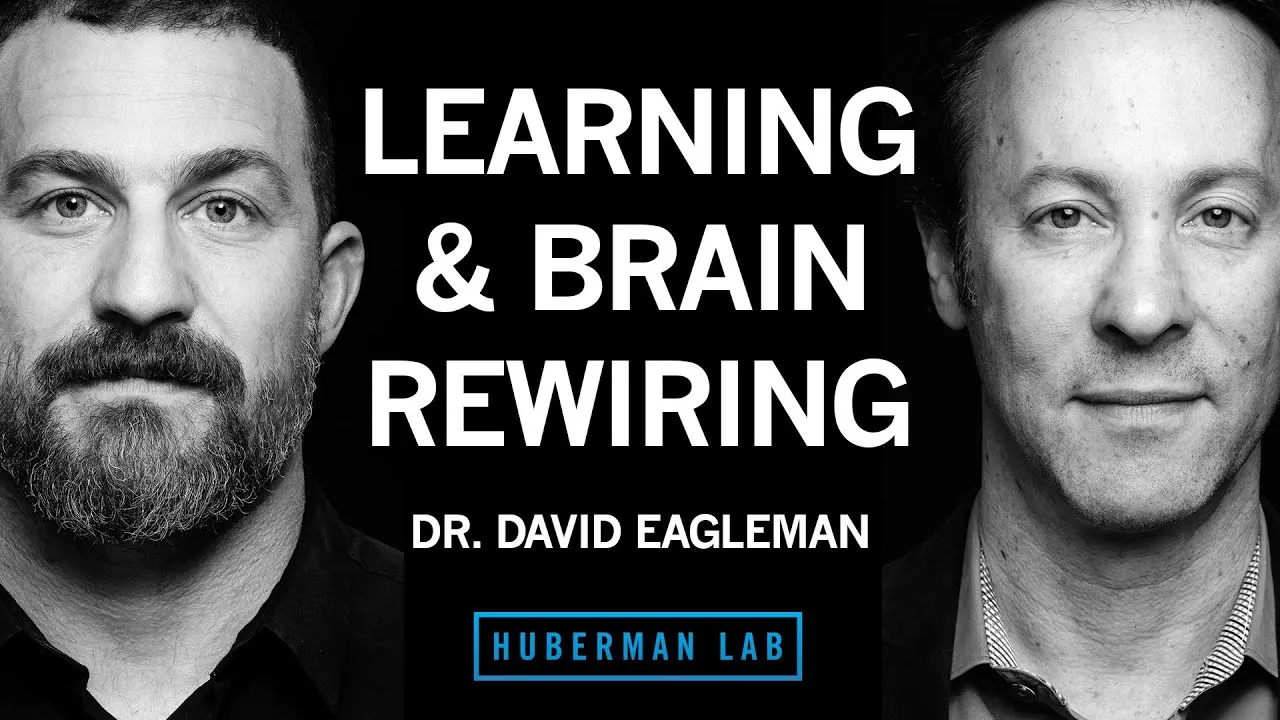
Your brain is not a static organ; it’s a dynamic, ever-changing landscape capable of rewiring itself throughout your life. This remarkable ability, known as neuroplasticity, is the key to continuous learning, adaptation, and cognitive enhancement. Dr. David Eagleman, a renowned neuroscientist and best-selling author, joined Dr. Andrew Huberman on the Huberman Lab podcast to delve into the science behind neuroplasticity and how we can leverage it to improve our lives.
Understanding Neuroplasticity: A Brain in Constant Motion
Neuroplasticity refers to the brain’s capacity to reorganize its structure, function, and connections in response to experience, learning, and even injury. Dr. Eagleman likens the brain to a creature with a “half-baked” brain at birth, which is then shaped and wired by the environment and experiences it encounters. “Your brain is locked in silence and darkness. It’s trying to make a model of the outside world. And if you’re constantly pushing and challenging it with things it doesn’t understand, then it’ll keep changing,” he explains.
With approximately 86 billion neurons, each forming thousands of connections, the brain is in a perpetual state of reconfiguration. These connections are not fixed; they strengthen, weaken, form, and dissolve constantly. This adaptability is what allows humans to learn complex skills, languages, and cultural norms, setting us apart from other species. Unlike an alligator, whose brain remains largely the same over millennia, human brains are designed for flexibility, enabling us to build upon the knowledge of previous generations.
The Cortex: A Versatile Learning Machine
A significant portion of our cognitive power resides in the cerebral cortex, the outer, wrinkled layer of the brain. While often depicted in textbooks as having distinct regions for specific functions (like visual or auditory processing), the cortex is remarkably adaptable. Dr. Eagleman highlights research, such as a study from MIT, where visual information was rerouted to the auditory cortex in an animal, causing the auditory cortex to become visually responsive.
This suggests that the cortex, including the prefrontal cortex responsible for higher-level thinking, planning, and decision-making, is a versatile “one-trick pony.” Its function is determined by the type of information it processes. This flexibility explains why individuals who are blind from birth often have enhanced auditory and tactile processing, as the cortical areas normally dedicated to vision are repurposed. Similarly, individuals who are deaf may experience heightened visual processing, including improved lip-reading abilities.
Embracing Challenge for Brain Growth
The key to fostering neuroplasticity, according to Dr. Eagleman, is to consistently engage in activities that challenge you. Simply doing crossword puzzles, while beneficial initially, becomes less effective once you become proficient. The brain thrives on novelty and difficulty. “It’s good until you get good at it and then stop and do something that you’re not good at and constantly find the next thing that’s a real challenge for you. That’s the key thing about plasticity,” he advises.
This principle extends to all areas of learning. When learning a new skill, whether it’s a sport, a musical instrument, or a new language, the brain is actively forming new neural pathways. As these skills become more ingrained, they transition from “software” to “hardware” – becoming more efficient and requiring less conscious effort. This is why experts, like Serena Williams in tennis, appear to perform effortlessly; their brains have optimized these actions through extensive practice.
Specialization vs. Diversification: Finding the Right Balance
The discussion touched upon the debate surrounding early specialization versus a more diversified approach to learning, particularly in children. While some elite athletes and performers, like Tiger Woods or the Williams sisters, achieved greatness through intense early focus, research suggests that a broader range of experiences might be more beneficial for overall cognitive development and long-term success.
Dr. Eagleman notes that while intense practice is crucial for mastery, a diversified approach can also be valuable. However, he also points out that learning multiple languages from a very young age might lead to a lower vocabulary in each compared to growing up monolingual, due to the division of practice time. The key takeaway is that dedicating significant time and effort to any challenging endeavor is essential for deep learning and skill acquisition.
Leveraging Curiosity and Technology for Learning
The digital age, with the internet and AI, has revolutionized access to information. Dr. Eagleman expresses optimism about these tools, particularly for education. He highlights that learning is most effective when it’s driven by curiosity. When individuals can immediately access information relevant to their interests, the learning process is significantly enhanced.
This immediate access can foster deeper engagement and retention compared to traditional, passive learning methods. Tools like AI can facilitate personalized learning experiences, such as AI-driven debates that help students develop critical thinking skills by exploring issues from multiple perspectives. For creativity, Dr. Eagleman suggests that it stems from remixing existing knowledge – bending, blending, and breaking down foundational concepts to create something new.
Cultivating a Healthy Nervous System: Essential Skills
When asked about the core elements for building a healthy, well-rounded nervous system, Dr. Eagleman emphasizes maximizing engagement across various life domains: being an athlete, a scholar, and socially connected. He warns against wasting time on passive activities, suggesting instead to fill that time with reading, learning, or engaging podcasts.
For the future, given the unpredictable nature of evolving careers, he identifies critical thinking and creativity as paramount skills. These abilities allow individuals to adapt, solve novel problems, and innovate, regardless of the specific technological or economic landscape they encounter.
Key Health Takeaways
- Embrace Challenge: Continuously seek out new and difficult activities that push your cognitive boundaries to stimulate neuroplasticity.
- Lifelong Learning: Understand that your brain can change and adapt at any age. Never stop learning new skills or acquiring knowledge.
- Purposeful Engagement: Prioritize activities that engage your curiosity and require active participation, rather than passive consumption of information.
- Diversify (with Focus): While broad experiences are valuable, deep learning requires dedicated practice and focused effort in chosen areas.
- Cultivate Critical Thinking & Creativity: These are essential skills for navigating an unpredictable future. Engage in activities that promote problem-solving, analysis, and innovative thinking.
- Limit Distractions: Be mindful of how you spend your time. Minimize passive scrolling and unproductive digital habits to free up time for more enriching activities.
Disclaimer: This article is for informational purposes only and does not constitute medical advice. Always consult with a qualified healthcare professional for any health concerns or before making any decisions related to your health or treatment. The information presented here is based on a discussion with Dr. David Eagleman and Dr. Andrew Huberman on the Huberman Lab podcast.
Source: Science & Tools of Learning & Memory | Dr. David Eagleman (YouTube)