Unlock Stronger Glutes with These Essential Exercises
Weak or underdeveloped gluteal muscles are a common issue, often contributing to stalled strength progress, poor posture, and persistent back pain. Fortunately, you don’t need a complex workout regimen to address this. According to leading glute expert Brett Contreras, inventor of the hip thrust, just two targeted exercises can significantly improve your movement, enhance athletic performance, and alleviate discomfort. These exercises can be performed at home and are designed to effectively target the gluteus maximus, the largest of the three gluteal muscles, which can become weakened from prolonged sitting and inadequate training.
The Power of the Step-Down for Glute Development
While traditional exercises like squats, lunges, and deadlifts engage the glutes, they often come with limitations. These compound movements tax multiple muscle groups simultaneously, meaning other muscles like the lower back or even grip strength can give out before your glutes are fully worked. This can lead to reaching muscular failure with your glutes still having significant capacity left. Furthermore, if your glutes are already weak or difficult to activate, other muscles may compensate, hindering your glute growth even if you’re strong in these foundational lifts. Soreness can also be a major deterrent, with exercises like Bulgarian split squats sometimes causing debilitating pain that makes you dread future workouts.
To overcome these challenges, Contreras recommends the glute-focused step-down. This exercise, though similar in appearance to a lunge or split squat, employs specific form adjustments to isolate the glutes. By keeping one leg elevated and controlling the descent, the planted leg’s glute is forced to bear the majority of the load. This movement emphasizes hip extension in a stretched position, which Contreras believes is particularly effective for building the lower glutes and can be performed more frequently due to reduced soreness.
Performing the Glute-Focused Step-Down
- Setup: Stand facing a sturdy elevated surface (like a bench or step), with one foot placed on top. You can hold onto a rack or wall for balance if needed.
- Execution: Step back with your non-working leg, keeping it in line with your torso. Lean forward from your hips, allowing your torso to fold over your front leg. Lower yourself slowly until the thigh of your front leg is roughly parallel to the ground, or your back foot lightly taps the surface. Focus on sitting your hips back.
- Form Tips: To maximize glute activation and minimize quad involvement, aim to keep your front knee relatively stable, ideally not bending too far past your toes. Choose a height that allows for a good stretch without excessive strain.
- Progression: Begin with bodyweight. As you get stronger, you can progressively overload the exercise by holding dumbbells. For added glute medius (outer glute) activation, hold a dumbbell in the hand opposite to your planted leg. This requires your glutes to work harder to stabilize your body against rotational forces.
The glute-focused step-down is effective even with bodyweight and can be done at home using household items like a chair and counter for support. Its ability to target the glutes in a stretched position makes it a valuable tool for building foundational glute strength and improving hip mobility, which can positively impact performance in other lifts and daily activities.
The Hip Thrust: Maximizing Glute Squeeze
While the step-down excels at working the glutes in a stretched position, the hip thrust is ideal for challenging them at the peak of contraction, or the squeeze phase. This is crucial for developing a well-rounded, aesthetically pleasing glute physique. Research, including a study co-authored by Contreras, suggests that combining exercises targeting both the stretch and squeeze phases of muscle contraction yields the greatest benefits for muscle growth.
Hip thrusts are highly effective for developing hip extension strength, which is vital for preventing low back pain and improving overall movement mechanics. Strong end-range hip extension allows the body to distribute stress more effectively, leading to better squat and deadlift performance, and even longer strides when walking.
Optimizing Your Hip Thrust Technique
- Setup: Position yourself with your upper back supported on a bench. Your feet should be planted flat on the floor, far enough away so that your knees are directly over your feet at the top of the movement.
- Execution: Brace your core, squeeze your glutes, and drive your hips upward toward the ceiling. Aim for a full contraction at the top.
- Key Adjustments:
- Foot Placement: Too close to the bench targets quads; too far targets hamstrings. Find the sweet spot for glute focus.
- Upper Back Position: Ensure your upper back is high on the bench for stability.
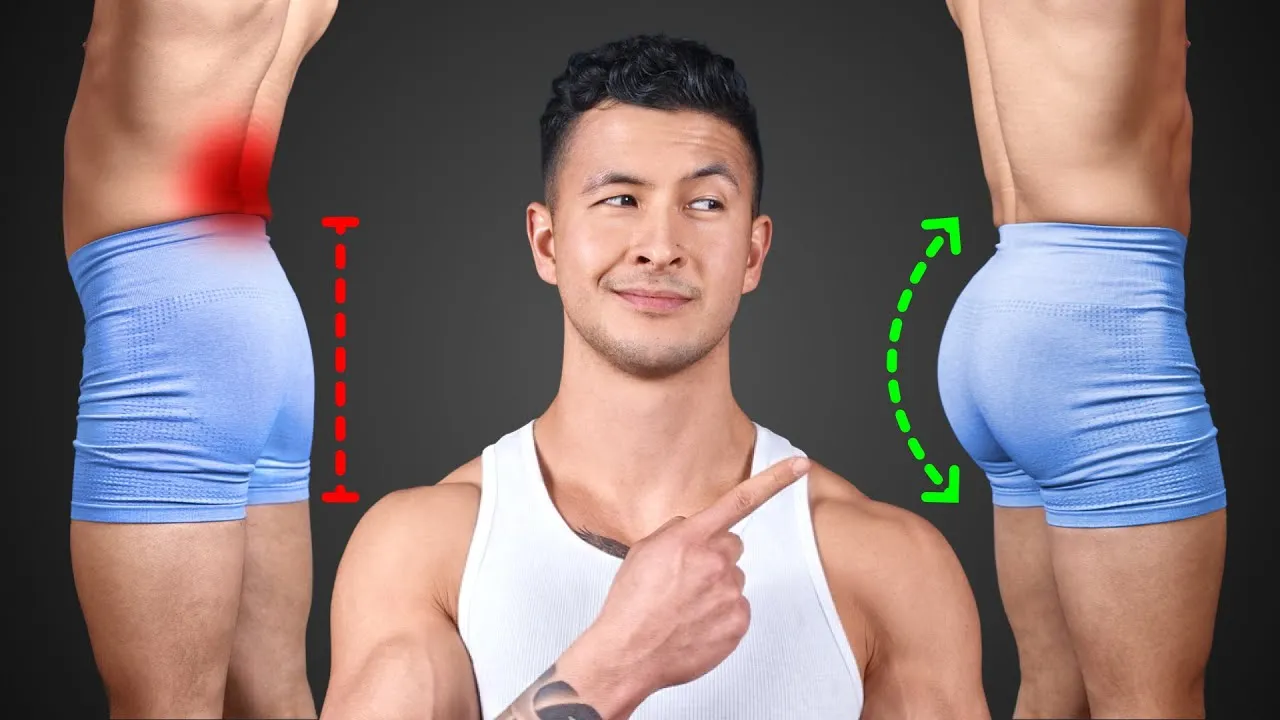
- The Scoop Method: Tuck your chin and keep your gaze relatively forward. Allow your upper back to arch slightly, and focus on tilting your pelvis upward by squeezing your glutes. This method has been found by many to enhance glute activation and can be beneficial for individuals experiencing back pain.
- The Hinge Method: Look forward at the bottom and slightly up towards the ceiling at the top. Hinge your body in a more linear fashion. This method allows for greater range of motion and potentially heavier loads for some individuals.
Contreras suggests experimenting with both the ‘scoop’ and ‘hinge’ methods to discover which technique best engages your glutes. The scoop method, in particular, has been shown to be highly effective for individuals struggling with back pain, allowing them to perform hip thrusts pain-free by reducing lumbar stress.
Integrating These Exercises into Your Routine
For optimal results, Contreras recommends performing three sets of 8 to 12 repetitions for both the glute-focused step-down and the hip thrust, two to three times per week. Consistency and progressive overload—gradually increasing the weight, reps, or difficulty—are key to continued progress.
It’s important to listen to your body and adjust the frequency and intensity based on your recovery capacity. While these exercises are powerful, they should be part of a balanced fitness program. Remember to consult with a healthcare professional or certified fitness trainer before starting any new exercise program, especially if you have pre-existing conditions or experience pain.
Key Health Takeaways
- Weak glutes can contribute to poor posture, back pain, and limited athletic performance.
- The glute-focused step-down effectively targets the glutes in a stretched position, minimizing soreness and allowing for higher training frequency.
- The hip thrust is excellent for working the glutes at their peak contraction, crucial for overall glute development.
- Experiment with the ‘scoop’ and ‘hinge’ methods for hip thrusts to find what best activates your glutes and minimizes discomfort.
- Incorporate these two exercises into your routine 2-3 times per week, aiming for 3 sets of 8-12 reps, and progressively challenge yourself.
Disclaimer: This article is for informational purposes only and does not constitute medical advice. Always consult with a qualified healthcare provider before making any decisions about your health or treatment.
Source: The ONLY 2 Exercises You Need to Fix Your Flat Butt (YouTube)