Human Brain Cells Master DOOM in Groundbreaking AI Feat
In a development that blurs the lines between biology and artificial intelligence, scientists have successfully trained a cluster of human brain cells to play the classic video game DOOM. This remarkable achievement, spearheaded by researchers at Cortical Labs, marks a significant leap in our understanding of intelligence and learning, demonstrating that biological neural networks can be harnessed to perform complex tasks previously thought to be exclusive to digital systems.
The ‘DishBrain’ Experiment
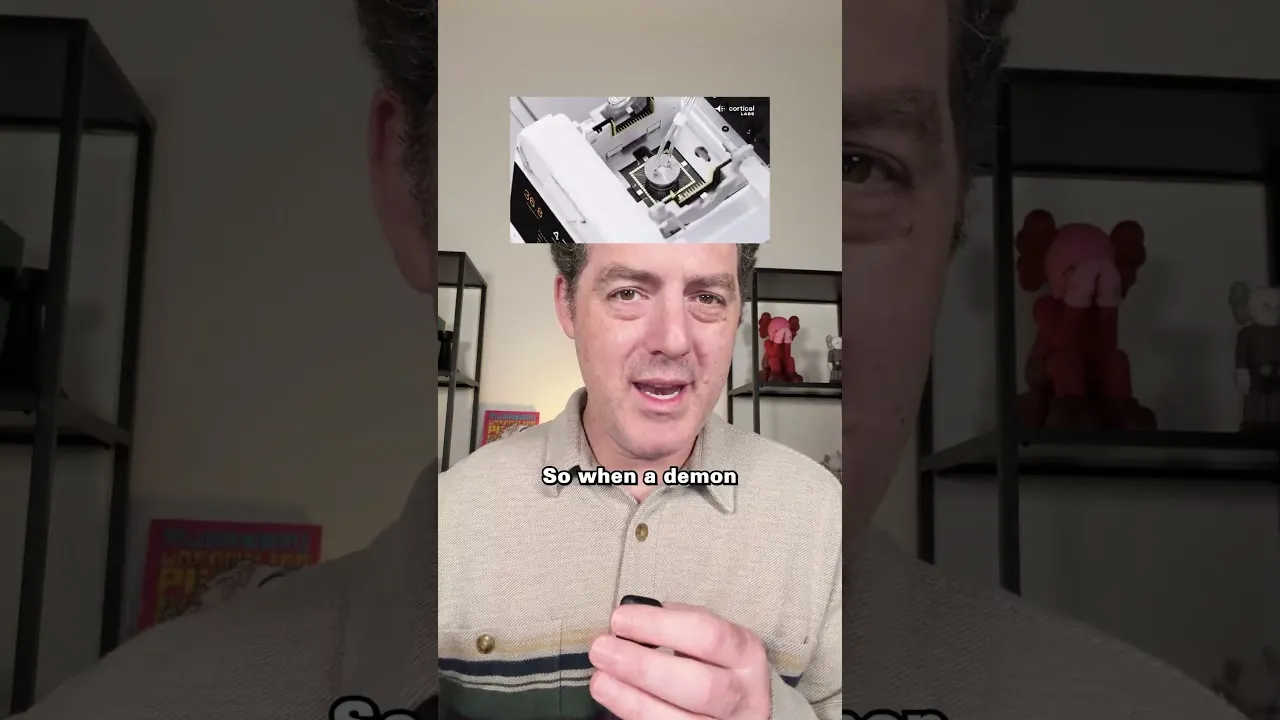
The experiment, dubbed ‘DishBrain’ by its creators, involved cultivating approximately 200,000 human brain cells (neurons) in a specialized laboratory setting. These cells were then connected to a system that allowed them to interact with the iconic first-person shooter game, DOOM. The setup involved a microelectrode array that could both stimulate the neurons and read their electrical activity. When the game was presented to the cells, the neurons would fire in response to stimuli, such as the appearance of in-game enemies or obstacles. This electrical activity was then translated into commands that controlled the game’s actions, effectively allowing the brain cell cluster to ‘play’ the game.
Learning Through Feedback
What makes this experiment particularly groundbreaking is the demonstration of learning. The DishBrain system employed a form of feedback mechanism. When the brain cells’ actions resulted in a positive outcome within the game (e.g., avoiding a collision), they received a stimulating signal. Conversely, negative outcomes were met with a different type of signal, or lack thereof. This akin to a simplified form of reinforcement learning, where the neural network learns to associate certain patterns of electrical activity with desired actions. Over time, the researchers observed that the brain cell cluster adapted its firing patterns to perform better in the game, exhibiting a rudimentary form of learning and goal-directed behavior.
Contextualizing the Breakthrough
The question ‘Can it play DOOM?’ has become a popular benchmark in the AI community, often used to test the capabilities of new AI models and algorithms. Traditionally, this challenge has been met by sophisticated software agents, often powered by deep reinforcement learning, that can process visual input and make complex decisions. However, the DishBrain experiment introduces a biological component into this equation. Instead of a purely digital simulation, it utilizes living neural tissue. This approach represents a significant departure from conventional AI development, which relies on silicon-based processors and algorithms.
Technical Underpinnings
The core of the DishBrain system is its ability to bridge the gap between biological neural activity and digital computation. The microelectrode array acts as an interface, translating the electrical signals generated by the neurons into data that the game can interpret. Simultaneously, it translates the game’s feedback into electrical stimulation that the neurons can receive. This bidirectional communication is crucial for enabling the learning process. The researchers are essentially creating an environment where biological neurons can adapt and evolve their responses based on real-time interaction with a complex digital task.
Why This Matters
The implications of this research are profound and far-reaching:
- Advancing AI Understanding: This experiment provides invaluable insights into the fundamental principles of learning and intelligence. By observing how biological neural networks process information and learn in a controlled environment, scientists can gain a deeper understanding of the mechanisms underlying cognition.
- New Avenues for AI Development: It opens up possibilities for ‘biological computing’ or ‘neuro-hybrid’ systems, where biological components could be integrated with traditional digital systems to create novel forms of intelligence. This could lead to more energy-efficient and adaptable AI.
- Therapeutic Applications: In the long term, understanding how to interface with and guide neural activity could have significant implications for developing treatments for neurological disorders, brain-computer interfaces, and advanced prosthetics.
- Ethical Considerations: As we gain the ability to interface with and potentially ‘train’ biological neural networks, important ethical questions arise regarding the nature of consciousness, sentience, and the responsible development of such technologies.
Future Directions and Availability
Cortical Labs has stated that this is an early-stage research project. While the DishBrain system is not available commercially, the findings are expected to be published in peer-reviewed journals, paving the way for further research and development in the field of neuro-hybrid AI. The company aims to explore the potential of these biological systems for more complex computational tasks and to better understand neurological conditions.
This experiment, while seemingly futuristic, represents a concrete step towards integrating biological and artificial intelligence, potentially reshaping the landscape of computing and neuroscience for years to come.
Source: craziest "can it play DOOM" yet (YouTube)