Build a $100K Lifestyle Business: A 5-Phase Roadmap
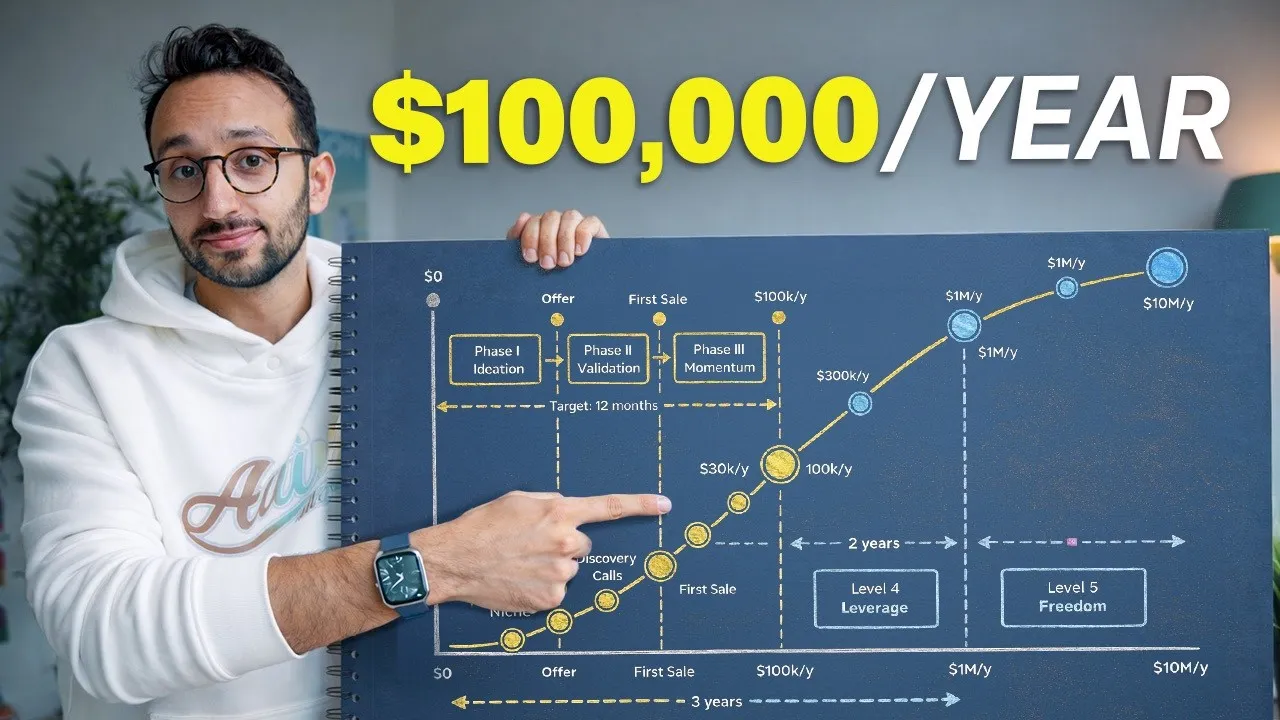
Ever dreamed of starting your own business but felt lost about where to begin? This guide provides a clear, five-phase plan to build a lifestyle business that can earn $100,000 a year. We’ll cover everything from finding your unique business idea and creating your first product or service, to making your very first sale. You’ll learn the secrets to creating an irresistible offer and why testing your idea before building it is crucial. Plus, discover how to talk to potential customers in a way that feels natural, not pushy.
What You’ll Learn
This article will guide you through a proven roadmap for creating a successful online business. You will learn how to:
- Identify a profitable niche and develop essential skills.
- Craft a compelling offer that customers can’t refuse.
- Validate your business idea before investing heavily.
- Conduct effective customer discovery calls.
- Build momentum and achieve your first sale.
Prerequisites
Before you start, it’s helpful to have a general idea of your interests or skills. You should also be prepared to dedicate time and effort to building your business. Having a computer with internet access is essential.
The 5-Phase Business Roadmap
Building a successful business takes a plan. This roadmap breaks down the process into manageable phases, making it easier to follow and execute. Think of it as a step-by-step guide to turning your business idea into a reality.
Phase 1: Ideation and Offer Creation
This is where your business journey truly begins. You’ll explore potential ideas and start shaping them into something you can offer to customers. Don’t rush this phase; a strong foundation here makes everything else easier.
Find Your Niche and Craft Your Skills
The first step is to identify a specific area or topic you want to focus on. This is your niche. Think about what you enjoy, what you’re good at, or what problems you see that you can solve. For example, if you love baking and notice many people struggle to make gluten-free bread, that could be your niche. Once you have a niche, consider what skills you need. You might need to improve your baking techniques or learn about marketing gluten-free products. Developing these skills will make your offer much stronger.
Build Your First Draft Offer: The 6 P’s
Now, let’s create your initial offer. A great offer makes people want to buy. Alex Hormozi’s book, “$100M Offers,” suggests considering the ‘6 P’s’ to make your offer irresistible. These are:
- Problem: What specific problem does your offer solve for your customer? Make sure it’s a problem they care about.
- Promise: What is the main benefit or transformation your customer will experience? This should be a clear and exciting outcome.
- Process: How will you deliver the solution? Briefly explain the steps involved in your service or product.
- Proof: Why should they believe you? This could be testimonials, case studies, or your own experience.
- Price: How much does it cost? Make sure the price reflects the value you are providing.
- P.S. (Postscript): Add a bonus or guarantee to make the offer even more appealing. This could be a limited-time discount or a satisfaction guarantee.
Use these six points to structure your offer clearly. Imagine selling a gluten-free bread-making course: the problem is difficult gluten-free baking, the promise is delicious, easy-to-make bread, the process is video lessons and recipes, proof could be photos of your successful bread, the price is set, and a P.S. could be a bonus recipe book.
Phase 2: Validation
Before you spend a lot of time and money creating a product or service, it’s smart to check if people actually want it. This phase is all about testing your idea with real potential customers.
How to Run Discovery Calls
Discovery calls are conversations with potential customers to understand their needs and see if your offer is a good fit. They are not sales pitches. The goal is to listen more than you talk. Start by asking open-ended questions about their challenges related to your niche. For example, if you’re selling a gluten-free baking course, ask about their biggest struggles with gluten-free baking. Nod, take notes, and show genuine interest. Only after understanding their problems should you explain how your offer can help. This approach builds trust and ensures you are solving a real problem for them.
Expert Tip: The book “The Mom Test” by Rob Fitzpatrick offers great advice on how to ask questions that reveal real customer needs without leading them. It emphasizes listening for what people *do* rather than what they *say* they would do.
How to Get People on Discovery Calls
Finding people to talk to is key. You can start by reaching out to your existing network – friends, family, or colleagues who might be interested. Post on social media in relevant groups or forums where your target audience hangs out. Offer a small incentive, like a free consultation or a discount on your future offer, in exchange for their time. You could also create a simple landing page describing your upcoming offer and ask people to sign up for a chance to be one of the first to try it and get a discovery call.
Warning: Don’t try to sell during these initial calls. Focus purely on learning about your potential customer’s needs and validating your offer idea.
Phase 3: Momentum
Once you’ve validated your idea and refined your offer based on customer feedback, it’s time to build momentum. This phase focuses on turning your validated offer into sales and growing your customer base.
Getting Your First Sale
With a validated offer and a clear understanding of your customer’s needs, you’re ready to make your first sale. Reach out to the people you had discovery calls with who expressed strong interest. Remind them of the problem you discussed and how your offer provides the perfect solution. Clearly state the price and what they will receive. Make the purchase process as simple as possible. This first sale is a huge milestone and proves your business concept works.
Building on Success
After your first sale, gather feedback from your new customer. Ask them what they liked and what could be improved. Use this information to refine your offer further. Continue to find new potential customers by using the same methods you used to get people on discovery calls. As you make more sales, you’ll gain confidence and learn more about what works best for your business. Consistency is key in building momentum and growing your income over time.
Beyond the First Sale
Building a $100K lifestyle business involves continuous learning and adaptation. The phases described here provide a solid framework, but always be open to new ideas and feedback. Keep refining your offers, improving your skills, and connecting with your audience. Your journey to a successful lifestyle business starts with these steps.
Source: How to Actually Make Money Online in 2026 (YouTube)