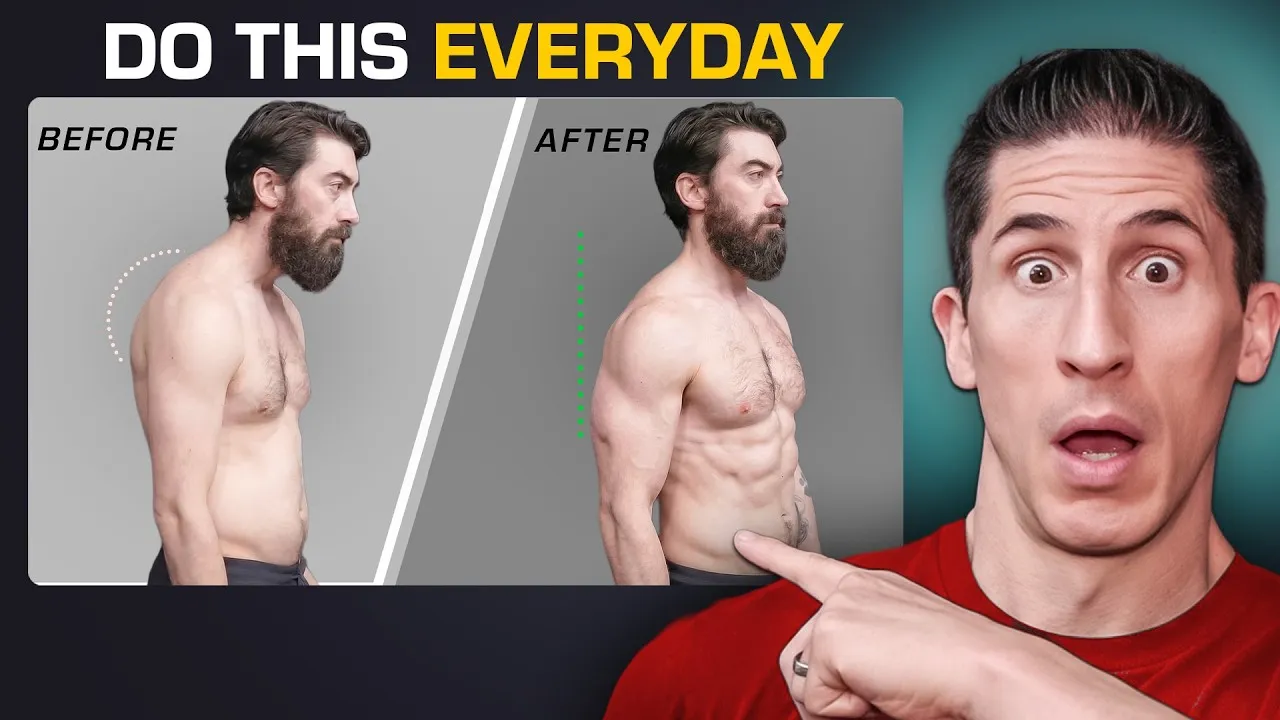
Build Muscle Daily: The Loaded Carry for Skinny Guys
For individuals struggling to gain muscle, often referred to as “hardgainers” or “skinny guys,” a foundational exercise might be the missing piece in their training regimen. The loaded carry, an exercise that involves walking while holding a weight, is highlighted as a powerful tool for building muscle, improving posture, and developing a stronger, more muscular physique. This exercise is particularly beneficial for those who find traditional heavy lifts like squats and deadlifts challenging due to a lack of supporting muscle mass.
Why Loaded Carries Are Key for Muscle Growth
Many hardgainers are not lacking in effort but in the structural stability required to handle heavier loads. When starting with significant barbell exercises, the body may not have enough muscle to support the weight safely and effectively. The loaded carry offers a solution by allowing individuals to safely handle substantial weights while simultaneously building the necessary strength foundation for overall muscle growth. Unlike exercises where the weight is placed directly on the spine, the load in a carry is held in the hands. This allows the body to gradually adapt to heavier resistance, promoting the development of crucial muscles such as grip strength, traps, and upper back stability.
Targeting Lagging Muscle Groups
The loaded carry is exceptionally valuable for skinny guys because it directly targets areas that often lag behind in development. These include the traps, forearms, grip, upper back, and core. These muscle groups are essential for stabilizing the body during more complex lifts. By strengthening them through loaded carries, individuals can expect to see improvements in their performance on squats, rows, presses, and deadlifts.
Improving Posture and Correcting Imbalances
Beyond muscle building, loaded carries offer significant benefits for posture. Many individuals who are naturally slender or have focused heavily on pushing movements like bench presses may develop rounded shoulders and poor posture due to an imbalance between pushing and pulling muscles. The loaded carry actively promotes thoracic extension, proper scapular positioning, and correct shoulder alignment. This helps to counteract postural imbalances while simultaneously building muscle in the upper back and surrounding areas.
Performing the Loaded Carry Correctly
To maximize the benefits of the loaded carry, proper technique is essential. The exercise involves holding a weight (or weights) in one or both hands and walking a set distance or for a set time while maintaining an upright posture, braced core, and engaged shoulder blades.
Variations to Consider:
- Farmer’s Carry: Holding a weight in each hand.
- Overhead Carry: Holding a weight overhead.
- Suitcase Carry (or Gun Carry): Holding a weight in only one hand, challenging core stability.
- Plate Pinch Carry: Holding weight plates together with your thumb and fingers.
- Trap Bar Carry: Using a trap bar to hold the weight.
Programming and Progression
Incorporating loaded carries into a workout routine can be done in several ways. They can be measured by steps, distance, or time. Beginners should start with shorter durations and focus on maintaining correct form and control. A good starting point for weight selection is approximately 25 percent of bodyweight in each hand. As strength increases, individuals can gradually increase the weight, extend the duration of the carries, or explore different variations to continue challenging their muscles.
The versatility of the loaded carry is a major advantage. It can be performed with various equipment, including dumbbells, kettlebells, weight plates, or trap bars, and can be done in almost any training environment. This makes it an accessible exercise that can be added to a daily routine without interfering with other training goals.
Loaded Carries as Conditioning
Loaded carries can also be used as a form of conditioning without compromising muscle mass. By adjusting the weight, distance, and rest periods, they can be an effective way to improve cardiovascular fitness and muscular endurance while still supporting muscle growth.
Common Mistakes to Avoid
While the loaded carry is relatively straightforward, common mistakes can hinder progress or lead to injury. These include:
- Allowing the shoulders to round forward.
- Hunching the upper back.
- Letting the core relax.
- Allowing the head to jut forward.
- Moving too quickly without control.
Focusing on maintaining an upright posture, a braced core, and controlled movement throughout the exercise is crucial.
Who Can Benefit?
This exercise is particularly beneficial for:
- “Skinny guys” or hardgainers looking to build overall muscle mass.
- Individuals seeking to improve their posture and correct rounded shoulders.
- Anyone looking to increase grip strength and forearm development.
- Lifters who want to build a stronger foundation for heavier compound lifts.
- Athletes seeking a functional conditioning exercise that supports muscle development.
Key Health Takeaways
- Build Foundational Strength: Loaded carries help build the core and upper body strength needed to support heavier lifting.
- Target Key Muscle Groups: Effectively develops traps, forearms, grip, and the upper back, often lagging areas for hardgainers.
- Improve Posture: Encourages thoracic extension and proper shoulder alignment, counteracting rounded shoulders.
- Enhance Grip Strength: A direct and effective way to build formidable grip strength.
- Versatile and Accessible: Can be performed with various equipment and in different settings, making it easy to incorporate daily.
Disclaimer: This article is for informational purposes only and does not constitute medical advice. Always consult with a qualified healthcare professional or certified personal trainer before beginning any new exercise program, especially if you have pre-existing health conditions. The information presented here is not a substitute for professional medical advice, diagnosis, or treatment.
For those looking to build lean, athletic muscle, resources like the program selector tool at athleanx.com can help identify a personalized training plan. Subscribing to fitness channels and turning on notifications can also provide ongoing guidance on muscle building, injury prevention, and nutrition.
Source: Do This Exercise EVERY Day to Build Muscle (SKINNY GUYS!) (YouTube)