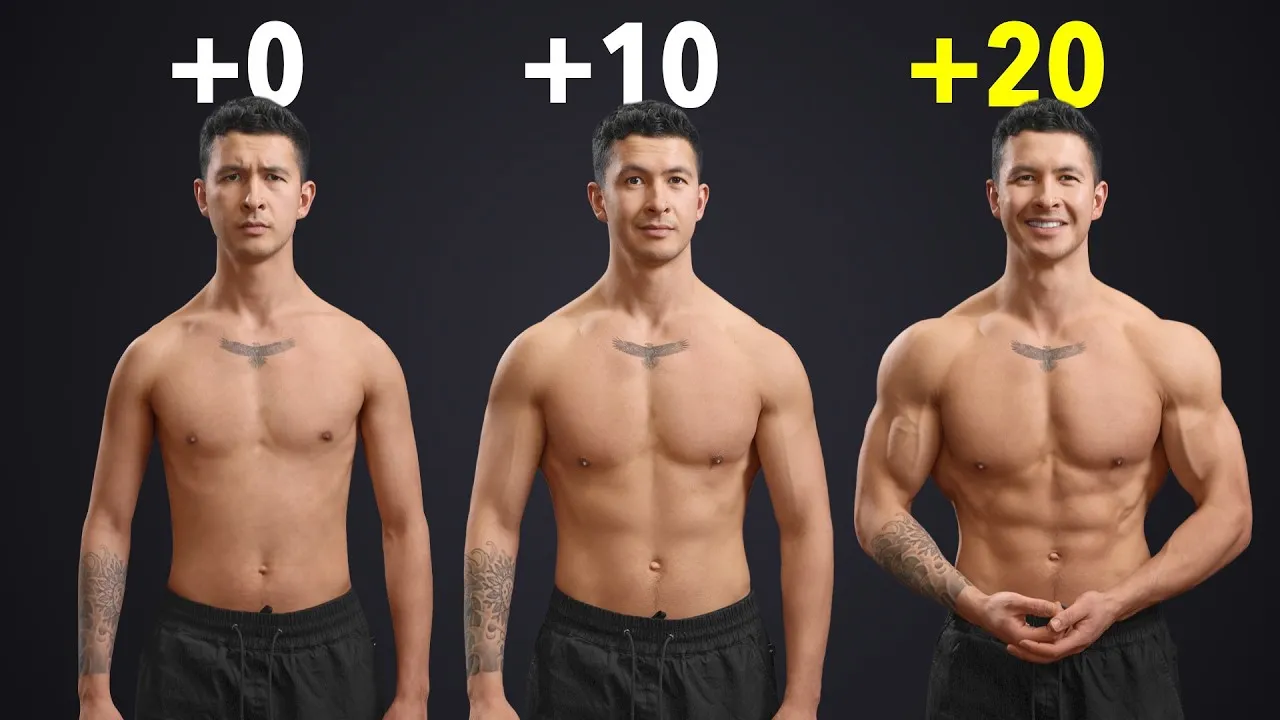
Build Muscle Faster: Your Guide to 20 Pounds Naturally
Gaining a significant amount of muscle, like 20 pounds, can dramatically change your physique, no matter your starting point. While many aspire to this goal, fewer than 5% of people achieve it naturally. This isn’t usually due to age or genetics, but rather a lack of a well-structured plan. You might see initial progress, but then hit a plateau, spending years with the same body. Simply adding more protein, creatine, or workouts often won’t break through this barrier. To find the fastest natural way to gain 20 pounds of muscle, a team of scientists and coaches explored the most effective strategies.
Understanding the Timeline for Muscle Gain
First, it’s crucial to understand how long it actually takes to build muscle. Promises of gaining 20 pounds of muscle in just three months are unrealistic for natural lifters. With proper training and nutrition, it takes at least a year to gain this much muscle. After the first year, muscle gain typically slows down by about half each subsequent year. The most significant gains often come not at the very beginning of lifting, but when you start training with the right approach.
Optimizing Your Training for Muscle Growth
Training is responsible for about 90% of muscle growth. Research into the training routines of top natural bodybuilders, who have built substantial muscle mass, revealed surprising insights. Contrary to what you might expect, they don’t spend hours doing endless exercises. On average, they perform about 12 sets per muscle group per week. For example, for the chest, this might mean four sets each of bench press, incline press, and flyes for the entire week. Some muscles might even receive as few as six sets weekly.
The Importance of Training Intensity
The reason for this lower volume might be surprising: the more sets you do, the less benefit you get from each extra set. Dr. Mike Zordos, a professor and researcher at Florida Atlantic University, studied the relationship between sets and muscle growth. His team found that while sets 1 through 5 yield significant growth, sets 6 through 10 provide some growth, and additional sets beyond that offer diminishing returns. This suggests that simply training longer isn’t the best solution.
Pushing Sets Closer to Failure
Instead of doing more sets, training each set closer to muscular failure—the point where you can’t perform another repetition—can nearly double muscle growth. Training with eight reps still left in the tank allows for muscle growth, but pushing to just one or two reps shy of failure yields much better results. How do you know if you’re pushing hard enough? If your last rep isn’t moving very slowly, you’re likely not training intensely enough. Also, if you can perform more reps on your final set than your first set with the same weight, you’re probably not pushing hard enough.
Balancing Intensity and Recovery
While training closer to failure is effective, taking every set to the absolute limit can lead to excessive fatigue and soreness. This can decrease your training frequency and overall weekly volume, potentially hindering progress. The key is to train hard and consistently while avoiding injury. This leads to two main training approaches:
- The Intensity Method: This approach involves taking all your sets to muscular failure. You might only need 5 to 12 sets per muscle group per week. A chest workout could consist of three sets of bench press, three sets of incline press, and two sets of cable flyes, totaling eight sets. These workouts can be short, around 20 minutes, and you might train only 3 to 4 hours per week. However, each set is mentally demanding, requiring you to push past your physical limits.
- The Volume Method: This method involves performing more sets, typically 12 to 20 sets per muscle group per week, but stopping two or three repetitions short of failure. This makes each set less taxing, but workouts are longer. For example, a chest workout might include four sets each of bench press, dips, incline press, and cable flyes.
The difference in results between these two methods is generally small. The best approach is the one you will enjoy and stick with consistently. Some people prefer a mix of both, using the intensity method for certain muscle groups and the volume method for others, depending on recovery needs and time constraints.
Structuring Your Workouts for Frequency
Research suggests that performing around 10-11 sets per muscle group per session is optimal. Training beyond this point in a single session may not yield additional growth due to fatigue. This is where training frequency becomes important. Instead of doing all 12 sets for your chest in one workout, splitting them into at least two separate sessions per week can potentially speed up gains by up to 30%. Splits like upper/lower, push/pull/legs, or full body workouts are effective ways to organize your training and ensure adequate frequency.
Selecting the Right Exercises
Choosing the right exercises is also crucial for maximizing muscle growth. For beginners, focusing on fundamental movement patterns like a press, pull, squat, and hip hinge is sufficient. With just six core exercises performed consistently, you can build over 10 pounds of muscle. As you advance to an intermediate stage, you might find that standard compound exercises don’t fully stimulate certain muscle groups. This is when you need to become your own experimenter, identifying exercises that best suit your body type and respond well for you. This might involve incorporating more machine and cable work or specialized exercises for lagging body parts like the rear delts or upper chest.
Progressing Through Exercise Stages
There are three stages in exercise selection:
- Stage 1 (Beginner): Focus on compound movements covering basic patterns.
- Stage 2 (Intermediate): Identify exercises that best stimulate your muscles, potentially including machine and cable variations for specific body parts. Pay attention to how exercises feel on your joints and which ones provide the best muscle activation.
- Stage 3 (Advanced): Double down on the exercises that have proven most effective for your body, rotating them only when necessary.
While specific exercise choices can be highly individual, some exercises tend to work well for many people. Experimenting with variations of exercises like lat pulldowns, machine rows, hack squats, and RDLs can help you find your best options.
Fueling Your Muscle Growth: Nutrition Strategies
Nutrition is the fuel for muscle growth. The amount you should eat depends on your body composition and goals.
Body Recomposition for Higher Body Fat Levels
If you have a higher body fat percentage (over 20% for men, over 30% for women), you have an advantage. Your body can utilize stored fat for energy, supporting muscle building. In this phase, aiming for body recomposition—losing fat while gaining muscle—is effective. You likely don’t need a large calorie surplus and might achieve 70-80% of the muscle gain possible in a surplus while also losing fat. It’s recommended to maintain a moderate calorie deficit, losing no more than 0.5% of your body weight per week, which translates to about 250-500 calories below your daily needs.
Calorie Surplus for Maximum Muscle Gain
If your primary goal is maximizing muscle growth and you are leaner, a slight calorie surplus is necessary. Studies show that untrained individuals consuming an extra 2,000 calories per day alongside a hypertrophy-focused program can gain nearly a pound of lean mass per week. For context, most beginners gain 10-20 pounds of lean mass in a full year. However, the amount of surplus needed varies: beginners might aim for a 2% increase in body mass per month, intermediates around 1%, and advanced lifters closer to 0.5%.
Protein Intake for Muscle Synthesis
While protein is essential, its role in muscle growth is often overestimated. Aiming for around 1.6 grams of protein per kilogram of body weight (or 0.7 grams per pound) is generally sufficient to maximize muscle protein synthesis. It’s difficult to not hit this target with a normal diet, and even lower amounts can still support muscle gains.
Optimizing Pre- and Post-Workout Nutrition
What you eat around your workouts can significantly impact performance and recovery. Consuming a meal with slow-digesting carbohydrates and protein 1.5 to 2 hours before training can provide sustained energy. About 30 minutes before your workout, having some fast-digesting carbohydrates can provide an immediate energy boost. While protein intake is important, focusing on overall calorie intake and pre-workout nutrition can be more impactful for some.
The Role of Supplements and Sleep
Creatine Supplementation
Creatine is one of the most researched and effective supplements for muscle growth. It can help increase lean mass by 2 to 3 pounds in the first 8 to 12 weeks, partly due to water retention in muscles. However, not everyone responds to creatine, with estimates suggesting 20-30% of individuals may not see significant benefits. A key indicator of effectiveness is an increase in repetitions performed with a given weight.
The Critical Importance of Sleep
Sleep is a vital, yet often overlooked, component of muscle building. During sleep, the body produces more growth hormone and testosterone, which are crucial for muscle repair and growth. Insufficient sleep impairs recovery, limiting your body’s ability to rebuild and regenerate muscle tissue after workouts. Aim for 7 to 9 hours of quality sleep per night.
Improving Sleep Quality
To enhance sleep quality:
- Environment: Ensure your bedroom is completely dark. Even small LED lights from chargers or smoke detectors can disrupt sleep. Use an eye mask and earplugs if necessary.
- Temperature: The body sleeps best when it’s cool. Program your thermostat to drop the temperature overnight, especially in the early morning hours.
Napping can also be beneficial. A short 20-minute nap can improve athletic performance and counteract the effects of sleep deprivation.
Key Health Takeaways
- Realistic Timeline: Gaining 20 pounds of muscle naturally takes at least a year, with progress slowing over time.
- Smart Training: Focus on training intensity and pushing sets close to failure, rather than simply doing more sets or spending excessive time in the gym.
- Optimize Frequency: Split your weekly sets across multiple training days (e.g., 10-11 sets per muscle group per session) for better results.
- Exercise Selection: Choose exercises that best stimulate your muscles and suit your body type, progressing from basic compound movements to more specialized exercises.
- Nutrition Matters: Adjust calorie intake based on your body fat percentage and goals. Aim for body recomposition if you have higher body fat, or a slight calorie surplus if your main goal is muscle gain.
- Protein Sufficiency: Aim for about 1.6g/kg (0.7g/lb) of protein daily, but don’t obsess over hitting exact numbers.
- Pre-Workout Fuel: Eat a balanced meal 1.5-2 hours before training and fast-digesting carbs 30 minutes prior.
- Consider Creatine: Creatine is a well-researched supplement that can aid muscle growth.
- Prioritize Sleep: Aim for 7-9 hours of quality sleep per night, ensuring a dark, cool environment.
- Consistency is Key: The most important factor is consistently applying these principles week after week.
Disclaimer: This article is for informational purposes only and does not constitute medical advice. Always consult with a qualified healthcare professional before making any decisions related to your health or treatment.
Source: The Fastest Way to Gain 20 lbs Of Muscle (Naturally) (YouTube)