Change Your Personality to Save Your Relationship
Feeling like you and your partner are drifting apart or fundamentally incompatible? Many couples believe that when differences arise, the only solution is compromise, which often leaves both partners unhappy. However, new insights suggest a different approach: recognizing that personalities can change and evolve, offering a powerful way to bridge compatibility gaps.
The Myth of Fixed Personalities
A common mistake couples make is believing their personalities are set in stone. They think, “I am this way, and you are that way, and we must find a middle ground.” This often leads to compromises where neither person is fully satisfied. For example, if one partner loves to travel and the other dislikes it, a compromise might be traveling 50% less. This solution, while seemingly practical, can breed resentment and unhappiness because both individuals are giving up something important.
Personalities Are Not Static
The truth, supported by psychological research, is that personalities are not fixed. Every day, we are different people than we were the day before. Our cells age, our experiences shape us, and our perspectives shift. This continuous change means that perceived incompatibility isn’t necessarily a sign that the relationship is doomed. It might simply reflect a current state of differing preferences or habits that can be addressed.
The Power of Personal Growth
Psychotherapy provides a clear example of how personalities can be reshaped. For individuals with personality disorders, therapy aims to help them construct a different way of being, demonstrating that significant personality changes are achievable. This principle extends to everyday relationships. If two people find themselves incompatible, it’s possible for one or both partners to actively change and adapt to become more compatible.
This doesn’t mean forcing yourself to be someone you’re not. Instead, it involves a willingness to learn and grow. For instance, the partner who dislikes travel could learn to find enjoyment in new experiences, or the travel-loving partner could discover contentment in more settled activities. The key is recognizing that these preferences are not rigid limitations but rather malleable aspects of oneself.
When Change is an Option
The crucial question then becomes: how important is the relationship to you? If you believe deeply in your partnership, you might find the motivation to explore these personal growth possibilities. It requires an honest assessment of your commitment and a willingness to invest in the relationship’s future by adapting and evolving together.
This perspective challenges the notion that incompatibility is an insurmountable barrier. It empowers individuals to see their relationships not as static arrangements but as dynamic journeys where personal growth can lead to deeper connection and lasting compatibility.
Key Health Takeaways
- Perceived incompatibility in relationships is often based on the mistaken belief that personalities are fixed.
- Research shows that personalities can and do change over time through experience and conscious effort.
- Therapeutic interventions, like psychotherapy, demonstrate that significant personality shifts are possible.
- Instead of solely relying on compromise, partners can consider personal growth to bridge compatibility gaps.
- One partner might learn to enjoy activities they previously disliked, or become content with less of something they loved.
- The decision to pursue personal change for a relationship hinges on the individual’s commitment and belief in the partnership’s value.
Context and Considerations
This information is relevant to individuals in romantic relationships experiencing conflicts due to differing preferences, habits, or personality traits. It applies to couples who are questioning their compatibility but still value their connection. It is important to note that this advice does not apply to situations involving abuse, disrespect, or fundamental value differences that cannot be reconciled through personal growth.
Disclaimer
This article is for informational purposes only and does not constitute medical or psychological advice. Always consult with a qualified healthcare provider or therapist for any questions you may have regarding your personal health or relationship concerns. The decision to change or remain in a relationship is a personal one, and external advice should be carefully considered.
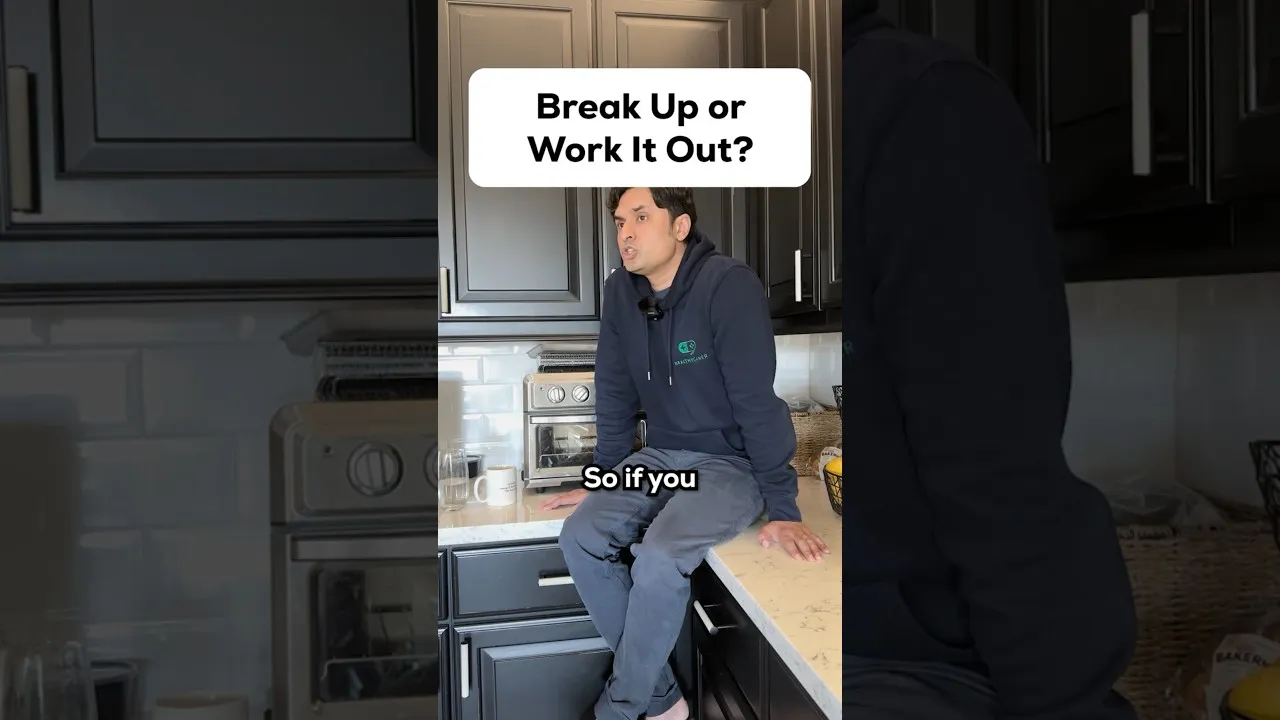
Source: Break Up or Work it Out (YouTube)