Claude Code Leaks, Revealing AI’s Inner Workings
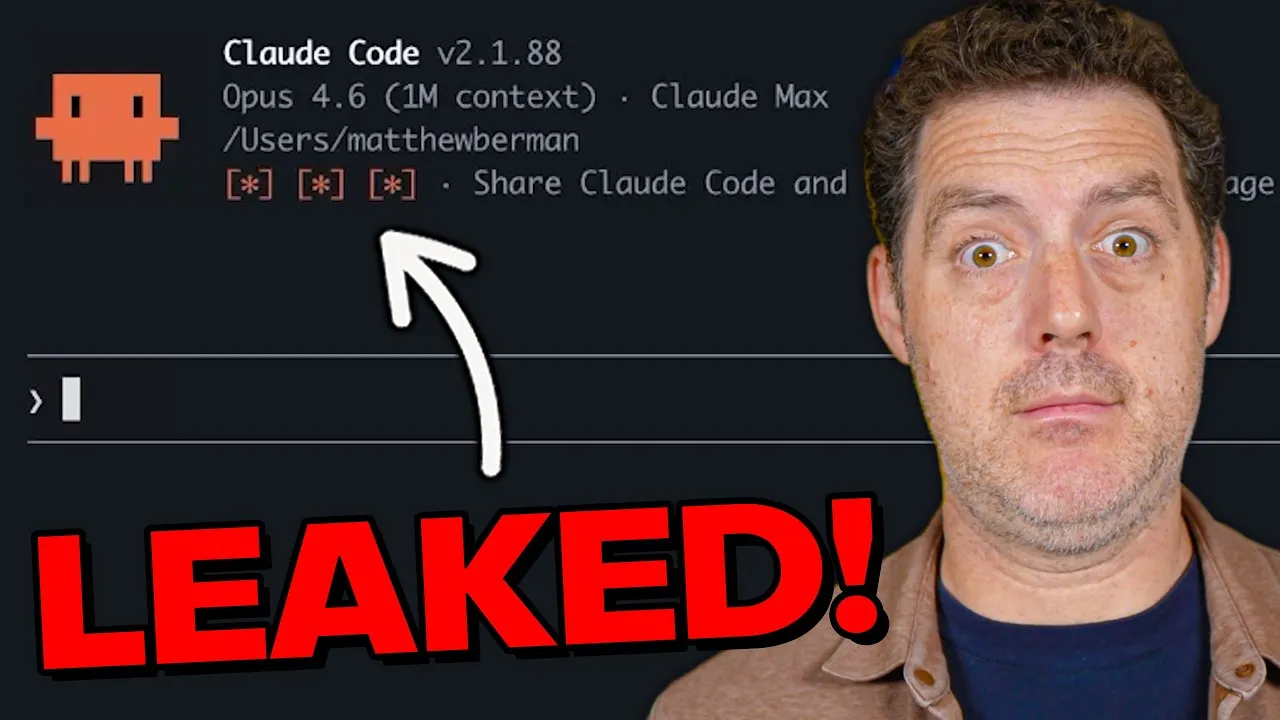
A significant portion of the source code for Anthropic’s powerful AI coding assistant, Claude Code, has been accidentally leaked. This leak offers a rare glimpse into the technology behind one of the most advanced tools for AI-assisted programming. The leaked code, initially discovered via a map file in Anthropic’s npm registry, has spread rapidly across the internet, sparking widespread interest and analysis from developers and AI enthusiasts worldwide.
While Anthropic is expected to pursue legal actions like DMCA takedowns, the situation has evolved quickly. Someone has already converted the leaked Claude Code codebase into Python. This rewritten version is now considered legally distinct, making it difficult to enforce copyright claims on the translated code. This development means people can now download and run Claude Code locally, exploring its capabilities and inner workings firsthand.
What Makes Claude Code Special?
Claude Code is highly regarded for its ability to significantly enhance the performance of large language models (LLMs), especially for coding tasks. Its effectiveness comes from a sophisticated “harness” designed to work seamlessly with Anthropic’s Claude family of models. While the leaked code provides deep insights into the harness itself, experts note that its full power is realized when paired with Claude models. Using the harness with other AI models, like those from OpenAI or Google, might not yield the same level of performance.
The leak has generated immense attention, with the initial announcement garnering millions of views on platforms like X (formerly Twitter). This public access allows developers to study the exact prompts and agent setups Anthropic uses. This knowledge can help them build better, more efficient, or cheaper coding agents. It also allows for the incorporation of clever techniques, such as how Claude Code handles user permissions or manages multiple AI sub-agents working together.
Key Insights from the Leaked Code
Several key features contributing to Claude Code’s success have been highlighted by the analysis of the leaked code:
- Claude.md: This file is loaded with every interaction. It acts as a detailed instruction manual for Claude, specifying coding standards, project architecture, file priorities, and best practices. Users can customize this file, up to 40,000 characters, to guide Claude’s behavior according to their specific project needs and team conventions.
- Parallelism and Sub-agents: Claude Code is built to handle multiple AI agents running at the same time. Crucially, these sub-agents share a “prompt cache,” meaning they can work in parallel without significant performance loss. The code supports complex agent management, including isolated work trees and communication via file-based mailboxes, suggesting that running tasks with a single agent is less efficient.
- Permission Configuration: The system is designed for robust permission settings. Instead of frequent user prompts for confirmation, Claude Code aims to have permissions pre-configured. It uses an “auto” mode that classifies actions and predicts user consent, automatically allowing safe operations and blocking potentially dangerous ones. This is a more advanced approach than simply bypassing checks or manually allowing edits.
- Compaction Techniques: To manage the vast amounts of information an AI assistant processes, Claude Code employs several “compaction” methods. These include time-based clearing of old results, summarizing conversation segments, extracting key context into files, and truncating older messages. These techniques help the AI remember important information more accurately by knowing what to “forget.” Users are advised to use a `/compact` command proactively to save important context before it’s lost.
- Hooks and Extensibility: The system includes various “hooks” that allow developers to integrate custom actions at different stages of the AI’s operation, such as before or after tool use, or when a user submits a prompt. These hooks can be commands, prompts, agents, HTTP requests, or functions, offering deep customization.
- Persistent Sessions: Conversations are saved as JSONL files, allowing sessions to be persistent and resumable. This means users can stop and restart their work without losing context, which is more efficient than starting a new session from scratch.
- Built-in Tools: Claude Code utilizes 60 built-in tools for tasks like browsing the web, saving files, and executing code. These tools are categorized into read-only “concurrent” operations and “serialized” mutating operations, allowing for efficient parallel execution where possible.
- Streaming Architecture: The streaming architecture means that interruptions are “cheap.” If an AI assistant goes in the wrong direction, users can stop it immediately without losing significant progress or incurring high costs. This encourages active user intervention to guide the AI effectively.
Why This Matters
The leak of Claude Code’s source code represents a significant moment for the AI community. It democratizes access to advanced AI development techniques, allowing a wider range of developers to study, learn from, and build upon sophisticated AI systems. This could accelerate innovation in AI coding assistants, leading to more powerful and accessible tools for everyone.
For competitors and open-source projects, the leak provides a blueprint for improving their own AI harnesses. They can now analyze Claude Code’s strategies for prompt engineering, agent management, and context handling. This also allows for the identification of potential weaknesses, which can then be addressed, leading to more secure and robust AI systems overall.
While the leak might appear detrimental to Anthropic, it has not exposed critical company secrets like customer data or API keys. The primary impact is a potential blow to their reputation for being “sloppy.” However, the exposure of their methods could ultimately benefit the broader AI field by fostering a more open and collaborative development environment.
The availability of the Python version of Claude Code means developers can run it locally, experiment with different AI models, and integrate it into their workflows. This direct access empowers individuals and smaller teams to explore cutting-edge AI capabilities without relying solely on cloud-based services.
This event underscores the ongoing tension between proprietary AI development and the open-source ethos. As AI technology becomes more integral to software development, the accessibility and transparency of these tools will play a crucial role in shaping the future of the industry.
Source: Claude Code was just leaked… (WOAH) (YouTube)