Cloudflare Rebuilds Next.js API on Vite
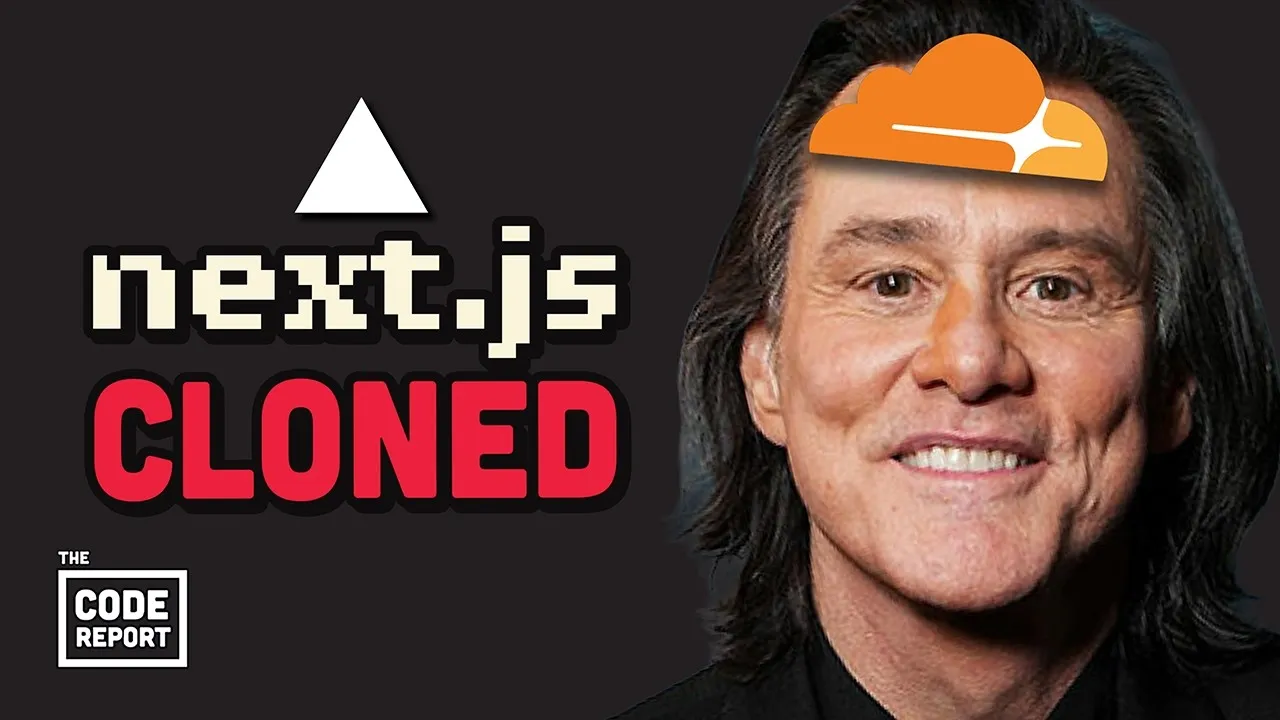
In a move that intensifies the ongoing rivalry between web development giants Vercel and Cloudflare, Cloudflare has unveiled V-Next, a significant re-implementation of the popular Next.js API built atop the Vite build tool. This development aims to liberate Next.js applications from the confines of Vercel’s proprietary deployment environment, allowing them to run on any platform, including Cloudflare’s own Workers.
The Next.js Deployment Challenge
Next.js, a leading framework for building React applications, has long faced a critical limitation: its deep integration with Vercel’s infrastructure. While deploying Next.js apps on Vercel is seamless, leveraging features like routing, middleware, Incremental Static Regeneration (ISR), and image optimization, moving these applications to alternative platforms like Cloudflare or Netlify has historically been complex. Developers have often relied on community projects like Open Next, which repackages Next.js build outputs to function on different platforms. However, this approach is inherently fragile, as it depends on reverse-engineering the build output, making it susceptible to breakage with every Next.js update.
Cloudflare’s Ambitious Rebuild
Cloudflare’s V-Next represents a fundamentally different strategy. Instead of building on top of Next.js’s output, the company has opted to rebuild the core Next.js framework from scratch using Vite. This is not the first attempt at such a feat; Cloudflare itself has previously tried and failed to achieve this. The breakthrough this time, according to the project’s developers, was significantly accelerated by the use of AI.
The development timeline was remarkably swift. Basic functionalities like Server-Side Rendering (SSR), middleware, server actions, and streaming were reportedly functional within a single day. By the third day, the team had achieved full client hydration when deploying to Cloudflare Workers. The remaining development time was dedicated to refining edge cases, expanding the test suite, and achieving approximately 94% API coverage of the original Next.js API. Astonishingly, this extensive development effort was completed with an estimated cost of just $1,100 in AI tokens.
Leveraging Vite’s Architecture
A key advantage of V-Next is its foundation on Vite. This allows V-Next to benefit from Vite’s modern architecture, including its Rust-based bundler, Rollup. This integration promises significant performance improvements, particularly in build times and client bundle sizes. Cloudflare’s internal benchmarks suggest that V-Next can achieve production build times up to 4.4 times faster than traditional Next.js builds, with client bundle sizes reduced by as much as 57%. Anecdotal evidence from independent testing supports these claims, with some developers reporting build time improvements of up to 5x.
The Vercel Response
The launch of V-Next has predictably ignited a strong reaction from Vercel. Vercel’s CTO publicly described V-Next as a “slop fork,” while CEO Guillermo Rauch (Gero) shared a migration guide from Cloudflare to Vercel and highlighted potential vulnerabilities discovered in the V-Next project. These critiques suggest that while V-Next may function as a Next.js clone, it might not yet match the robustness or feature parity of the original framework, especially in early iterations.
Real-World Implementation and Caveats
Initial attempts to migrate existing Next.js applications to V-Next reveal that while simple projects might work with minimal changes, more complex applications often require refactoring. Cloudflare has introduced agent tools to assist in this migration process. These tools can automate tasks such as updating the `package.json` to use `type: module` (necessary for Vite’s ES module handling) and refactoring JSX files to use the `.jsx` extension, which is required by Vite. However, as one developer’s experience highlighted, the migration process, even with AI assistance, can still be challenging, with parts of the application potentially breaking and requiring manual intervention.
Why This Matters
The development of V-Next has significant implications for the open-source ecosystem and developer choice. By decoupling Next.js applications from a specific deployment platform, Cloudflare is fostering greater flexibility and potentially reducing vendor lock-in. This could encourage more developers to adopt Next.js for projects deployed on a wider range of infrastructure, including edge computing platforms like Cloudflare Workers.
Furthermore, the success of V-Next, particularly its AI-assisted development, could serve as a blueprint for other ambitious open-source projects. It demonstrates the potential of AI to accelerate complex software engineering tasks, enabling teams to tackle ambitious rebuilds and feature integrations more rapidly and cost-effectively. While V-Next is still in its early stages, and users adopting bleeding-edge software often face initial instability, its trajectory suggests a future where popular frameworks are more platform-agnostic, driven by innovation and competitive pressures.
For developers considering the switch, the current advice leans towards caution. While the performance gains are promising, the project is still maturing. As with any rapidly evolving technology, the best approach is to monitor its progress and evaluate its stability and feature set over the coming months.
Source: Cloudflare just slop forked Next.js… (YouTube)