The Power of Incremental Gains: How Small Choices Yield Big Results
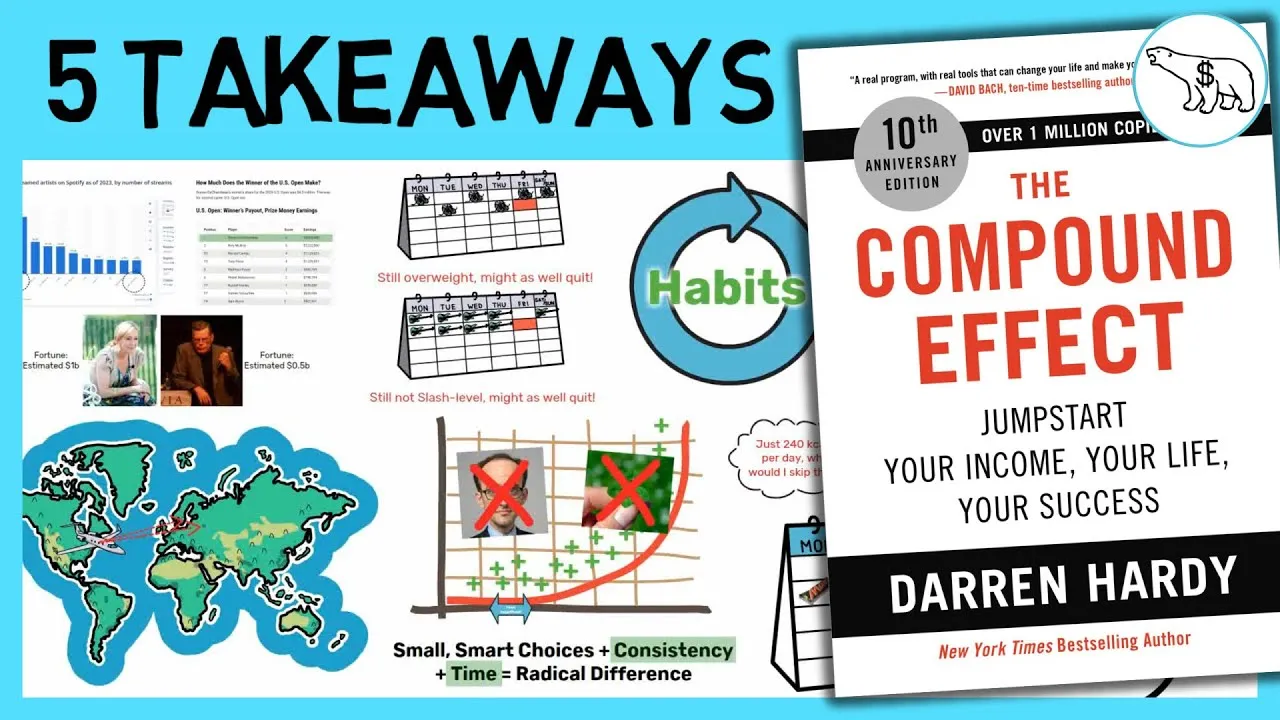
In the pursuit of significant achievements, whether in fitness, finance, or personal development, the path to success is often simpler and more profound than complex strategies might suggest. Darren Hardy’s seminal work, “The Compound Effect,” highlights a universal principle: consistent, small, smart choices, when combined with time, lead to radical differences in outcomes. This concept, applicable across various life domains, underscores the idea that massive rewards are not the result of single, extraordinary actions, but rather the cumulative effect of many minor, deliberate decisions.
The Formula for Radical Change
The core of the compound effect lies in a straightforward formula: Small, smart choices + Consistency + Time = Radical Difference. This principle is illustrated by the analogy of an airplane journey. A pilot adjusting a plane’s heading by just 2.4 degrees north at takeoff from New York can result in its landing in Stockholm instead of Moscow. While the initial deviation is minuscule, over the vast distance of the journey, the cumulative effect of this small change leads to a dramatically different destination.
In practical terms, consider the impact of a seemingly minor dietary change. Skipping a high-calorie snack, such as a candy bar, on weekdays might seem insignificant in the short term. However, over a year, this small act can lead to a saving of approximately 63,000 calories, translating to roughly 8 kilograms (17.6 pounds) of potential weight loss. This demonstrates how small, consistent efforts can yield substantial, measurable results over time.
Exponential Returns and Market Parallels
The transcript emphasizes that results often manifest exponentially. For instance, working just 10% longer hours could potentially lead to a 40% increase in income, a disproportionate gain that highlights the power of compounding effort. This principle is observable in various high-stakes fields:
- Entertainment Industry: Taylor Swift, the most streamed artist on Spotify in 2023, reportedly earned significantly more than the 10th most streamed artist. The difference in earnings is not necessarily due to being four times ‘better,’ but rather a slightly superior performance compounded over millions of streams.
- Professional Sports: The winner of the U.S. Open in golf often receives a prize money payout that is substantially larger than the runner-up’s, even when the margin of victory is narrow, such as a single point.
- Authorship: J.K. Rowling’s estimated earnings of $1 billion, twice that of a highly successful author like Stephen King, illustrates how sustained success and a slightly greater market penetration can lead to exponentially larger financial rewards.
The crucial, yet often frustrating, aspect of the compound effect is that each individual step along the way may not feel significant. This can lead to discouragement and premature quitting. Many aspiring individuals abandon their goals – be it fitness, learning an instrument, or pursuing a career – because they don’t see immediate, dramatic progress. This is akin to a miner giving up just before striking gold; the effort was there, but the patience for the compounding effect to manifest was lacking.
Taking 100% Responsibility: The Foundation of Control
A cornerstone of achieving the compound effect is embracing 100% responsibility for one’s life and circumstances. The author stresses that blaming external factors – such as other people, circumstances, or even the weather – for one’s current situation is a comfortable but ultimately disempowering psychological default. True progress begins when individuals acknowledge that their present reality is a direct consequence of their past choices.
“Until a person can say deeply and honestly: ‘I am what I am today because of the choices I made yesterday’, that person cannot say ‘I choose otherwise’.”
This mindset shift is critical. By accepting full accountability, individuals regain the power to make different choices moving forward. This echoes the profound insight from psychiatrist Viktor Frankl, a Holocaust survivor, who observed that even in the direst circumstances, the ultimate human freedom is the ability to choose one’s attitude and response. Applying this to personal goals means recognizing that while you cannot control external events or other people’s actions, you can always control your own responses, efforts, and choices.
Disarming the Autopilot: Tracking for Awareness
Many people operate on ‘autopilot,’ allowing ingrained habits and routines to dictate their actions without conscious thought. While some automatic behaviors are beneficial (like brushing teeth), others can be detrimental, leading to self-sabotage. The key to overcoming this is to gain awareness and consciously redirect habits toward success.
Darren Hardy advocates for ‘tracking’ as a powerful tool to disarm this autopilot. The principle is simple: “What gets measured gets managed.” By monitoring key variables related to one’s goals – such as time spent at the gym, dietary intake, productive work hours, or daily expenses – individuals gain critical insights into their behavior. The act of tracking itself can be a deterrent to actions that contradict long-term objectives. For example, having to log unhealthy food consumption immediately after indulging can create enough friction and self-awareness to discourage future occurrences.
Replacing Willpower with ‘Why-Power’
The reliance on willpower to overcome urges and maintain discipline is often insufficient. Instant gratification, driven by primal instincts, frequently overpowers rational decision-making. Instead of brute force willpower, the concept of ‘why-power’ is introduced. This involves connecting daily choices to deeply held dreams and desires, creating a powerful intrinsic motivation.
The difference between being offered $20 to walk a plank versus walking a plank suspended between two skyscrapers with a child on the other side highlights this. The ‘why’ – saving a child – provides the immense motivation needed to overcome fear and inertia. Similarly, for personal goals, understanding the profound ‘why’ behind them – whether it’s improved health for longevity, financial security for family, or personal growth for self-fulfillment – is essential to sustain effort through challenging phases. This deep-seated motivation helps overcome the initial inertia of new habits, which, according to Newton’s first law, require effort to initiate but then tend to continue once in motion.
Leveraging Influences for Momentum
Finally, the compound effect is significantly influenced by three key external factors:
- What You Feed Your Mind: The information consumed daily shapes one’s mindset. Regularly engaging with negative or trivial content can hinder progress, while exposure to positive, inspiring, and skill-building information can foster growth. The mind, naturally inclined towards survival and negativity, needs conscious direction towards constructive inputs. This includes mindful media consumption and incorporating practices like gratitude.
- The People You Spend Time With: The adage that we become the average of the five people we associate with holds significant weight. Positive social circles can inspire and elevate, while negative associations can drag down ambition and success. Seeking out mentors, role models, or even engaging with the ’eminent dead’ through their works can provide powerful positive influences.
- Your Surroundings: Physical and psychological environments play a crucial role. Being in inspiring locations or decluttering one’s life, both physically and mentally, can remove energy drains and foster progress. Incomplete tasks and unresolved issues act as psychological clutter, siphoning off mental energy that could be directed toward achieving goals.
By understanding and intentionally managing these influences, individuals can amplify the positive effects of their small, consistent choices, paving the way for significant and lasting success.
Source: THE COMPOUND EFFECT – SUMMARY (BY DARREN HARDY) (YouTube)