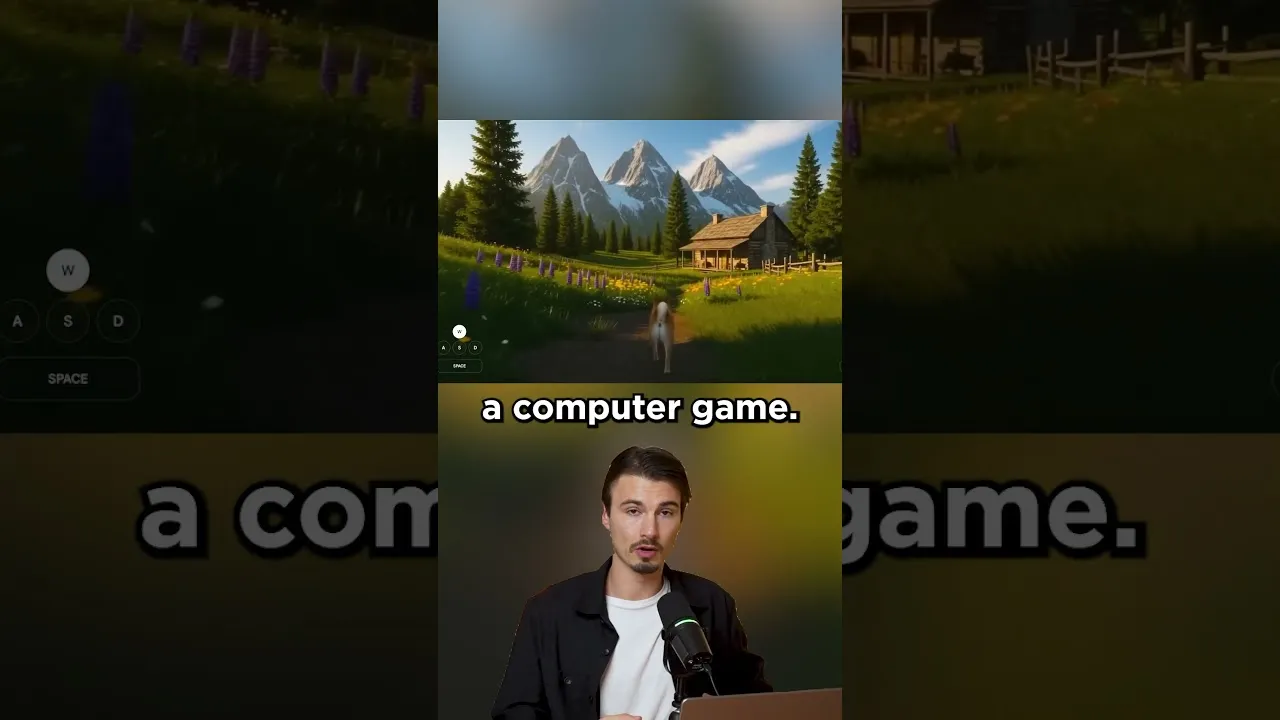
Explore the Future of AI-Generated Environments
Imagine describing a scene, a memory, or even a wild dream, and then being able to step inside it and explore. Google’s new AI model, Genie, makes this possible. Genie is a text-to-world generator that transforms simple text prompts into fully navigable, interactive 3D environments. This tutorial will guide you through the concept and potential of using Google Genie to bring your imagination to life.
What You Will Learn
This article will introduce you to Google Genie, explaining what it is and how it functions. You’ll see examples of its capabilities and understand the core process of generating a 3D world from a text description. While direct access and hands-on tutorials are currently limited, this guide provides the foundational knowledge to appreciate and anticipate the future applications of this groundbreaking technology.
Understanding Google Genie
Google Genie represents a significant leap forward in generative AI. Unlike previous models that might create static images or 2D scenes, Genie focuses on generating complete, interactive 3D worlds. This means you can not only see a world described by text but also move within it, explore its spaces, and experience it in a way that mimics navigating a video game.
How it Works: Text to Interactive World
The fundamental principle behind Genie is straightforward: you provide a text prompt, and the AI generates a corresponding 3D environment. This environment is not just a visual representation; it possesses three-dimensional properties, allowing for navigation and interaction. Think of it as giving the AI a description, and it builds a virtual space you can walk around in.
Visualizing the Output
The examples showcased by Google demonstrate the impressive fidelity and scope of Genie’s output. Users can input prompts ranging from everyday scenes to fantastical landscapes, and Genie renders these into explorable 3D spaces. The resulting worlds are designed to be interactive, much like the environments found in modern computer games.
Getting Started (Conceptual Overview)
While direct public access to Google Genie for hands-on creation is not yet widely available, the process can be understood conceptually based on the information released by Google.
1. Formulate Your Text Prompt
The first step is to craft a detailed text description of the world you want to create. Be as descriptive as possible. Consider elements like the environment (e.g., “a lush forest clearing,” “a bustling futuristic city street”), objects within the scene (e.g., “a small wooden cabin,” “hovering vehicles”), lighting, and overall mood.
2. Input Prompt into Google Genie
Once your prompt is ready, you would input it into the Google Genie system. This is the core interaction where the AI begins its generation process.
3. Explore the Generated 3D World
After processing the prompt, Genie generates an interactive 3D world. The output is designed to be navigable. You can then explore this world, moving through it as if you were in a video game, experiencing its three-dimensional properties firsthand.
Potential Applications
The implications of Google Genie are vast:
- Gaming: Rapid prototyping of game environments, custom level generation.
- Virtual Reality (VR) and Augmented Reality (AR): Creating immersive VR/AR experiences from simple descriptions.
- Education: Building interactive historical sites, scientific simulations, or geographical models.
- Creative Arts: Visualizing concepts for film, architecture, or digital art installations.
- Personal Expression: Turning personal dreams and ideas into explorable digital spaces.
Prerequisites
At present, the primary prerequisite mentioned for potential access or understanding of Google Genie’s capabilities involves specific hardware and regional availability. While not a direct user requirement for the AI model itself, the information suggests that a US Google account and potentially specific hardware might be necessary for future implementations or testing phases. The cost associated with accessing such technology could also be a factor, with figures like $250 being mentioned in relation to potential development or access tiers.
Expert Notes
Google Genie is still in its developmental stages, and public access is limited. The technology is impressive for its ability to create interactive, navigable 3D worlds from text, moving beyond static image generation. This opens up new avenues for content creation and virtual experiences.
Source: A Solution Looking for a Problem… (YouTube)