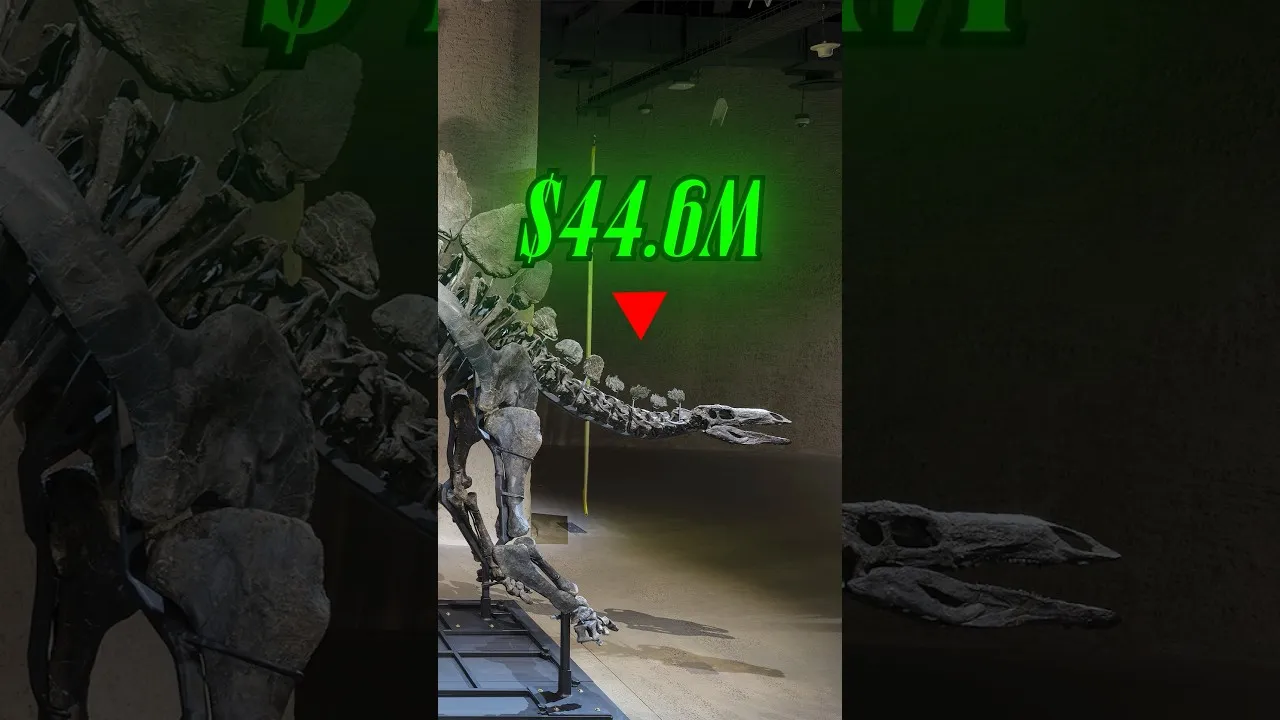
Dinosaur Market Roars: $44.6M Sale Ignites Investor Frenzy
A single dinosaur fossil sale has sent shockwaves through the collectibles market, turning ancient bones into a hot new asset class. The sale of a Stegosaurus fossil, nicknamed Apex, for a staggering $44.6 million in 2024 has dramatically reshaped perceptions of dinosaur remains. This colossal price tag, far exceeding initial expectations, has experts and investors alike pointing to a significant shift in how these prehistoric relics are viewed. It’s no longer just about scientific curiosity; it’s about substantial financial returns.
This extraordinary sale dwarfs previous records and highlights a growing trend among the ultra-wealthy to invest in unique and rare assets. The previous valuation for Apex was a mere $4 million, illustrating an almost tenfold increase in perceived value. This dramatic surge in price suggests that dinosaur fossils are now being treated with the same seriousness as fine art or rare commodities. The market has, in effect, exploded overnight.
Celebrity Interest Fuels the Fire
The burgeoning interest in dinosaur fossils isn’t confined to anonymous collectors. High-profile figures are actively participating, further legitimizing and driving up prices. Actor Nicholas Cage famously outbid Leonardo DiCaprio for a dinosaur skull valued at $276,000, showcasing a competitive spirit among celebrities for these ancient treasures. More recently, social media personality Logan Paul reportedly offered $2 million for a dinosaur skull, only to be turned down, indicating the seller’s belief in its even greater future value.
These high-profile transactions serve to amplify the allure of dinosaur fossils as investment vehicles. When celebrities with vast resources and a keen eye for trends invest heavily, it signals to others that there is significant potential for profit. This celebrity endorsement, coupled with the dramatic price appreciation seen in sales like Apex, is creating a powerful narrative around dinosaur fossils as a lucrative investment.
From Collectibles to Investments
The transformation of dinosaur fossils from mere scientific curiosities or niche collectibles into serious investment assets is a key takeaway from recent market activity. Just as the value of rare Pokémon cards or masterpieces of fine art can skyrocket, dinosaur fossils are now following a similar trajectory. The market is clearly demonstrating that these ancient specimens possess not only historical significance but also significant financial potential.
Consider the case of a Triceratops skull associated with Logan Paul. Its value reportedly surged from $500,000 to $1 million. This kind of rapid appreciation is precisely what attracts investors looking for assets that can offer substantial returns in a relatively short period. The underlying principle is scarcity: there are only so many well-preserved dinosaur fossils available, and demand appears to be rapidly increasing.
Market Impact and Investor Considerations
The implications of this market shift are profound. For investors, it opens up a new, albeit highly specialized, avenue for wealth diversification. However, it’s crucial to understand the inherent risks and the unique nature of this market. Unlike stocks or bonds, dinosaur fossils are illiquid assets, meaning they can be difficult to sell quickly at a fair price.
Furthermore, authenticity, preservation quality, and provenance (the history of ownership) are critical factors that heavily influence value. Buyers must conduct thorough due diligence, often relying on expert appraisers and paleontologists. The astronomical prices also suggest that this market is currently driven by a small pool of extremely wealthy individuals, making it inaccessible to the average investor.
Long-Term Outlook
The long-term outlook for dinosaur fossil investments remains to be seen, but the recent surge in activity suggests a sustained interest. As more high-profile sales occur and more wealthy individuals enter the market, prices could continue to climb. The potential for significant returns, as demonstrated by the Apex sale, will likely attract further attention.
However, markets can be cyclical. A sharp increase in demand can sometimes lead to a bubble, where prices become detached from underlying value. Future discoveries of significant fossils, changes in collector sentiment, or even shifts in regulatory policies regarding the excavation and sale of fossils could all impact long-term prices. For now, the prehistoric past has become a very present and potentially profitable investment for the select few.
Source: Why Rich People Are Buying Dinosaurs! 🦕 (YouTube)