Discover Global News: A World Tour of Current Events
Stay informed about the latest happenings around the globe with this comprehensive overview of significant news from various countries. This article delves into a diverse range of topics, from environmental concerns and political developments to technological advancements and cultural events, providing a snapshot of the world’s current affairs.
What You’ll Learn:
- Key political and social issues impacting different nations.
- Environmental challenges and conservation efforts worldwide.
- Technological innovations and their societal integration.
- Cultural events and their significance in global communities.
- Economic trends and their influence on national policies.
Key Global News Highlights:
Europe
- Iceland: Despite a volcanic eruption near the Blue Lagoon, the tourism board assured that the capital city and international airport remain unaffected, though the tourism economy experienced some challenges elsewhere.
- Ireland: A decline in humpback whale sightings has led to the closure of a whale-watching company, raising concerns among activists about overfishing and the protection of marine waters.
- United Kingdom: Prime Minister Keir Starmer urged France to help curb small boat crossings, as the arrival of nearly 40,000 refugees and asylum seekers in 2025 has become a major political issue for the new Labor government.
- Norway: New legislation passed by Parliament allows for potential damming of previously protected rivers for hydropower, sparking controversy between proponents of low-carbon energy and critics concerned about environmental destruction.
- Sweden: An investigation revealed that the Prime Minister’s security guards’ fitness app data exposed his jogging routes and travel spots, highlighting a significant security breach due to seemingly innocuous social media sharing.
- Finland & Denmark: Both nations have nationally banned phones from classrooms, citing concerns about educational outcomes, self-esteem, and the increasing digitization of daily life.
- Estonia: Embracing technology, Estonia launched the AI Leap 2025 initiative, integrating artificial intelligence into its school systems to enhance educational outcomes.
- Latvia: The intelligence and security service released a guide to help citizens identify potential Russian spies, noting suspicious behaviors like lingering near important sites or being overly inquisitive.
- Lithuania: In collaboration with the military and education department, Lithuania aims to educate 22,000 citizens on drone technology, from building to flying, to counter the growing drone capabilities of its eastern neighbor.
- Russia: An 8.8 magnitude earthquake off its east coast triggered tidal wave alerts, and a rare volcanic eruption occurred in the far east, the first in 600 years.
- Belarus: The release of 52 political prisoners was an attempt by the increasingly authoritarian state to ease international sanctions, though it represents a small fraction of the over thousand political prisoners held.
- Ukraine: President Zelensky’s administration is embroiled in corruption allegations concerning illegal kickbacks from the state-owned nuclear energy company, undermining government credibility and leading to resignations.
- Moldova: Parliamentary elections saw a strong victory for the pro-Western, pro-EU Action and Solidarity party, signaling a rebuke to Russian interference efforts, which included alleged attempts to bribe Orthodox priests.
- Poland: Due to right-wing protests and concerns over irregular immigration, Poland has temporarily increased policing of its border with Germany, testing Schengen Area agreements.
- Czech Republic: Hikers discovered a treasure trove of gold coins, bracelets, and valuables worth approximately $650,000 in the Crook Mountains, prompting research into their origins.
- Slovakia: A grassroots movement successfully petitioned to cancel Kanye West’s performance at a hip-hop festival following the release of a song containing a Nazi greeting.
- Hungary: The 30th anniversary of Budapest’s Pride parade saw an estimated 100,000 marchers, defying a ban by PM Viktor Orbán and celebrating the nation’s LGBTQ population.
- Romania: A centrist mayor won the national election, providing relief from a European perspective, despite a far-right candidate being removed from the ballot due to Russian interference.
- Bulgaria: Six Bulgarians went on trial in London for espionage charges related to gathering information on Ukrainian soldiers, uncovering deception and a love triangle among the accused.
- Greece: A nationwide strike protested a new pro-business law allowing 13-hour workdays, which ultimately passed, alongside legislation for an elective six-day work week, making Greece less attractive in the EU labor market.
- North Macedonia: The under-25 demographic faces economic struggles, compounded by a fire at an unlicensed nightclub that killed 59 people, predominantly young individuals.
- Albania & Montenegro: Both countries are at the top of the EU’s list for potential membership as early as 2030, with Albania’s accession talks expected to conclude by 2027 due to progress in combating corruption.
- Georgia & Serbia: Both nations took steps back amid concerns over crackdowns on free speech, with Serbia experiencing increased hostility towards journalists, reaching its lowest press freedom levels in over two decades.
- Bosnia and Herzegovina: A separatist leader, allied with a recently ousted leader, was elected to the Serb Republic’s top position in a snap election, keeping separatism prominent ahead of the 2027 general election.
- Croatia: Dubrovnik is facing a garbage problem as thousands of pounds of plastic, presumed to be from Albania, washed ashore, prompting plans for satellite monitoring to divert future debris.
- Ireland, Spain, Slovenia, Netherlands: These countries announced boycotts of the Eurovision competition due to the governing body allowing Israel to participate amidst the war in Gaza.
- San Marino: The small country is hopeful that DJ Gabby Pont will bring them their first Eurovision win in 2026, having participated 14 times previously.
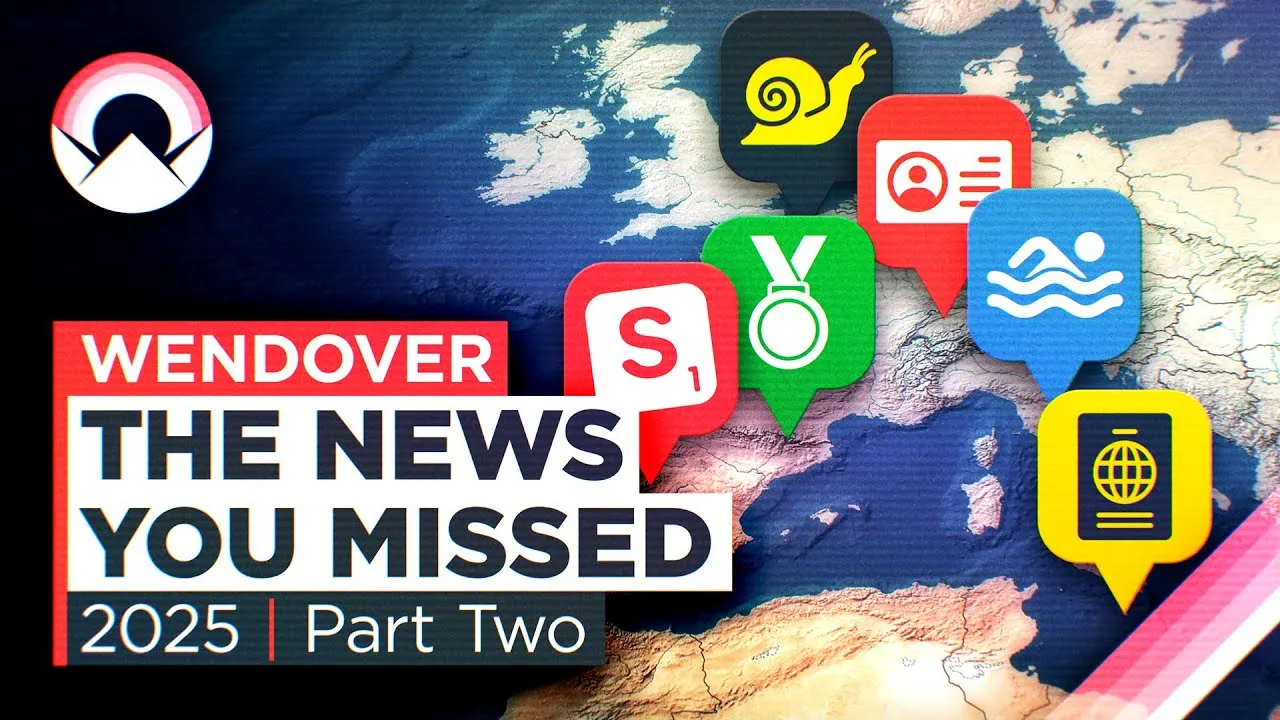
- Malta: The EU’s top court deemed the Golden Passport program, which allowed foreigners to pay for citizenship, illegal, citing concerns over corruption and nefarious actors, despite Malta’s argument of critical investment.
- Monaco: Hosted the first Grand Prix de la Joaillerie, a jewelry competition recognizing exquisite designs from luxury brands.
- Italy: The mayor of Rome declared the Tiber River will be swimmable in five years, a move spurred by Paris’s cleanup of the Seine, despite the project costing billions due to microplastic pollution.
- Austria: Abandoning its disarmament goal, Austria is doubling its military budget to over 2% of GDP in response to ongoing threats and increased military spending by neighboring countries.
- Liechtenstein: Became the 22nd European country to legalize same-sex marriage, granting full marriage rights to same-sex couples.
- Switzerland: Residents narrowly approved plans for electronic ID cards linked to smartphones, though physical IDs remain available.
- Luxembourg: The second cousin to the throne died at age 22 from a rare genetic disease, having dedicated his later years to raising awareness and funding for mitochondrial diseases.
- Germany: Is replenishing military reserves through voluntary conscription, with potential for mandatory call-ups if needed, to address growing threats.
- Netherlands: Briefly took over Nexperia, a Chinese-owned manufacturer, citing national security concerns after the US blacklisted its parent company, Wingtech. Nexperia was later returned to China after export controls impacted European supply chains.
- Belgium: Became the first EU country to ban disposable vapes, aiming to eliminate new smokers by 2040.
- France: A theft of over 990 lbs of snails, a popular delicacy, occurred from a family business, impacting supply ahead of the holiday season.
- Andorra: Hosted the 20th edition of the Games of the Small States of Europe, a sports competition for countries with fewer than 1 million residents.
- Portugal: The foreign-born population has tripled since 2019 due to lenient citizenship and residency programs, though new requirements now mandate at least 10 years of residency for most applicants.
- Spain: Nigel Richards, a Malaysian-born New Zealander, won the Spanish World Scrabble Championships despite not speaking Spanish, by memorizing thousands of words.
- Morocco & Algeria: The UN voted to accept Morocco’s 2007 autonomy proposal for Western Sahara, potentially ending a decades-long territorial dispute.
- Tunisia: Denied responsibility for a bombing of a humanitarian aid flotilla off its coast, stating the fire originated on the boat itself.
- Libya: Over a dozen NGO rescue vessels suspended cooperation with the Libyan Coast Guard, citing the agency’s alleged violence and inhumane conditions for migrants, despite EU funding.
Africa
- Egypt: Opened the Grand Egyptian Museum, the world’s largest archaeological facility, after over two decades of development, featuring over 50,000 artifacts.
- Sudan: An ongoing civil war is exacerbated by a cholera outbreak, with over 100,000 cases and 2,500 deaths, due to lack of infrastructure and supplies.
- Chad: Briefly cut ties with African Parks, an organization Prince Harry sits on the board of, over mismanagement concerns, but reinstated the relationship after new assurances.
- Burkina Faso, Mali, Niger: These three countries, recently taken over by military juntas, withdrew from the International Criminal Court, citing accusations of unfair targeting of African nations.
- Mauritania: Mass deportations and the breakup of smuggling rings are effects of a $1 billion migration partnership with the EU, aimed at curbing undocumented immigration to Europe.
- Cabo Verde: Became the second smallest country in the world to qualify for the World Cup after defeating Eswatini.
- Senegal: A travel ban prevented the women’s national basketball team from training in the US, forcing the camp to be held domestically.
- The Gambia: Young protesters took to the streets again, citing concerns over corruption and controversial sales, in what is described as the largest youth protest in the country’s history.
- Guinea-Bissau: Hosted its first art biennial, featuring 50 artists from 17 countries, funded entirely without government support.
- Guinea: The first shipment from the $20 billion Simandou iron ore project, the world’s largest known deposit, was sent to China, a key investor.
- Sierra Leone: A Canadian-Sierra Leonean social media influencer was arrested and jailed for a critical video of the president and first lady, under strict cybersecurity laws.
- Liberia: The government proposed adding 14 seats to the House of Representatives to better serve the public, though funding is a concern, alongside a bill to decrease lawmakers’ salaries.
- Côte d’Ivoire: President Alassane Ouattara, serving his fourth term, inaugurated Africa’s tallest building amidst a violent election where his main opponents were barred from running.
- Ghana: A fire destroyed over 60% of the Kantamanto Market, one of the world’s largest secondhand markets, impacting tens of thousands of employees and the secondhand clothing trade.
- Togo: Low turnout in municipal elections and subsequent protests suggest citizens are losing faith in the government, led by Faure Gnassingbé, whose family has ruled since 1967.
- Benin: A military coup attempt was thwarted by officials ahead of a presidential election, with Nigeria providing air support at Benin’s request.
- Cameroon: President Paul Biya, 92, was sworn in for his seventh term, making him the oldest president and second longest-serving in Africa, amid accusations of fraudulent elections.
- Equatorial Guinea: Signed a $690 billion deal with Chevron to develop the Aseng Gas Project, aiming to boost oil output after a decline since 2010.
- Central African Republic: President Faustin-Archange Touadéra is running for re-election in an environment where Russia wields soft power through its Wagner mercenary group, raising concerns about growing Russian political influence.
- South Sudan: Vice President Riek Machar was placed under house arrest and charged with treason and murder, jeopardizing the peace deal that ended the civil war.
- Eritrea: Released 13 individuals, including a former Olympian, who had been detained without trial for 18 years in connection with an attempted assassination, a surprising move given the country’s human rights record.
Source: One Piece of News From Every Country in the World (Pt 2) (YouTube)