Understanding the Formation of ‘Blanets’ Around Black Holes
For a long time, the extreme environments around black holes were thought to be too chaotic for planets to form. However, recent scientific understanding suggests that it might be possible for celestial bodies, dubbed ‘blanets,’ to coalesce and orbit these enigmatic cosmic objects. This article will guide you through the fascinating concept of planet formation in the vicinity of black holes, exploring the conditions under which this phenomenon could occur.
What You Will Learn
This guide will delve into the theoretical possibilities of planet formation around black holes. You will learn about the specific conditions required, the types of black holes that might host such systems, and the potential characteristics of these unique ‘blanets.’ We will also touch upon the challenges and the scientific reasoning behind these intriguing possibilities.
Prerequisites
No prior advanced astrophysics knowledge is required. A general curiosity about space and black holes is all you need to understand the concepts presented.
Understanding the Black Hole Environment
Black holes are regions of spacetime where gravity is so strong that nothing, not even light, can escape. They come in various sizes, from stellar-mass black holes, formed from the collapse of massive stars, to supermassive black holes found at the centers of galaxies.
The Role of Accretion Disks
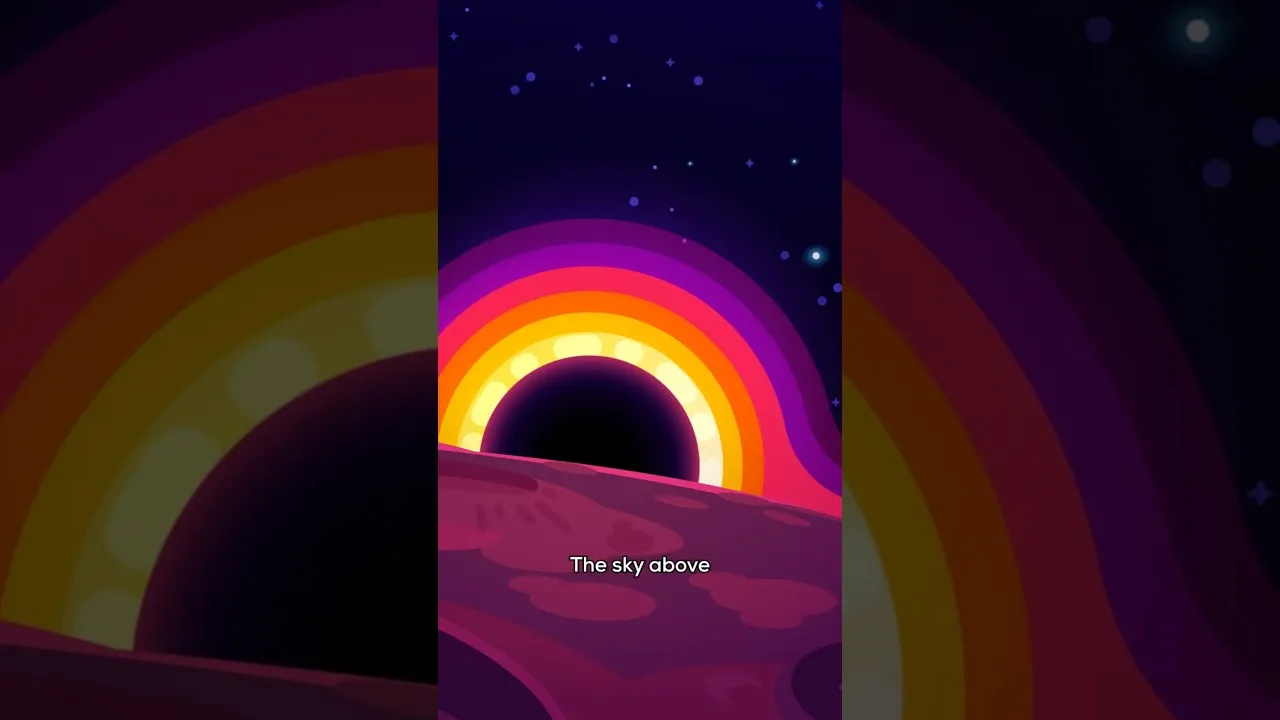
A key factor in the formation of ‘blanets’ is the presence of an accretion disk. When matter, such as gas and dust, falls towards a black hole, it doesn’t fall straight in. Instead, it forms a swirling, flattened disk around the black hole, known as an accretion disk. This disk is incredibly hot and dense due to friction and gravitational forces.
Conditions for Planet Formation
The traditional understanding of planet formation, as seen in our own solar system, involves the gradual accretion of dust and gas in a protoplanetary disk around a young star. For planets to form around a black hole, similar processes would need to occur within its accretion disk.
Sufficient Material
The accretion disk must contain a substantial amount of gas and dust. This material provides the raw ingredients for forming planets. The density and composition of this material are crucial.
Stable Disk Conditions
While accretion disks are dynamic, they must maintain a degree of stability for a long enough period to allow for the slow process of planetesimal and planet formation. Extreme turbulence or rapid dispersal of material would prevent this.
Gravitational Influence
The black hole’s gravity plays a dual role. It draws in material to form the disk, but its immense pull can also disrupt or tear apart forming structures if the conditions are not right. The size of the black hole and the dynamics of the disk are important factors.
Location Within the Disk
Planet formation is more likely to occur in the cooler, outer regions of the accretion disk, where gas and dust can condense more easily. The intense heat closer to the black hole would likely vaporize or prevent the aggregation of solid material.
Types of Black Holes and Potential ‘Blanets’
Supermassive Black Holes
Supermassive black holes, residing at the centers of galaxies, are prime candidates for hosting ‘blanets.’ Their massive gravitational pull can create vast accretion disks that are stable enough to potentially harbor planet-forming material. The sheer scale of these systems means that planets could form at significant distances from the black hole itself, in regions where conditions are more conducive to formation.
Stellar-Mass Black Holes
While more challenging, it’s not entirely impossible for planets to form around stellar-mass black holes. If a star collapses to form a black hole, it might leave behind a remnant disk of material. In binary systems, a black hole could also accrete material from a companion star, forming a disk. The key would be the stability and longevity of such disks.
Challenges and Considerations
Tidal Forces
Black holes exert powerful tidal forces, which can stretch and tear apart objects that get too close. Any forming planets would need to be at a safe distance from the black hole to avoid being destroyed. This distance is often referred to as the Roche limit.
Radiation and High-Energy Phenomena
Accretion disks around black holes are sources of intense radiation and high-energy particles. This environment could be hostile to the delicate processes of planet formation and the survival of any nascent planets. Shielding by gas and dust would be essential.
Orbital Stability
The orbits of planets around a black hole would be subject to complex gravitational interactions, not only from the black hole itself but also from the accretion disk and potentially other celestial bodies. Maintaining stable orbits over long periods is a significant challenge.
The Concept of ‘Blanets’
‘Blanets’ are hypothetical planets that orbit a black hole rather than a star. If they form, they would likely be quite different from the planets we are familiar with. Their composition and characteristics would depend heavily on the material available in the accretion disk and the specific conditions of their formation environment.
Potential Characteristics
- Composition: ‘Blanets’ could be rocky, gaseous, or a combination, depending on the available elements in the accretion disk.
- Atmosphere: The intense radiation environment might strip away atmospheres, or alternatively, create exotic atmospheric compositions.
- Habitability: The concept of habitability as we understand it would be severely challenged due to the extreme conditions. However, some theories suggest that planets far enough from the black hole, perhaps shielded by dust, could potentially harbor conditions for life.
Conclusion
While the idea of planets forming around black holes, or ‘blanets,’ is still largely theoretical, it represents a fascinating frontier in astrophysics. The conditions required – a stable accretion disk with sufficient material, located at a safe distance from the black hole’s intense gravity and radiation – present significant challenges. However, the possibility remains open, particularly around supermassive black holes. Continued research and observation may one day provide concrete evidence for these extraordinary celestial bodies.
Source: Planets Around Black Holes (YouTube)