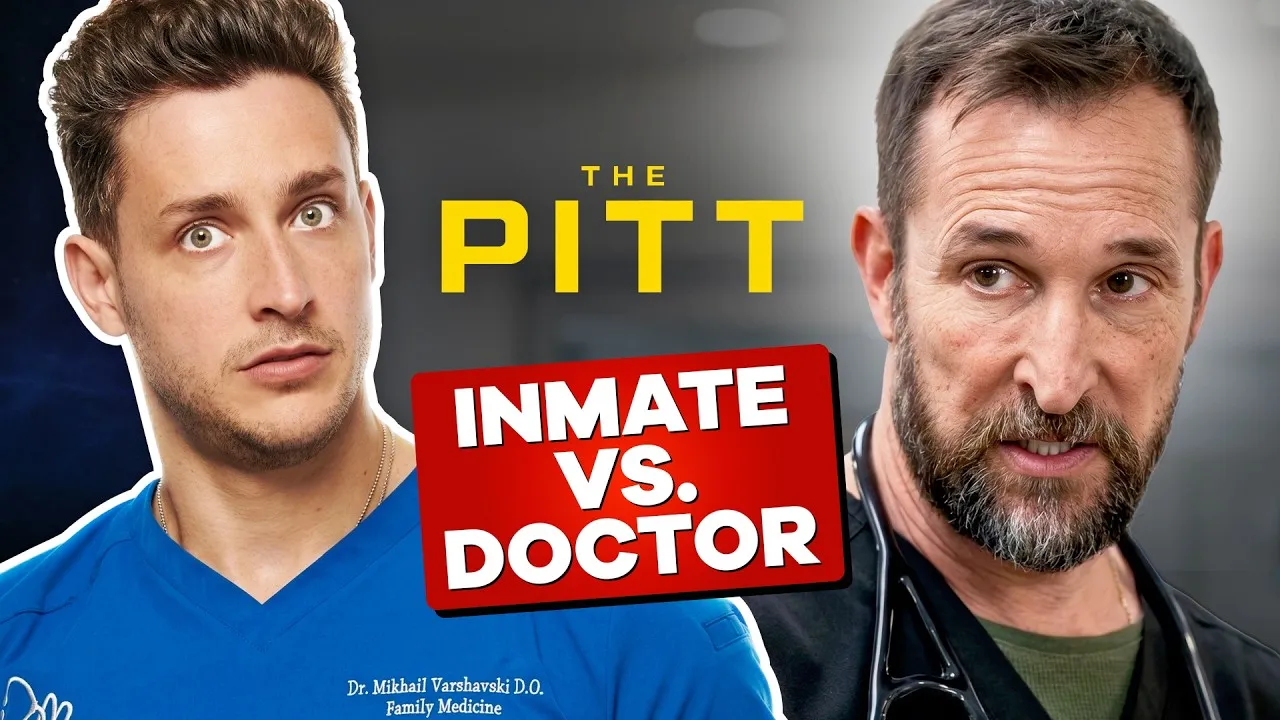
Doctors Unpack Medical Realism in ‘The Pitt’ Season 2
Medical dramas like ‘The Pitt’ offer a window into the high-stakes world of emergency medicine, but how accurate are they? Two doctors, Dr. Mike Langdon and Dr. Sepideh Moafi, recently shared their insights while reacting to episode six of ‘The Pitt’ Season 2. They highlighted key moments, from the mechanics of CPR to the complex realities of patient care, offering a glimpse into the challenges faced by real healthcare professionals.
CPR Techniques and Patient Education
One of the first points of discussion was the portrayal of Cardiopulmonary Resuscitation (CPR). Dr. Langdon, a physician and popular medical content creator, noted that while the actors’ efforts were commendable, the chest compressions could have been deeper. “People learn from television on what they should do, what they shouldn’t do,” he explained, emphasizing the importance of accurate depiction for public education. He pointed out that proper CPR involves keeping arms straight and pushing from the shoulders, a technique that can look artificial but is crucial for effectiveness.
The show’s camera angles were praised for cleverly obscuring minor imperfections in the CPR technique, a common challenge in real-life emergencies where precision is vital. This attention to detail, even in fictional portrayals, underscores how medical shows can inadvertently shape public understanding of critical procedures.
Navigating Complex Medical Cases
The episode presented a patient, Louie, with end-stage liver disease due to alcoholism, who suffered a cardiac arrest. The doctors elaborated on the critical condition, explaining how scarring in the liver from alcoholism increases pressure in the portal venous system. This pressure can cause blood to divert, widening thin-walled veins in the esophagus and stomach, making them prone to rupture. Factors like friction from an Endotracheal (ET) tube or even slight pressure can trigger dangerous bleeding in these patients, who also often have impaired clotting due to liver dysfunction.
The scene depicted a pulmonary hemorrhage, where blood filled the patient’s lungs. The doctors discussed the difficulty in pinpointing the exact cause in such a critical situation. It could stem from the fragile blood vessels related to liver failure, an injury from the ET tube insertion, or alveolar bleeding within the lungs themselves. In an emergency room setting, the immediate priority is resuscitation, but understanding the underlying causes is crucial for treatment and prognosis.
The Emotional Toll of Medicine
The emotional impact of such critical events on medical staff was also a central theme. Both doctors acknowledged that witnessing severe trauma and loss is never easy, even for seasoned professionals. Dr. Moafi shared her experience during the filming of a complex procedure, the ‘clamshell’ procedure, noting that the realistic prosthetics made it difficult to watch, despite being present during filming.
The process of preparing for and performing realistic medical scenes was also discussed. Shows often employ medical advisors to ensure accuracy. Actors rehearse procedures at various speeds, from 25% to 100%, mimicking the medical training principle of “see one, do one, teach one.” This methodical approach helps actors become comfortable and deliver more authentic performances, creating a sense of interdependence and shared effort that mirrors real medical teams.
Mental Health and Diagnosis
The episode also touched upon mental health, with a character named Jackson experiencing paranoia and auditory hallucinations, suggesting potential schizophrenia. Dr. Langdon explained that schizophrenia can sometimes emerge during periods of acute stress, such as critical illness, even without prior warning signs. He noted that this condition often begins in young adulthood, a demographic frequently seen in high-stress environments like college, and can be exacerbated by factors like marijuana use.
The Art of Patient Interaction
Beyond the technical aspects, the doctors emphasized the nuanced art of patient interaction, especially in sensitive situations like end-of-life care or dealing with chronic pain. They highlighted the importance of balancing compassion and seriousness with moments of happiness and humor, a delicate line to navigate with each individual patient.
The conversation also extended to the patient experience and trust. Dr. Langdon stressed the importance of clear communication and education, ensuring patients understand their options and feel empowered in their healthcare decisions. He believes that building trust through emotional attunement and presence is key, rather than relying on a patient’s obligation to follow medical advice.
Addressing Malnutrition and Incarcerated Patients
The episode featured a discussion on diagnosing malnutrition in an incarcerated patient, Gus. The differential diagnosis included inadequate intake, substance abuse, and medical conditions like esophageal strictures or malabsorption. The doctors noted that this type of diagnostic reasoning, often depicted on whiteboards in older shows, is more realistically handled through direct patient assessment and discussion in modern medicine, except for specific case reviews like Morbidity and Mortality rounds.
The challenges of providing care to incarcerated individuals were also raised, including patient and staff safety concerns. The decision to transfer Gus to a different hospital unit or a correctional facility involved considerations of bed availability, the risk of hospital-acquired infections, and the patient’s comfort and potential for rest in a familiar environment.
Technological Advancements in Healthcare
The potential impact of Artificial Intelligence (AI) in healthcare was also explored. Dr. Langdon mentioned his hospital is beta-testing an AI system to streamline charting and improve efficiency. While concerns exist about AI potentially increasing patient loads, many doctors, particularly those trained in more traditional, hands-on methods, welcome it as a tool. They see AI as a way to reduce the barrier between provider and patient, allowing for more direct interaction and less time spent typing notes while in the room with a patient.
Accuracy and Actor Portrayals
The actors’ dedication to detail was frequently praised. John Lee Ames, playing a patient with severe pain, was noted for his incredibly specific and heart-wrenching portrayal. The doctors acknowledged that such performances can be difficult to watch, even for those in the medical field, because they beautifully reveal the underlying humanity of patients, challenging initial judgments.
The realism extended to the portrayal of the hospital environment itself. Dr. Moafi commented that the show’s depiction of hospital workflow and doctor-patient interactions felt authentic, akin to shadowing a nurse for a day. This level of detail, driven by actors who understand the emotional and psychological aspects of patient care, contributes significantly to the show’s authenticity.
The Importance of the Primary Survey
In the case of a motorcycle accident victim, Brandon Lee, the doctors reviewed the ‘primary survey’ – a systematic approach to identify and treat life-threatening injuries (Airway, Breathing, Circulation, Disability, Exposure). They emphasized the importance of not being distracted by less critical injuries, like lacerations, and thoroughly assessing the entire body for hidden trauma.
The mechanism of injury, such as an eight-foot fall from a motorcycle pyramid, is a critical factor in deciding whether imaging is necessary, even if initial exams appear normal. This highlights how understanding the forces involved in an accident guides diagnostic decisions.
Final Thoughts on ‘The Pitt’
Overall, the discussion revealed that ‘The Pitt’ strives for a high degree of medical accuracy, engaging with complex cases and the human element of healthcare. The insights from Dr. Langdon and Dr. Moafi provide a valuable perspective, bridging the gap between fictional drama and the realities of modern medicine.
Key Health Takeaways
- Accurate CPR Matters: While TV shows can depict CPR, understanding proper technique (depth, rate, full recoil) is crucial. Public education on CPR is vital.
- Liver Disease Risks: Advanced liver disease, especially from alcoholism, significantly increases the risk of severe bleeding, particularly in the esophagus and stomach.
- Mental Health Awareness: Conditions like schizophrenia can manifest in young adults, sometimes triggered by stress, and require professional diagnosis and care.
- Patient-Centered Care: Building trust, clear communication, and empowering patients in their healthcare decisions are fundamental to effective medical practice.
- Diagnostic Process: Medical diagnosis involves considering multiple factors, including patient history, mechanism of injury, and potential underlying conditions, often requiring a systematic approach.
- Technology as a Tool: AI and other technologies are being integrated into healthcare to improve efficiency, but the human element of physician-patient interaction remains paramount.
Disclaimer: This article is for informational purposes only and does not constitute medical advice. Always consult with a qualified healthcare professional for any health concerns or before making any decisions related to your health or treatment.
Source: Doctor Reacts To The Pitt Season 2 Episode 6 (YouTube)