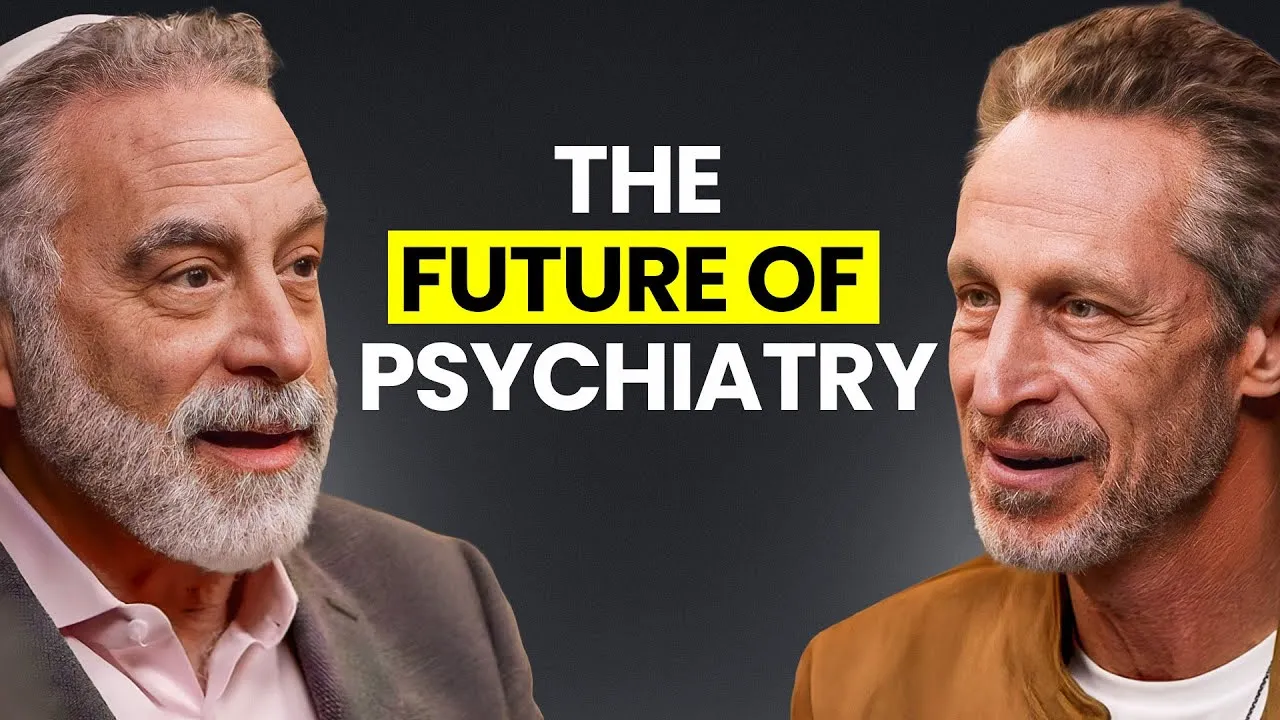
Fix Your Brain, Transform Your Mind: A New Psychiatry Approach
In the evolving landscape of mental health, a paradigm shift is underway, moving beyond symptom suppression to address the root causes of psychiatric conditions. Dr. Robert Hedaya, a pioneering functional psychiatrist with over 46 years of experience, champions this approach, integrating advanced brain imaging and functional medicine principles to revolutionize treatment for complex and treatment-resistant cases.
The Limitations of Traditional Psychiatry
For decades, psychiatry has largely focused on psychotherapy and psychopharmacology, which often serve to manage symptoms rather than cure underlying issues. “Psychiatrists are looking at the brain, doing imaging, doing something called QEEG, which is like a brain wave test that maps out things that we never saw before and that we’re now making sense of,” explains Dr. Hedaya. This new wave of understanding acknowledges that the brain, the body’s physical hardware, must be functioning optimally for mental well-being, a concept often overlooked in traditional psychiatric practice.
A Personal Journey to Root-Cause Psychiatry
Dr. Hedaya’s own journey highlights the limitations of conventional approaches. Early in his career, he treated a patient experiencing severe panic attacks with psychotherapy and medication, with little success. A chance discovery of a slightly elevated Mean Corpuscular Volume (MCV) on her blood test led him to investigate further. He discovered a Vitamin B12 deficiency, and upon receiving an injection, the patient’s panic attacks vanished. This pivotal moment revealed a crucial insight: “Oh my god, what else am I missing?” he recalls. This experience, along with observing misdiagnoses in his own family due to rigid adherence to reference ranges, solidified his belief that a deeper, more systemic approach was necessary.
The Functional Medicine Framework
Functional medicine, which Dr. Hedaya has practiced for decades, is rooted in identifying and addressing the fundamental causes of disease. “As functional medicine doctors, we are root cause specialists. That’s what we do. We dig and dig and dig until we find the thing that’s or the things that are off. And then we try to correct them,” he states. This holistic approach considers the interconnectedness of the body and brain, examining factors such as diet, gut health, nutritional status, detoxification, hormone balance, and infections.
Quantitative EEG (QEEG): Mapping the Brain’s Electrical Activity
A significant advancement in Dr. Hedaya’s practice is the use of Quantitative Electroencephalography (QEEG). This non-invasive procedure involves placing a cap with sensors on the patient’s head to measure electrical activity (brain waves) at multiple points. The data is then analyzed by artificial intelligence, standardized against a large database, and compared to age and sex-matched controls. “What we get back from that is a basically a wiring map of the brain. We can actually see all the networks in the brain. We can see the surface areas of the brain and how they’re functioning,” Dr. Hedaya explains. QEEG allows clinicians to visualize information flow patterns, identify areas of dysfunction, and correlate these findings directly with a patient’s symptoms. This provides a level of diagnostic insight previously unattainable.
Correlating Brain Patterns with Symptoms
By analyzing QEEG data, Dr. Hedaya can pinpoint specific brain networks that are overactive, underactive, or disconnected. For instance, in depression, he often observes reduced communication between the frontal lobes. In a striking case, a patient with schizophrenia exhibited a disconnect in a brain tract crucial for interpreting facial expressions, which he identified through QEEG. Treating this specific abnormality with targeted laser therapy led to a significant improvement in the patient’s paranoia and social perception.
Identifying the Root Causes of Brain Dysfunction
The abnormalities detected by QEEG can stem from various sources, including:
- Head Trauma: Past head injuries, even those from childhood, can disrupt brain wiring and function.
- Toxins: Environmental toxins can interfere with brain chemistry and structure.
- Infections: Certain infections, like Mycoplasma or those associated with PANDAS (Pediatric Autoimmune Neuropsychiatric Disorders Associated with Streptococcal Infections), can target specific brain regions.
“We’re always doing the root cause medicine thing. Is it a gut thing? Toxins? Always doing the root cause,” Dr. Hedaya emphasizes. Once the underlying causes are identified, treatment can be precisely targeted.
Innovative Treatment Modalities
Beyond traditional therapies, Dr. Hedaya integrates cutting-edge treatments informed by QEEG findings. These include:
- Neurofeedback: Training the brain to regulate its own activity.
- Hyperbaric Oxygen Therapy: Increasing oxygen levels in the body to promote healing.
- Laser Therapy: Utilizing focused light to stimulate cellular activity and repair in specific brain areas.
Dr. Hedaya’s exploration into laser therapy was sparked during a vacation, where he read about its use in Russia for brain conditions. The subsequent chapter in the same book discussed QEEG, leading him to a “eureka” moment: QEEG could identify *where* to apply laser therapy for optimal results. After three years of dedicated study and mentorship, he began incorporating this technique in 2017.
A Holistic Approach to Mental Wellness
Dr. Hedaya advocates for a comprehensive approach that includes lifestyle factors crucial for brain health:
- Diet: Nourishing the body with whole, unprocessed foods.
- Mindfulness and Spirituality: Connecting with a higher power or engaging in practices that foster inner peace.
- Exercise: Regular physical activity tailored to individual needs.
- Relationships: Maintaining strong social connections.
“It’s a lot easier to get enlightened if you’re not mercury poisoned or B12 deficient, your thyroid’s working, and your gut microbiome is healthy,” he notes, underscoring the foundational role of physical health in mental well-being.
The Future of Psychiatry
The integration of functional medicine, advanced diagnostics like QEEG, and innovative therapies represents a significant leap forward in mental healthcare. “We’re going to actually succeed because we’re identifying now through functional medicine the root causes and it’s going to permeate the system,” Dr. Hedaya predicts. While acknowledging the history of fads in psychiatry, he is confident that this evidence-based, root-cause approach offers a sustainable path toward healing and improved mental health for countless individuals.
Disclaimer: This article is for informational purposes only and does not constitute medical advice. Always consult with a qualified healthcare professional before making any decisions about your health or treatment.
Source: Fix the Brain, Change the Mind: Root-Cause Psychiatry w/ Dr. Robert Hedaya (YouTube)