Gemini 3 Powers AI Design Revolution with Nano Banana
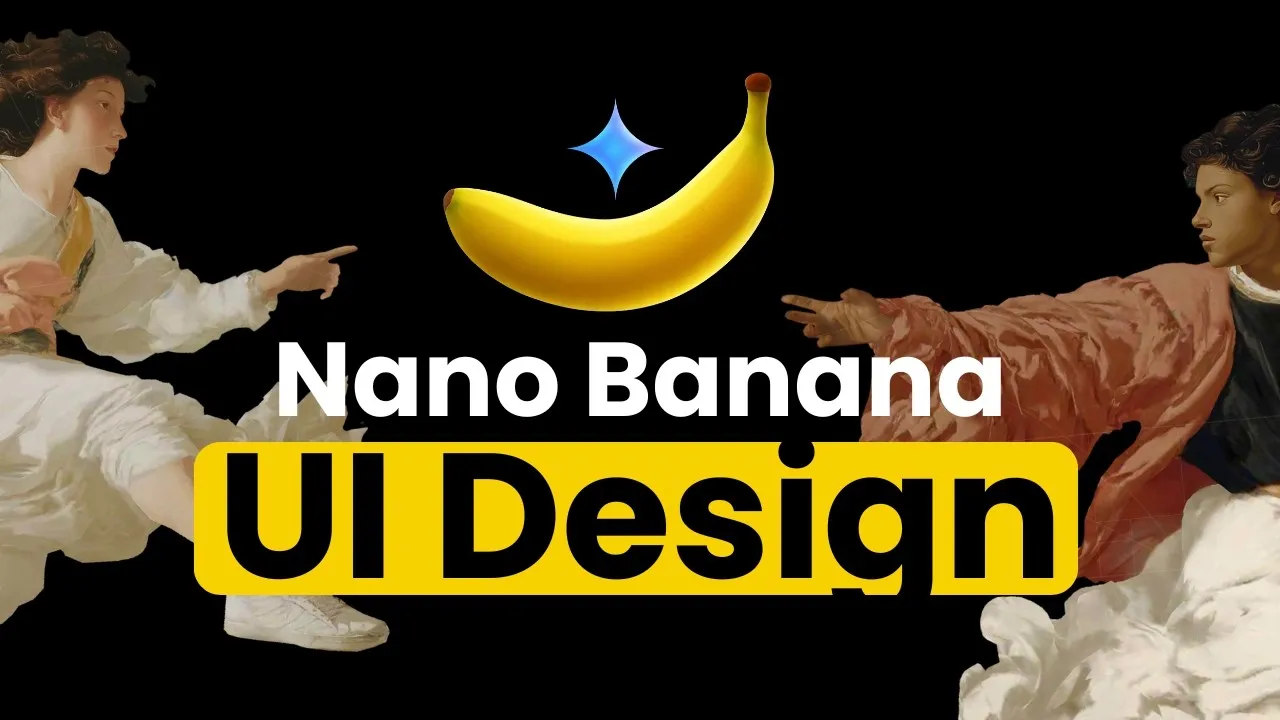
A novel approach combining Google’s Gemini 3 with the image generation capabilities of Nano Banana is unlocking unprecedented levels of creativity in UI and product design. This synergy allows for the rapid generation of unique, design-team-quality interfaces, moving beyond the often standardized outputs of traditional coding agents.
The Four-Step Design Workflow
The process, detailed by proponents, centers on leveraging AI for both planning and creative execution. It begins with a detailed planning phase, followed by creative ideation using image generation, asset extraction, and finally, implementation with coding agents.
Step 1: AI-Assisted Design Planning
The initial stage involves using a powerful reasoning model, such as Gemini 3, to plan the design. This is achieved by providing the AI with context about the product, including existing branding, key values, and desired themes. A crucial part of this step is the use of reference images. However, a key tip is to limit references to around three distinct images to avoid confusing the AI. Websites like Dribbble, Mobel, Behance, and Awwwards are suggested resources for inspiration.
To ensure alignment on the visual direction, users can prompt the AI to generate ASCII or wireframe representations of the planned layout. This textual and visual breakdown helps solidify the design concept before moving to more resource-intensive generation steps.
Step 2: Creative UI Generation with Nano Banana
This is where Nano Banana, an image generation model, shines. Instead of relying on coding agents that might struggle with novel or complex visual elements, Nano Banana excels at producing highly creative UI mockups. The advantage lies in its speed and ability to generate designs that might be technically challenging for immediate coding implementation, such as tilted UIs or those incorporating 3D elements. This approach offers a faster iteration cycle compared to waiting for a coding agent to produce potentially less inspired results.
While Nano Banana can produce stunning visuals, some of these might be complex to translate directly into code. This leads to the next critical step.
Step 3: Extracting High-Resolution Assets
When a UI mockup generated by Nano Banana includes elements that are difficult to code directly, such as intricate 3D objects or specific textures, these can be extracted as high-resolution image assets. Users can prompt Nano Banana to isolate and upscale these components, turning them into usable background images or graphical elements.
The process allows for iterative refinement. If an AI-generated image is close but not perfect, users can prompt further adjustments. For example, removing UI elements that are intended to be coded or modifying specific visual aspects. This continuous refinement ensures that the generated assets are precisely what’s needed for the subsequent implementation phase.
For even more dynamic assets, users can leverage platforms like Replicate to generate animated 3D assets with parallax effects, suitable for embedding on websites to create engaging scrolling experiences.
Step 4: Implementation with Coding Agents
Once the visual direction is set and necessary assets are prepared, the final step involves using coding agents to implement the design. The extracted image assets and refined UI mockups serve as detailed specifications for the coding AI. This can be done through platforms like Superdesign.dev, which integrates these capabilities.
For complex UIs, advanced planning can be done by asking the coding agent to analyze the design, identify difficult parts, and create a task breakdown for pixel-perfect implementation. This includes suggesting alternative approaches to achieve similar visual effects.
The process also includes tools for refining the generated code. If the initial implementation isn’t perfect, users can select specific elements and prompt for adjustments, such as making background blur more obvious or ensuring correct logo usage. The system can even suggest improvements by having Gemini 3 review the design and output annotations that can be fed back to the coding agent.
Why This Matters
This integrated workflow signifies a significant leap in AI-assisted design. It democratizes high-quality UI/UX creation, enabling individuals and smaller teams to produce sophisticated designs that previously required dedicated design teams and extensive development time. By separating the creative ideation (image generation) from the technical implementation (coding), the process becomes more efficient and the creative potential is vastly expanded.
The ability to rapidly prototype and iterate on visually unique designs, coupled with the extraction of usable assets, streamlines the entire product development lifecycle. This approach not only speeds up development but also pushes the boundaries of what’s aesthetically possible with AI, leading to more innovative and engaging digital products.
The described workflow is available for free trial on Superdesign.dev.
Source: Nano Banana + Gemini 3 = S-TIER UI DESIGNER (YouTube)