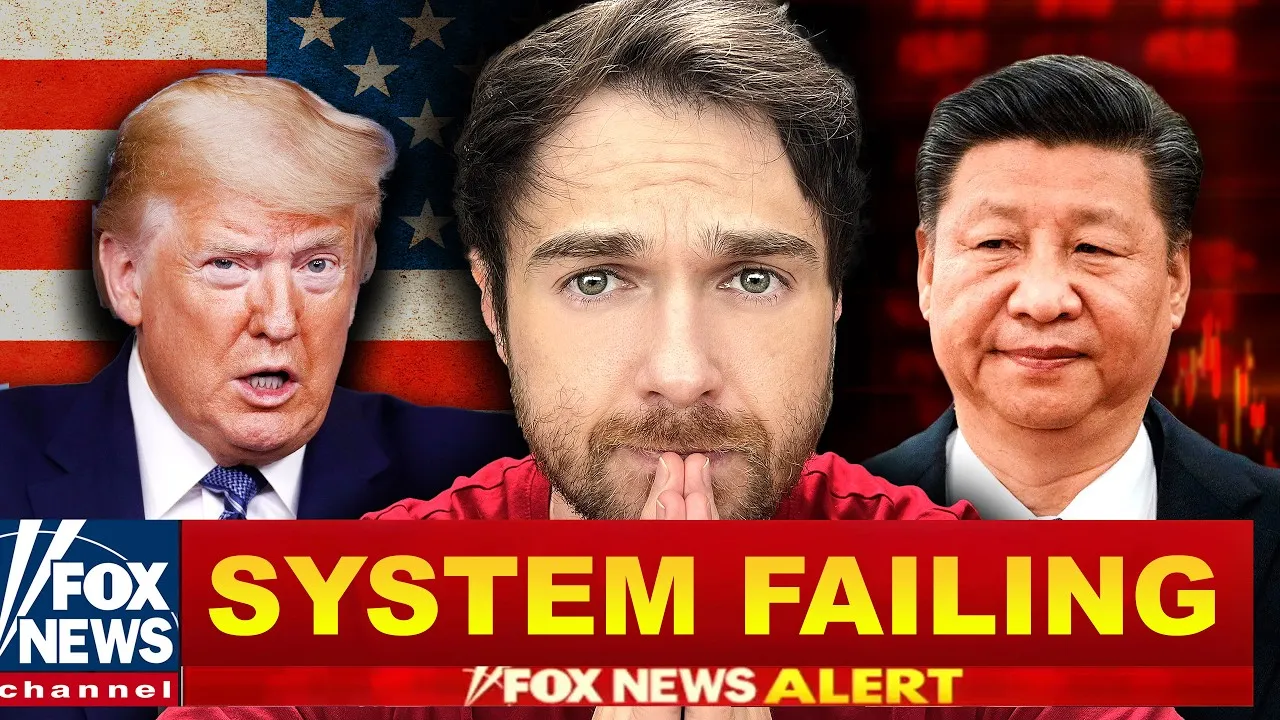
Global Power Shifts Spark Market Fears: End of an Era?
A complex web of geopolitical tensions, particularly the conflict in the Middle East, is creating significant uncertainty for global markets. Analysts suggest that the current events could mark the beginning of the end for a long period of American global dominance, often referred to as ‘Pax Americana’. This shift is happening at a time when the global economy is already facing multiple challenges, including high interest rates, a strained private credit market, and concerns about job creation.
The Stakes: Petro-Dollar and Global Energy Control
At the heart of this geopolitical chess match is control over energy and the system that prices it. For decades, the U.S. has benefited from the ‘petro-dollar’ system, where oil is primarily traded in U.S. dollars. This system has helped maintain the dollar’s status as the world’s reserve currency and fueled U.S. financial influence. However, a coalition of countries, including Iran, Russia, and China, is seen as working to challenge this order by promoting alternative payment systems, potentially using gold and other currencies like the Chinese yuan.
Key Players and Their Agendas
Several major players are involved in this unfolding scenario:
- United States: Aims to preserve its global financial and military dominance, ensuring oil remains priced in dollars and that global borrowing continues in U.S. currency.
- China: Seeks to dethrone the dollar, gain control over cheap energy for its economy, and become a key price setter for global commodities without direct military conflict.
- Russia: Possesses oil and commodities and is looking for allies willing to trade in currencies not subject to sanctions. It is actively supporting Iran and expanding its influence.
- Iran: Aims to survive and exert pressure on the global economy. By controlling the Strait of Hormuz, a critical chokepoint for oil transport, Iran can create economic pain and leverage for concessions, such as accepting payments in yuan for its oil.
- GCC Countries (Gulf Cooperation Council): While seeking stability and protection, these nations are hedging their bets between the existing petro-dollar system and emerging alternatives.
- Global Investors and Consumers: The personal finances of individuals, including 401(k)s, job security, and the cost of everyday goods like gas and food, are caught in the middle of these global power plays.
Economic Headwinds Amplify Geopolitical Risks
The current geopolitical situation is particularly concerning because it arrives when the economy is already fragile. Several factors are contributing to this:
- Private Credit Market Stress: A $9.4 trillion shadow banking system, known as private credit, which includes major firms like Blackstone and Apollo, is under pressure. As investors seek their money back, the system is struggling to meet demands, leading to falling stock prices for these institutions.
- Job Market Stagnation: Recent data indicates nearly zero net job creation in the private sector over the past year. Companies are increasingly using artificial intelligence (AI) as a reason to lay off workers or reduce hiring, impacting consumer spending and economic growth.
- Rising National Debt: The U.S. government’s spending significantly outpaces its revenue, a situation exacerbated by ongoing global conflicts. This growing debt is projected to outpace economic growth, raising concerns about long-term fiscal stability.
- Increasing Long-Term Bond Rates: Higher long-term bond yields mean borrowing costs are rising. This impacts everything from government debt servicing to corporate borrowing and mortgage rates.
The ‘Game’: Building an Alternative System
The theory suggests that Iran, Russia, and China are not directly attacking the petro-dollar but are systematically building an alternative system. Iran controls the Strait of Hormuz, creating a potential ‘toll booth’ for oil shipments. Russia offers an alternative energy supply to countries seeking to avoid Middle Eastern oil, often accepting payment in yuan or rubles. China provides the crucial payment infrastructure, allowing transactions to occur in yuan.
This alternative system appears to involve gold. Evidence suggests that countries, particularly in the GCC, began significantly increasing their gold purchases through Switzerland starting in 2022, the same year the U.S. froze Russian dollar reserves. This move indicates a desire to diversify away from dollar-denominated assets due to fears of similar actions being taken against them. The U.S. itself has also been a major exporter of physical gold, suggesting it may be settling some of its own trade deficit using the precious metal.
The challenge for this emerging system is scale. The global oil market is valued at approximately $4.1 trillion annually, while the gold market is around $485 billion. If even a small fraction of oil trade shifts to being settled via gold, the demand shock to the gold market could be immense, potentially driving its price significantly higher.
Market Impact: Bond and Stock Market Volatility
The current environment has created significant turmoil in both bond and stock markets.
Bond Market Concerns:
- Long-term bond yields have been rising, contrary to earlier expectations of falling interest rates. This means the U.S. government and corporations face higher borrowing costs.
- The U.S. government’s ‘true interest expense’—combining social security, Medicare, health spending, and debt interest—is consuming a substantial portion of tax revenue. This is further strained by increased defense spending requests.
- Bond investors are demanding higher yields to compensate for the perceived risks of global instability, potential supply chain disruptions, and rising inflation, especially given the U.S. government’s significant debt.
- Similar pressures are seen in the UK bond market, where a sharp rise in yields has echoes of past crises, highlighting the interconnectedness of global financial markets. European and UK investors hold a significant portion of U.S. Treasuries, meaning their market troubles can directly impact U.S. yields.
Stock Market Disconnect:
- Historically, job openings and the stock market (like the S&P 500) have moved in tandem. However, this correlation has broken down, with job openings falling while the S&P 500 has risen.
- This disconnect is partly attributed to market expectations that AI will boost corporate profits even if it leads to job losses, creating a scenario where companies become richer while consumers become poorer.
- A key indicator, rising credit spreads (the cost of borrowing for companies), has historically preceded stock market downturns. The current situation, with widening credit spreads while the S&P 500 remains elevated, suggests a potential market correction is on the horizon.
The Federal Reserve’s Dilemma
The Federal Reserve faces a difficult situation. Its mandate is to keep inflation low and unemployment low. However, an oil shock driven by geopolitical events complicates this. Cutting interest rates to support jobs could worsen inflation, while raising rates to fight inflation could trigger a bond market collapse and deepen a recession. This leaves the Fed in a potentially ‘checkmated’ position.
Potential Outcomes for Investors
Analysts outline three main scenarios:
- Best Case: Peaceful Resolution: The conflict ends quickly, and Iran receives security guarantees. The Strait of Hormuz reopens, oil prices stabilize, inflation eases, and the Fed can cut rates, supporting the stock market. However, even in this scenario, the world may emerge more multipolar, with a potentially weaker dollar and a stronger yuan/gold-based system gaining traction.
- War Continues (3-4 Weeks): Prolonged conflict could lead to significant economic breakdown. European and UK bond markets might falter, forcing foreign holders to sell U.S. Treasuries, driving up U.S. interest rates. This could trigger a credit crisis, corporate earnings slashes, and a broad asset decline. In this scenario, cash and gold might offer protection.
- War Drags On (Extended): If the conflict lasts long enough to break bond markets, the U.S. government might face unsustainable borrowing costs. This could force the Federal Reserve to intervene with massive liquidity injections or yield curve control. Historically, printing money during periods of high oil prices has led to widespread inflation, potentially resulting in a sovereign debt crisis and stagflation, where prices rise but economic growth stagnates.
What Investors Should Know
Given the uncertainty, investors are advised to be cautious. Some are increasing their cash and short-term bond holdings, anticipating potential market downturns. Over the next 5-10 years, a significant rotation from stocks to commodities like gold and silver is a possibility. Reducing personal debt and preparing for potential supply chain disruptions are also strategies being considered by some.
The current global economic and geopolitical landscape presents a complex set of risks. The long-term implications of shifting global power dynamics and the potential erosion of the dollar’s dominance are significant considerations for investors navigating these turbulent times.
Source: The End Of Pax Americana (YouTube)