Gold’s Meteoric Rise Ignites Investor Debate Amid Economic Uncertainty
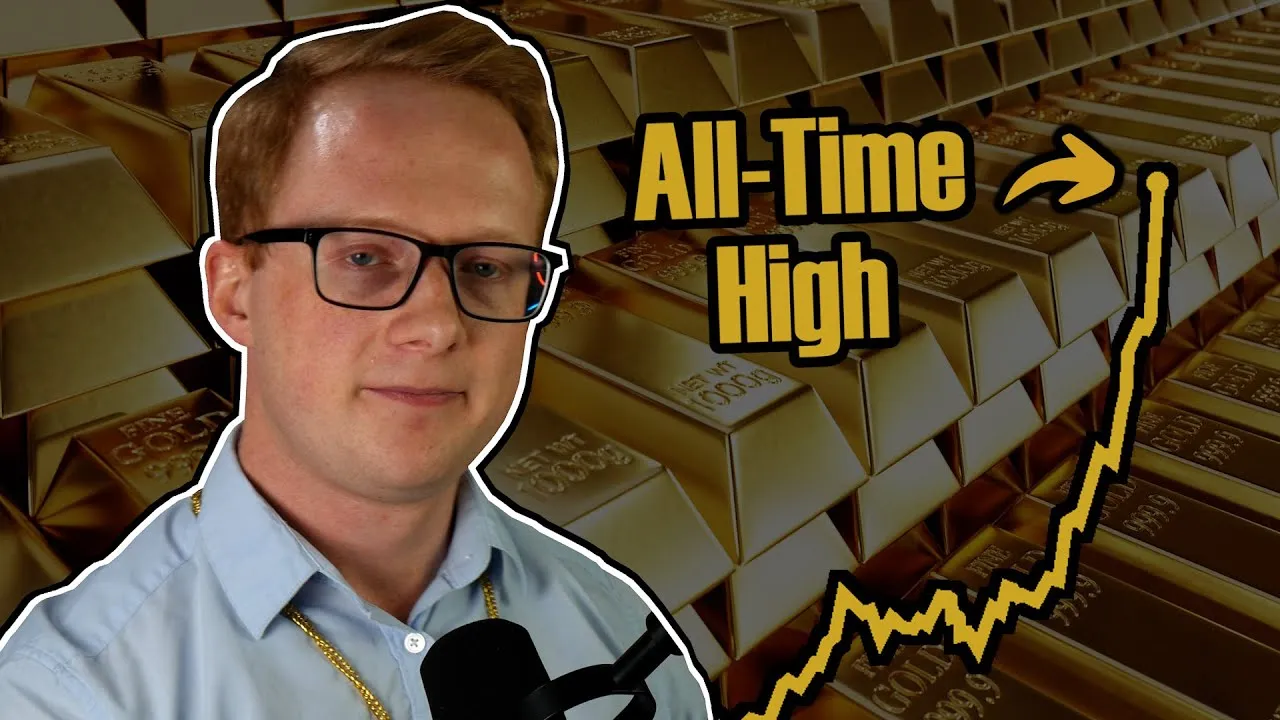
The precious metal gold has experienced a remarkable surge, climbing over 60% year-to-date and reaching an all-time high of nearly $4,400 earlier this week. This rally has extended to silver, which has also seen significant price appreciation. The heightened interest has manifested in unusual ways, with reports of people lining up at gold dealers in Australia and Vietnam, and search interest for buying gold reaching unprecedented levels. Even former President Donald Trump has reportedly been accumulating gold.
This euphoria surrounding gold’s ascent, however, is shadowed by a more concerning narrative gaining traction: the “debasement trade.” This theory posits that the rally is a direct response to ballooning government deficits, political instability, and substantial gold purchases by central banks. Proponents argue that gold’s price surge reflects a global apprehension about the potential collapse or replacement of the U.S. dollar, signaling a shift in the global financial order.
Understanding Gold as an Investment
Traditionally, investors turn to gold for several key reasons:
- Safe Haven Asset: Gold is widely perceived as a store of value that can preserve or even increase in worth during times of economic and geopolitical turmoil. Historically, it has surpassed significant price levels during periods of stress, such as $1,000 an ounce during the 2008 Great Financial Crisis, $2,000 during the COVID-19 pandemic, and $3,000 amid earlier trade tensions.
- Scarcity and Inflation Hedge: With its supply growing only about 2% annually, gold is a relatively rare commodity. This scarcity, combined with its historical role as a store of value, positions it as a hedge against inflation, protecting purchasing power when fiat currencies lose value.
- Historical Inertia: Perhaps the most significant driver of gold’s perceived value is its millennia-long history as a financial asset and a form of money. From its use in coinage and as backing for currencies to its current role in central bank reserves, gold’s deep-rooted historical significance continues to influence its status.
Despite the abandonment of the gold standard by developed countries in the 1970s, the debate over gold’s relevance in modern finance persists. While some view it as a relic, others maintain its fundamental importance as a sound monetary asset.
Factors Fueling the Current Gold Rally
Several converging factors are contributing to gold’s current popularity:
- Economic Uncertainty: Concerns about a potential recession persist. Goldman Sachs estimated a 20% recession probability within 12 months as of September, while J.P. Morgan placed it at 40% in July, and one UBS analyst suggested a staggering 93% probability in September. Some investors are also buying gold as a hedge against a potential bubble in AI stocks, given their high valuations and rapid growth. High government debt levels and the associated interest burden are also key economic anxieties.
- Political Instability: Political uncertainty, particularly in the U.S., is a significant driver. Actions and rhetoric from figures like Donald Trump have raised concerns about the integrity of the U.S. dollar, including pressure on the Federal Reserve. Government shutdowns and broader geopolitical tensions also contribute to a climate of uncertainty. Similar political divides are evident in other major economies, such as France, and policy shifts in countries like Japan raise concerns about future deficits.
- Central Bank Demand: In a notable shift from the post-gold standard era, central banks have become major buyers of gold, acquiring it at the fastest pace since the 1950s. The last three years have each seen over 1,000 tons of bullion purchased by these institutions. For the first time since 1996, central banks now hold more gold in their reserves than U.S. Treasuries, by value. This institutional buying is often channeled through gold Exchange Traded Funds (ETFs), which have seen over $60 billion in inflows in the first nine months of 2025.
The “Debasement Trade” Narrative
The “debasement trade” narrative suggests that the surge in gold prices is a signal of the U.S. dollar’s erosion in value. This concept draws parallels to historical instances where rulers debased currency by mixing precious metals with less valuable ones, leading to loss of trust and economic collapse. Proponents point to rising U.S. debt, the “weaponization” of the dollar against Russia, and general political instability as factors debasing the dollar. They cite a purported 10% decline in the dollar’s value this year and a decreasing share of the dollar in foreign reserves.
Prominent financial figures, including Ken Griffin of Citadel, Ray Dalio of Bridgewater, and Jamie Dimon of J.P. Morgan, have highlighted the risks associated with U.S. debt, with some acknowledging gold’s role as a potential hedge.
Skepticism Around the Debasement Narrative
Despite the compelling narrative, several points challenge the idea that the debasement trade is the primary driver of gold’s rally:
- Dollar Performance: While the dollar has seen some fluctuations, its overall movement hasn’t consistently mirrored gold’s sharp ascent. The dollar index has shown less dramatic movement since April, and the dollar remains roughly flat compared to three years ago.
- Inflation Expectations: Gold’s surge has not been accompanied by a significant increase in inflation expectations, which would typically accompany a scenario of currency debasement and runaway prices.
- U.S. Treasury Yields: Yields on U.S. Treasury bonds have not indicated a wholesale abandonment of the dollar. In fact, Treasury bond prices have increased since May, suggesting continued demand.
- Central Bank Holdings vs. Value: While central banks now hold more gold than U.S. Treasuries by value, this is largely due to gold’s price appreciation rather than a significant increase in the quantity of gold held. The U.S. dollar still constitutes the largest portion of foreign reserves globally, with approximately $7 trillion held compared to around $5 trillion in gold.
- Central Bank Buyers: The primary central bank buyers of gold year-to-date have been countries like Poland, Kazakhstan, and Turkey, with China, India, and Russia also being notable purchasers. However, a World Gold Council survey indicates that while the percentage of countries looking to increase gold reserves is rising, most central banks are not planning significant allocations, with interest primarily from emerging markets. Larger world powers have not shown the same aggressive accumulation, as holding liquid assets like U.S. dollars or Treasuries is crucial for monetary policy implementation.
Market Impact and Investor Considerations
While the “debasement trade” narrative offers a dramatic explanation for gold’s rally, a more nuanced view suggests a combination of factors, including safe-haven demand amid uncertainty and significant central bank accumulation.
What Investors Should Know:
- Volatility Risk: Gold, despite its safe-haven status, is not immune to volatility. The recent sharp price increase carries the risk of a correction. Analysts at Bank of America have noted that similar historical price movements have preceded declines of 20% to 33%. The metal has already seen a drop of over 5% from its recent peak, underscoring its potential for sharp reversals.
- No Guaranteed Returns: Scarcity alone does not guarantee demand or value appreciation. Platinum, for instance, is significantly rarer than gold but trades at a much lower price, highlighting that demand is driven by a complex interplay of historical perception, utility, and market sentiment, not just rarity.
- Opportunity Cost: Holding gold incurs costs related to storage and insurance, and it generates no income. Investors must weigh these costs against potential price appreciation.
- Uncertain Future Demand: Predicting gold’s future price is challenging, as it depends on evolving economic and political landscapes, as well as future demand trends. A cooling of geopolitical tensions or rising interest rates could lead to a pullback in gold prices.
- U.S. Central Bank Beneficiary: Ironically, the U.S. central bank, holding the largest gold reserves globally, stands to benefit from gold’s price appreciation.
Ultimately, while gold’s recent performance has been exceptional, investors should approach the current rally with a balanced perspective, considering the various drivers and potential risks rather than solely subscribing to extreme narratives like the “debasement trade.” The metal’s long-term value proposition remains subject to the unpredictable currents of global economic and political events.
Source: The 2025 Gold Rush – "Debasement Trade" or FOMO? (YouTube)