Google’s Nano Banana 2 Image Model Promises Unprecedented Speed and Quality
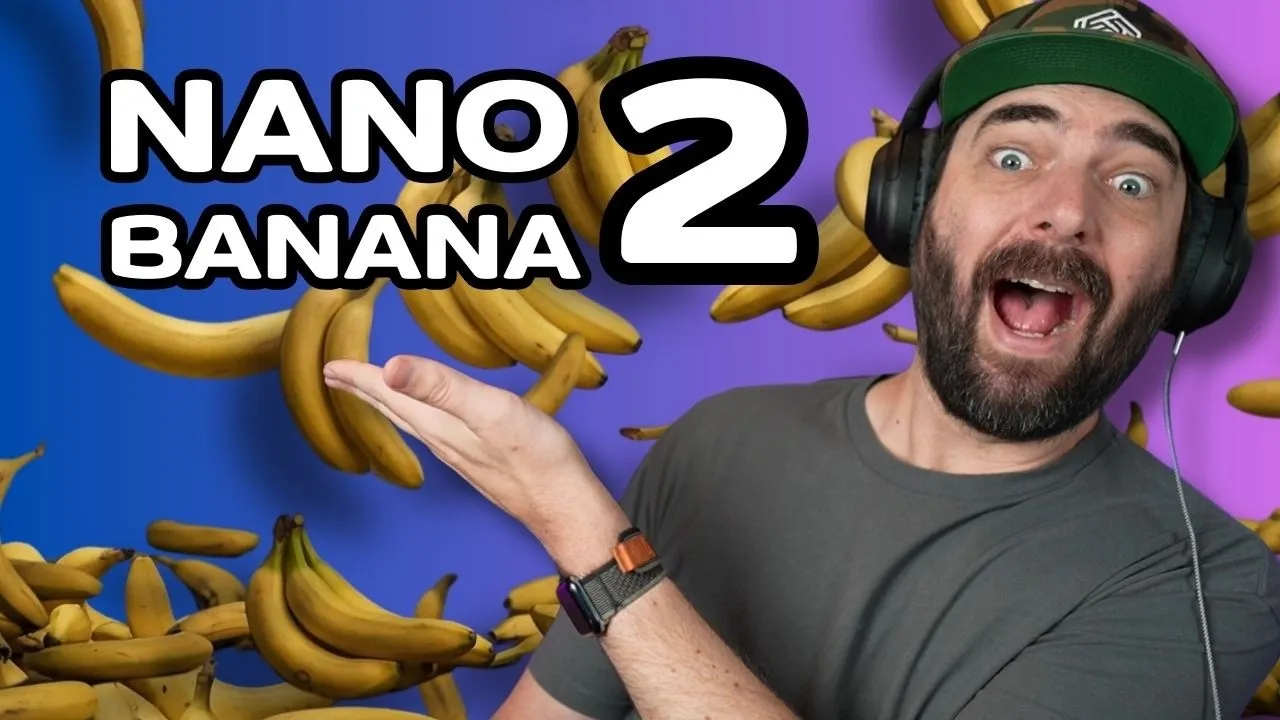
Google has officially launched Nano Banana 2, a significant upgrade to its AI image generation technology, now accessible to users. Previously known internally as Gemini 3.1 Flash, the model aims to deliver the sophisticated output quality and intelligence of its predecessor, Nano Banana Pro, but at dramatically accelerated speeds. This new iteration is poised to become the go-to tool for many users, offering a compelling blend of performance and capability.
Key Features and Performance Benchmarks
The core promise of Nano Banana 2 is its ability to provide pro-level quality and intelligence at flash-level speeds. Early tests indicate that Google is delivering on this claim, with image generation times significantly reduced compared to Nano Banana Pro. While the exact technical specifications like parameter count are not detailed, the performance leap is evident.
Key advancements highlighted by Google and tested include:
- Enhanced World Knowledge and Web Grounding: Similar to Nano Banana Pro, enabling more contextually relevant and accurate image generation.
- Accurate Text and Translation: The model boasts improved ability to render legible text and handle translations within images, a common challenge for AI image generators.
- Subject Consistency: Capable of maintaining consistency for up to five characters and up to fourteen objects within a single image, crucial for storytelling and sequential art.
- Stronger Instruction Following: Demonstrates a marked improvement in understanding and executing complex prompts, even surpassing Nano Banana Pro in some areas.
- 4K Output: The capability to generate images in production-ready formats, including up to 4K resolution, though achieving true 4K proved elusive in initial testing.
- Visual Fidelity Upgrade: An overall improvement in image quality and realism while maintaining high speeds.
Real-World Testing: Speed, Accuracy, and Consistency
Initial demonstrations showcased Nano Banana 2’s speed by generating a photorealistic water bottle with a logo in just about 10 seconds. Further iterations, including adding dramatic nighttime lighting, were also completed in roughly the same timeframe. These rapid generation cycles suggest a substantial improvement over previous models.
A direct comparison between Nano Banana 2 (referred to as ‘fast’ in testing) and Nano Banana Pro revealed that while Pro might still hold a slight edge in ultimate realism, the difference is marginal. Nano Banana 2 consistently generated images in roughly half the time, often within 13-15 seconds compared to Pro’s 25-35 seconds for similar tasks. This speed advantage is particularly notable when editing existing images.
Text Rendering and Translation Capabilities
Testing text rendering proved to be a significant benchmark. A complex prompt requiring a photorealistic laptop scene with a browser window displaying a fictional product’s pricing page, including specific headlines, subheads, a comparison table, and fine print, was given to both models. Nano Banana 2 successfully rendered all text accurately, with perfect spelling, alignment, and adherence to the requested UI design. In this specific test, the ‘fast’ model performed on par with the ‘Pro’ model, and in some instances, the output from the free tier was preferred aesthetically.
Translation tests also yielded impressive results. When asked to translate an English event poster into Spanish, Nano Banana 2 not only translated the text accurately but also maintained the original layout, typography, and style. In this instance, the ‘fast’ model was observed to produce a more visually appealing and detailed poster than the ‘Pro’ version.
Subject Consistency and Instruction Following
Subject consistency was put to the test by generating an image with five distinct characters and fourteen objects, and then asking the model to recreate the scene with specific actions. Nano Banana 2 largely succeeded in maintaining character identity and object presence across different scenarios. While one object (sunglasses) was inadvertently removed in one iteration, the overall consistency was strong.
However, more complex instruction following, such as changing camera angles while maintaining scene consistency, presented challenges. While characters remained consistent, the overall scene composition and object placement sometimes deviated from expectations, indicating areas where further refinement might be needed. Despite these nuances, the model’s ability to follow intricate prompts, like those specifying lens type, f-stop, lighting, and aspect ratio for product photography, was notably precise.
Resolution and Grounding Capabilities
Regarding resolution, while Google claims 4K output capabilities, testing indicated that images were consistently generated at 2752×1536 pixels, not the true 4K (3840×2160). This resolution was achieved by both Nano Banana 2 and Nano Banana Pro, suggesting that forcing higher resolutions might require specific prompting techniques or further model updates.
The model’s ability to ground image generation with real-world knowledge was also evaluated. An attempt to create an infographic of Petco Park with annotated landmarks showed that while the model could identify relevant locations, the spatial accuracy and layout of the infographic were not perfect. Annotating an existing image of the park yielded better, though not flawless, results, indicating that while web grounding is present, precision in complex spatial representations may still be a developing area.
Availability and Pricing
Nano Banana 2 is currently available for free within the Gemini interface at gemini.google.com for users in approximately 141 countries. The previous Nano Banana Pro model is now integrated into Google’s paid plans, specifically the Pro and Ultra tiers. Users on these paid plans can still access Nano Banana Pro, and can even opt to regenerate Nano Banana 2 outputs using the Pro model by selecting the “redo with Pro” option.
Beyond the Gemini interface, Nano Banana 2 is also slated for integration into Google AI Studio (aistudio.google.com), Google Cloud Vertex AI, and Google Flow, where it will serve as the default image generator and will be available at no cost.
Why This Matters
The launch of Nano Banana 2 represents a significant democratization of high-quality AI image generation. By offering pro-level capabilities for free and at unprecedented speeds, Google is lowering the barrier to entry for creators, designers, and businesses. This advancement means faster iteration cycles for visual content, more accessible tools for complex design tasks, and the potential for innovative applications across various industries.
While Nano Banana Pro may retain a slight edge in niche areas like ultra-realism and intricate web-grounded infographics, Nano Banana 2 is positioned to become the daily driver for most users. Its speed, accuracy in text rendering, and strong instruction-following capabilities make it a powerful and practical tool for a vast range of creative and professional needs.
Source: Google Upgraded Nano Banana (Free and Super Fast)! (YouTube)