Understand Robot Processing Speeds
This article explains the concept of how quickly robots process information and execute commands, drawing parallels between physical robots, simulations, and human reaction times. You will learn about standard update rates for humanoid robots, the impact of simulation frame rates, and how these compare to human neurological responses. We will also touch upon how simpler robotic systems can operate at lower frequencies.
Robot Control Update Rates
When we talk about how fast a robot ‘thinks’ or processes information, we are essentially referring to how frequently its control system updates. This is crucial for its ability to perceive its environment, make decisions, and execute actions in real-time.
Physical Robots: The Kilohertz Standard
For actual physical robots, especially advanced humanoid robots, the standard for achieving what is considered ‘good control’ is to update the system at a rate of one kilohertz (1 kHz). This means the robot’s control system is being refreshed 1,000 times every second.
Expert Note: While a kilohertz is the current industry standard for high-performance control, some advanced methods have managed to achieve effective control with update rates as low as a few hundred hertz (e.g., 200-300 Hz). This is often due to highly optimized and efficient calculation methods employed in their control algorithms. However, the kilohertz standard remains prevalent for robust and responsive control in modern robotics.
Simulations vs. Reality
In the context of animated simulations, the concept of ‘thinking speed’ is directly tied to the frame rate. A higher frame rate in a simulation means that more frames are displayed per second, leading to smoother and more realistic motion. While frame rates in simulations can be adjusted, they represent a digital approximation of real-world processing. In physical robots, the update rate is a measure of the actual computational cycles dedicated to control loops.
Human Reaction Time: A Biological Benchmark
To put robot processing speeds into perspective, it’s useful to compare them with human reaction times. If a person experiences a sudden stimulus, such as being pricked on the foot, their reaction time can be around 100 milliseconds (ms). Since 100 milliseconds is equal to 0.1 seconds, this translates to a processing rate of about 10 hertz (10 updates per second).
Observation: Despite a relatively slow reaction time compared to the kilohertz standard of robots, humans are capable of complex movements like walking and running effectively. This observation suggests that not all tasks require extremely high processing speeds, and that ‘smart decisions’ and efficient algorithms can compensate for lower update rates.
Simpler Robotic Systems and Lower Frequencies
Not all robots require the ultra-fast processing speeds of advanced humanoid robots. For simpler robotic systems, particularly those that rely on timing and making specific, less complex decisions, lower update rates can be sufficient. For instance, a robot that primarily needs to time its actions, such as pushing off at the right moment, might operate effectively in the range of 10 hertz.
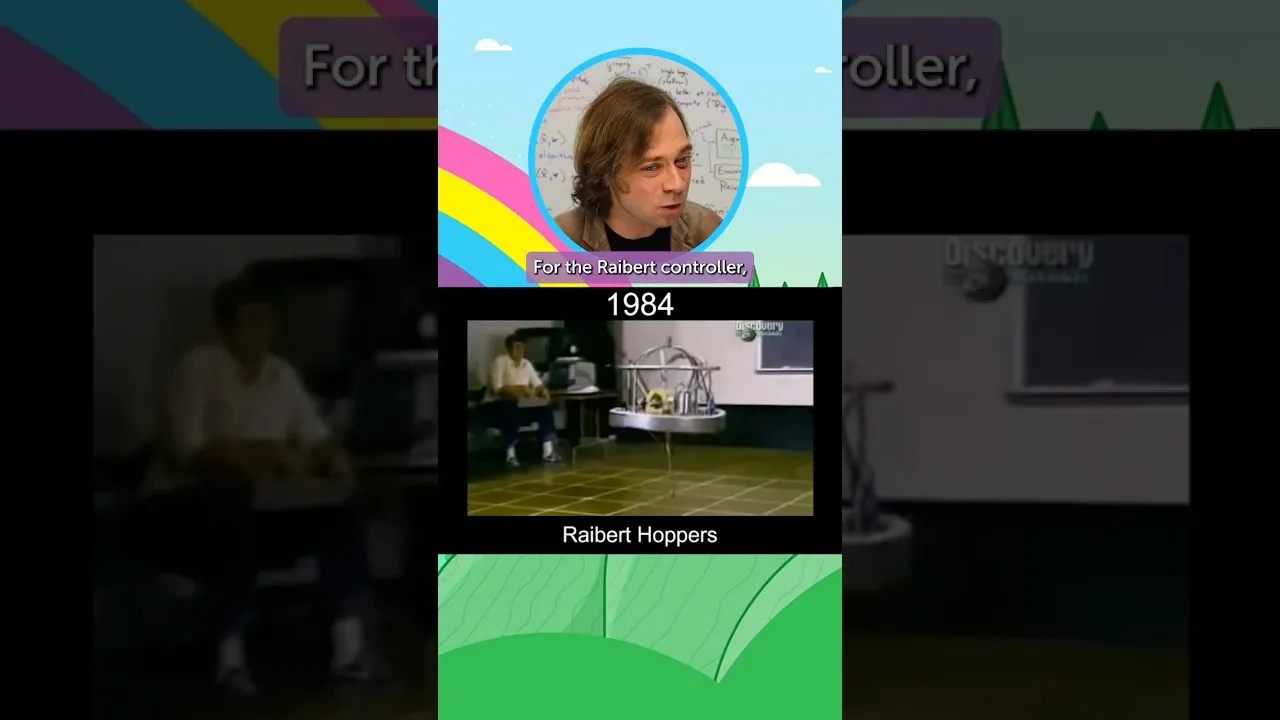
Example: A controller designed for a simple system like the ‘Rayboard controller’ (mentioned in the source material) might operate on the order of 10 hertz. This is because the control logic is straightforward, focusing on precise timing rather than continuous, complex environmental analysis and response. The ability to ‘get away with it’ at this lower frequency highlights the task-dependent nature of robotic processing requirements.
Key Takeaways
The speed at which a robot ‘thinks’ is determined by its control system’s update rate. While modern humanoid robots often aim for a kilohertz standard for high performance, simpler systems can function effectively at much lower rates, such as 10 hertz. Human reaction times provide a biological comparison, showing that complex actions are possible even with slower processing cycles. Ultimately, the required processing speed depends heavily on the robot’s intended application and the complexity of its tasks.
Source: How Fast Do Robots Think? #robot #coding #p5js #simulation (YouTube)