Discover Jupiter’s Surprising Role in Earth’s Formation
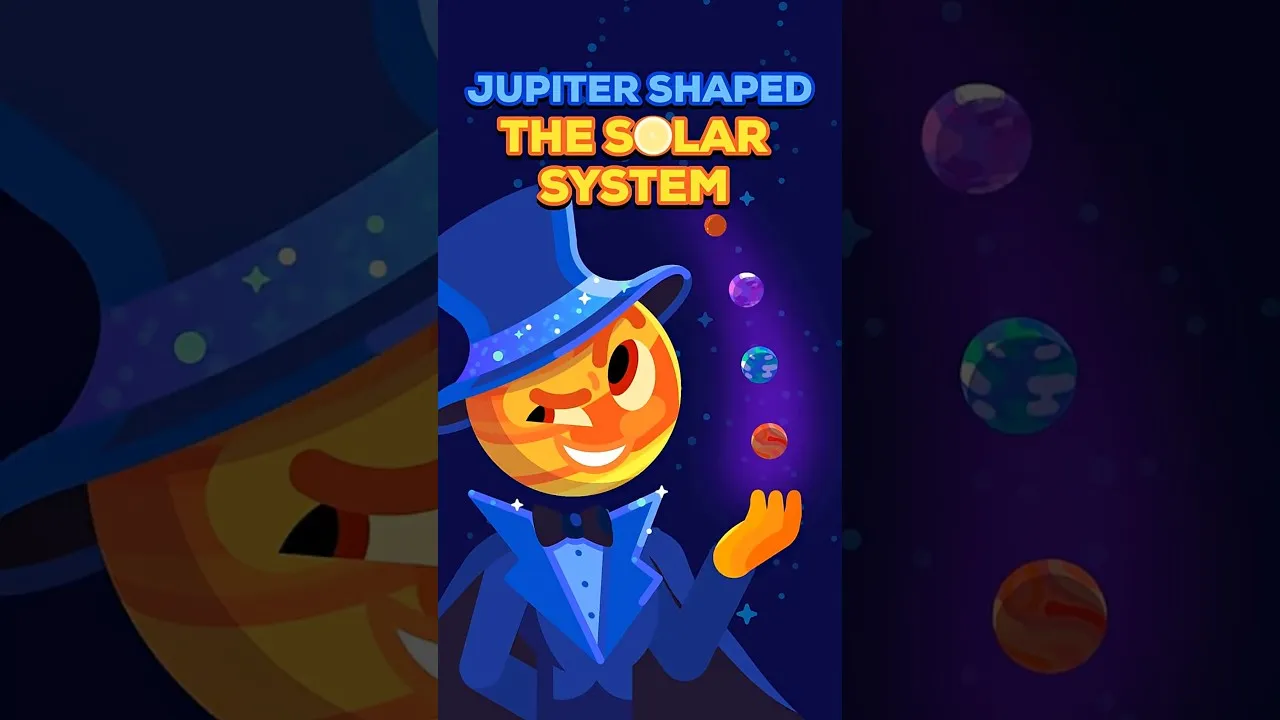
While we often admire Jupiter as the largest planet in our solar system, its influence extends far beyond its size. It has played a crucial, albeit chaotic, role in shaping the early solar system, directly impacting the conditions that allowed Earth to form and potentially harbor life. This article delves into the fascinating, and sometimes turbulent, journey of Jupiter and how its gravitational prowess influenced our planetary neighborhood, including the creation of Mars and the very existence of Earth as we know it.
What You Will Learn
- How Jupiter’s early migration affected the inner solar system.
- The connection between Jupiter’s movements and the formation of Mars.
- The critical role Jupiter played in enabling Earth to form and retain its water.
- Why Earth might not have life without Jupiter’s gravitational influence.
Understanding Jupiter’s Early Solar System Migration
In the early days of our solar system, approximately 4.5 billion years ago, the planets were not in their current stable orbits. Gravitational interactions were rampant, and the gas giants, in particular, were on the move. Jupiter, being the most massive, exerted a significant gravitational pull that influenced the positions of other celestial bodies.
Step 1: Jupiter’s Initial Journey Inward
Evidence suggests that Jupiter, along with Saturn, likely migrated inwards towards the Sun in the early solar system. This inward journey was a period of great upheaval. As Jupiter moved, its immense gravity disrupted the orbits of smaller bodies, such as asteroids and planetesimals, that were scattered throughout the protoplanetary disk.
Step 2: Gravitational Disruption of Inner Solar System Objects
Jupiter’s gravitational influence acted like a cosmic wrecking ball. It sent countless rocky and icy bodies careening in various directions. Many of these objects were flung outwards, contributing to the formation of the asteroid belt as we know it. Others were sent on trajectories that would eventually impact the inner planets.
Expert Note: This period of intense gravitational interaction and bombardment is often referred to as the ‘Late Heavy Bombardment’ in Earth’s history, though Jupiter’s influence predates and likely contributed to this event.
How Jupiter Shaped Mars
Jupiter’s migration had a profound effect on the formation and characteristics of Mars. The disruption caused by Jupiter’s gravity played a key role in the planet’s development.
Step 3: Clearing Material for Mars’s Formation
As Jupiter moved inwards and then possibly back outwards (a theory known as the ‘Grand Tack’), it cleared out a significant amount of material from the region where Mars is now located. This clearing action may have prevented Mars from growing into a much larger planet, similar to Earth or Venus. Essentially, Jupiter’s presence ‘stole’ the building blocks that could have made Mars a more massive world.
Step 4: Impacting Mars with Asteroids
The debris scattered by Jupiter’s gravitational influence also bombarded the forming Mars. This constant barrage of asteroids and planetesimals likely contributed to Mars’s current surface features, including its heavily cratered terrain and potentially even its tilted axis. The sheer volume of impacts may have stripped away much of Mars’s early atmosphere, contributing to its transformation into the cold, dry planet we see today.
Warning: The exact path and duration of Jupiter’s migration are still subjects of scientific research, and different models propose slightly varied scenarios. However, the general consensus is that its influence was significant.
Jupiter’s Crucial Role in Earth’s Habitability
Perhaps the most significant impact of Jupiter’s presence is on Earth’s ability to form and sustain life. Its gravitational shield has protected our planet in ways that are essential for our existence.
Step 5: Protecting Earth from Frequent Asteroid Impacts
While Jupiter’s gravity disrupted objects in the early solar system, its massive presence also acts as a gravitational guardian for Earth. Its immense pull captures or deflects many comets and asteroids that might otherwise head towards the inner solar system, including Earth. Without Jupiter acting as a cosmic vacuum cleaner, Earth would likely have experienced far more frequent and devastating impacts throughout its history. Such constant bombardment could have sterilized the planet, preventing the development and evolution of life.
Step 6: Enabling Earth to Retain Water
Another critical role Jupiter played was in the early formation of Earth itself. During the period when Earth was forming, there was a significant amount of water-rich material (asteroids and comets) available in the solar system. Jupiter’s gravitational influence helped to guide some of this material towards Earth. More importantly, Jupiter’s later outward migration, or its stable position, may have created a ‘sweet spot’ in the inner solar system that allowed Earth to accumulate and retain its water, rather than having it all flung away or bombarded off the planet.
Did You Know? Some scientific models suggest that if Jupiter had migrated differently, Earth might have ended up with significantly less water, or perhaps none at all, making life as we know it impossible.
Conclusion: The Unsung Hero of Earth’s Existence
The story of our solar system is one of dynamic change and powerful gravitational forces. Jupiter, the giant of our solar system, was not just a passive observer but an active architect. Its early migrations and ongoing gravitational influence have profoundly shaped the planets around it, from hindering Mars’s growth to safeguarding Earth from cosmic threats and ensuring it had the water necessary for life. Without Jupiter’s complex and often chaotic role, the Earth we inhabit, and the life it supports, might never have come to be.
Source: Jupiter Made Earth Possible (YouTube)