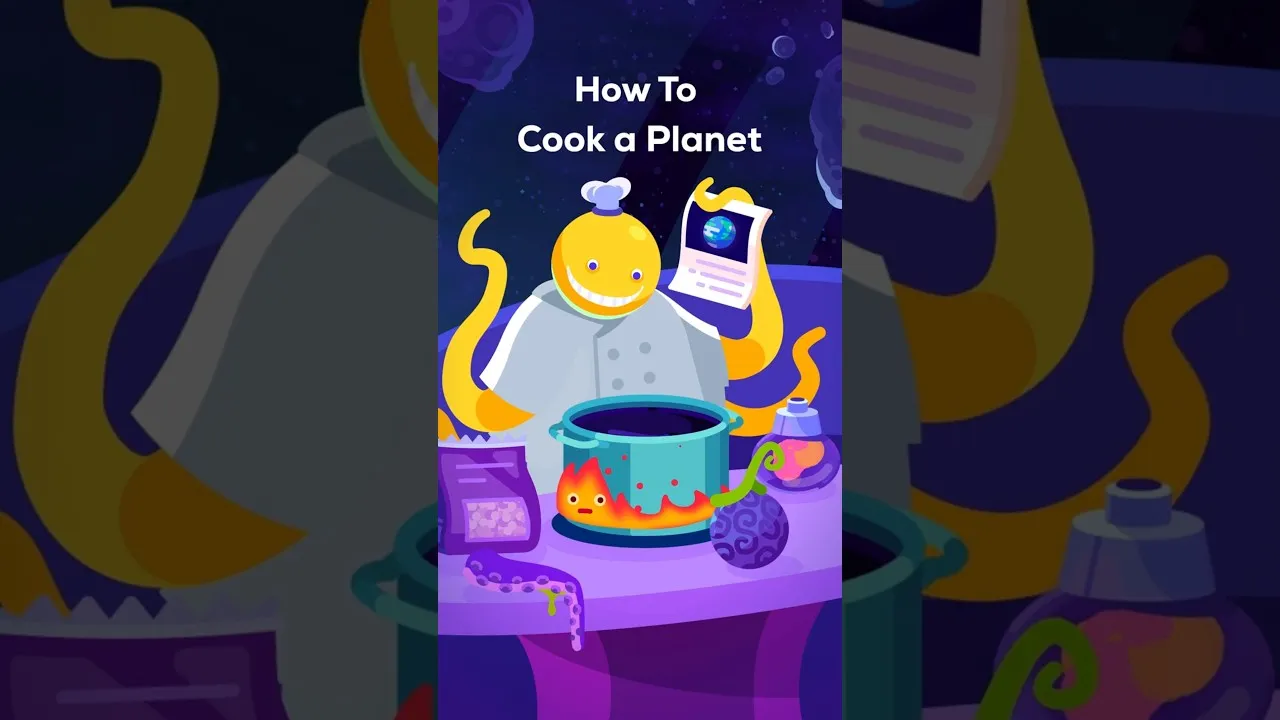
How to Build an Earth-like Planet From Scratch
Have you ever wondered how planets, especially those like our own Earth, come to be? This guide will walk you through the fundamental steps of creating an Earth-like planet from the very beginning, using the cosmic ingredients and processes observed in our universe. You’ll learn about the initial formation stages, the critical role of temperature and composition, and the events that shape a planet’s unique characteristics.
Prerequisites
- A newborn star (for heat and gravitational influence)
- Vast amounts of dust and gas
- Time (millions to hundreds of millions of years)
- Gravity
Steps
Initiate Accretion with Dust and Gas
Begin by swirling immense quantities of dust and gas around a newly formed star. This cosmic cloud is the raw material for planet formation. The star’s presence is crucial, providing both the initial energy and the gravitational anchor for this process.
Form Planetesimals Through Gravity
Once the dust and gas are in motion, activate gravity. This fundamental force will cause the dispersed dust particles to clump together. These initial clumps will grow into larger bodies known as planetesimals, which are essentially the building blocks of planets.
Bake and Cool: The Temperature Game
Gently bake your forming planet in the starlight for a few million years. Temperature control is paramount during this stage. If the environment is too cold, you risk forming gas giants, characterized by large amounts of frozen water, dust, and slow-moving gas molecules. Conversely, if the temperature exceeds approximately 1,000° C, the conditions will be too extreme for the formation of an Earth-like rocky planet. Aim for a moderate temperature range.
Expert Tip: The balance of heat from the star and the initial composition of the dust and gas significantly influence the type of planet that forms. Too much of certain elements or too much heat can lead to vastly different outcomes.
Manage Composition for Density
The amount and type of solid material available are critical for determining the planet’s density. Ensure you are using the right proportion of ingredients. If too much solid material is accumulated, the resulting planet will be denser than Earth. The goal is to achieve a composition that allows for a rocky, Earth-like structure.
Deliver Water with Asteroids and Comets
Water is essential for an Earth-like planet. To deliver it, utilize asteroids, comets, and smaller pebbles. These celestial bodies, originating from the colder regions of the solar system, carry significant amounts of ice. Introduce them to your forming planet to provide the necessary water content.
Allow for Core Formation and Cooling
After the initial accretion phase, let your world cool down for several hundred million years. However, this cooling process must be managed carefully; it should not be too rapid. During this period, heavy elements such as iron and nickel, which are still in a liquid state, need to settle and accumulate to form the planet’s core. This process must occur before a solid crust forms on the outside.
Warning: If the cooling is too fast, the core may not form properly, or a solid crust might develop prematurely, hindering the differentiation of internal layers.
Add Personal Touches: Impacts and Axis Tilt
To give your planet unique characteristics, introduce a few asteroid impacts. These impacts can serve multiple purposes: they can help in the formation of moons and can also contribute to the planet developing a tilted axis. A tilted axis is responsible for seasons on Earth.
Observe the Final Outcome (and Potential Hazards)
With all the ingredients and processes in place, your planet is nearing completion. However, be aware that even minor adjustments to this cosmic recipe can lead to dramatic and potentially hazardous outcomes. For instance, slight variations might result in extreme weather phenomena like rainstorms of molten glass or the formation of ice clouds, far from the Earth-like conditions you aimed for.
Expert Note: The chaotic nature of early solar system formation means that impacts and gravitational interactions are common. These events, while potentially destructive, are also crucial for shaping planetary bodies and delivering key components like water and volatiles.
Source: Let’s Cook a Planet! (YouTube)