How to Witness a Nuclear Reactor Refueling Safely
Nuclear power plants are complex facilities, and understanding their operation, especially during critical maintenance like refueling, can be challenging. This article provides a step-by-step guide to understanding the process of refueling a nuclear reactor, based on an immersive experience at the Browns Ferry Nuclear Plant. You will learn about the safety protocols, the equipment involved, and the overall procedure of removing spent fuel and inserting new fuel assemblies.
Prerequisites
- Basic understanding of power generation concepts.
- Willingness to follow strict safety guidelines.
Step 1: Understanding the “Outage”
Before witnessing a refueling, it’s crucial to understand what an “outage” signifies in a nuclear power plant. An outage is a planned period when a reactor unit is taken offline. This is necessary to perform essential maintenance, repairs, and, most importantly, refueling. While one unit is undergoing an outage, other units at the plant may continue to operate and generate power. This phase is critical for ensuring the long-term safety and efficiency of the plant.
Step 2: Site Entry and Security Protocols
Accessing a nuclear power plant, especially during an outage, involves rigorous security measures. Visitors must undergo extensive security checks, which may include biometric scans and identity verification. Cameras and recording devices are often restricted in certain areas. Personal identification and authorization are paramount throughout the process.
Tip:
Expect security to be a top priority. Always follow instructions from security personnel and be prepared for multiple layers of checks.
Step 3: Dosimetry and Radiation Monitoring
A key aspect of safety in nuclear facilities is monitoring radiation exposure. Visitors and personnel are issued dosimeters, devices that measure the amount of ionizing radiation absorbed. These dosimeters are critical legal records of exposure. In addition to a legal dosimeter, self-reading dosimeters (SRDs) provide real-time dose information. Anyone entering a Controlled Radiation Area (RCA) must be equipped with and properly log their dosimeter usage.
Expert Note:
Dosimeters are essential for ensuring that all individuals remain within safe radiation exposure limits. They are tracked meticulously for everyone working within the plant.
Step 4: Understanding Fuel Assemblies and the Core
Nuclear reactors generate power through nuclear fission, which occurs within fuel assemblies. These assemblies contain fuel rods, which are filled with pellets of nuclear fuel. During a refueling outage, these spent fuel rods are removed from the reactor core and replaced with new ones. A mockup of a fuel assembly, like the ATRIUM-11, is often used for training and demonstration purposes, showing the fuel rods and pellets.
Did You Know?
A nuclear plant can operate for up to two years on a single refueling of its core, a stark contrast to the constant supply of coal required for coal-fired power plants.
Step 5: The Refueling Process
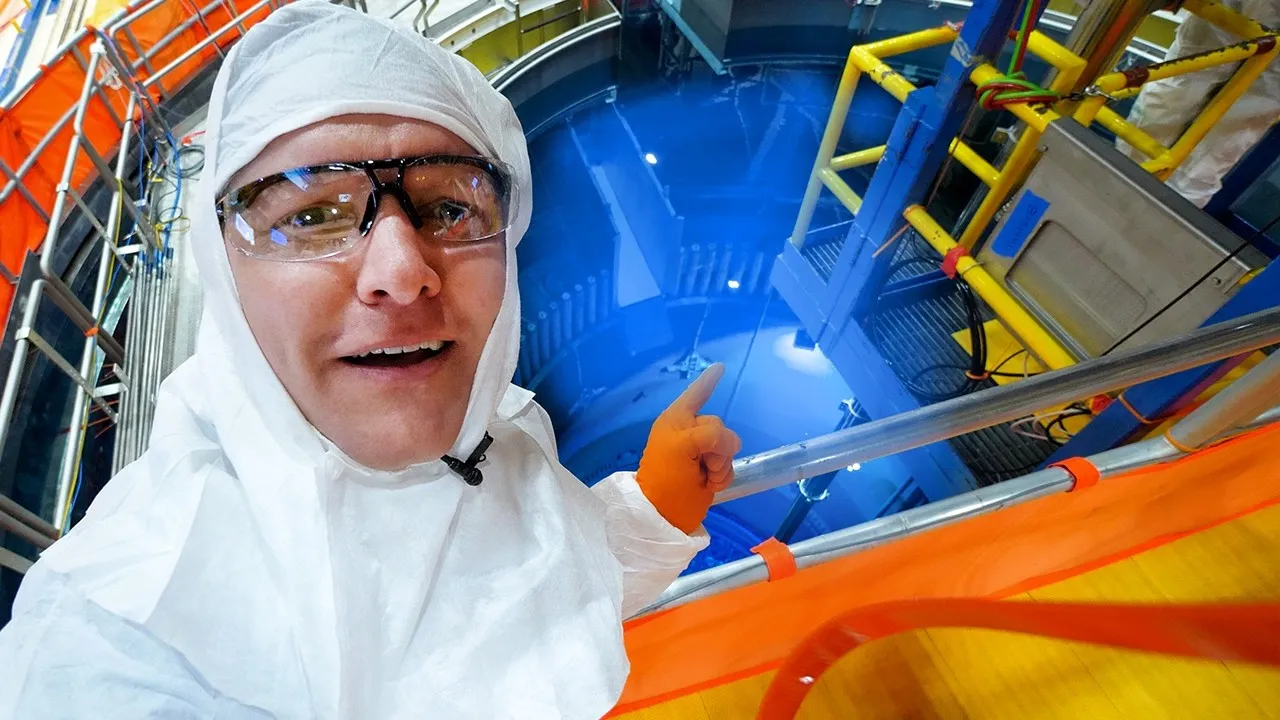
The refueling process is a carefully orchestrated event. For Boiling Water Reactors (BWRs) like the one at Browns Ferry, the reactor vessel is flooded with water. The reactor head and drywell head are removed and placed on stands. Shielding blocks are then removed to allow access to the fuel assemblies. A specialized crane, often equipped with a camera and a grapple mechanism, is used to lift the fuel assemblies from the core and transfer them. This process is performed with extreme precision, moving fuel from the reactor core to the spent fuel pool.
Observation:
The crane operator carefully maneuvers the fuel assembly, verifying its unique identifier before latching on and lifting it. This meticulous process ensures that each fuel assembly is handled correctly and placed in its designated location.
Step 6: Safety Over the Core and Foreign Material Control
Working above an open reactor core or spent fuel pool requires strict adherence to foreign material exclusion procedures. This means ensuring that no objects or debris are accidentally dropped into the core. Personnel undergo specific training to understand the rules and regulations associated with working in these areas. This prevents items from falling into the reactor and potentially causing damage or interfering with operations.
Warning:
Synthetic fibers in clothing can generate static electricity, which can attract radon. Radon is a naturally occurring radioactive gas that can adhere to clothing and set off radiation detectors. It’s important to wear appropriate, often natural, fiber clothing in controlled areas.
Step 7: Understanding Reactor Types (BWR vs. PWR)
Nuclear power plants primarily use two types of reactors: Boiling Water Reactors (BWRs) and Pressurized Water Reactors (PWRs). In a BWR, water boils directly inside the reactor vessel, creating steam to drive turbines. This design involves a large pocket of steam within the vessel. PWRs, on the other hand, operate at higher pressures, preventing mass boiling within the reactor vessel, though nucleate boiling (tiny bubbles forming and collapsing) occurs on the fuel surfaces. Both types operate at high temperatures and pressures, ultimately using steam to generate electricity.
Analogy:
A BWR is similar to a steam locomotive, which has a large reservoir of steam. A PWR operates more like a closed system where boiling is suppressed.
Step 8: Control Room Operations and Monitoring
The control room is the nerve center of the nuclear power plant. Here, operators monitor the status of the reactors using various instruments and displays. Megawatt meters show the power output of each unit. Plant managers often express a preference for “boring” operations, meaning steady-state power generation with no unexpected fluctuations. During an outage, operators carefully manage the process of taking a unit offline and bringing it back online, ensuring all safety parameters are met.
Key Takeaway:
The goal of nuclear plant operation is stability and predictability. Unexpected readings on control room dials can indicate issues that require immediate attention.
Step 9: Radiation Worker Permit (RWP) and Access
Before entering specific work areas, especially the RCA, personnel must obtain a Radiation Worker Permit (RWP). This involves signing in, understanding dose limits, and setting alarms for dose and dose rate. The RWP grants authorized access to specific areas for a defined period and purpose. It’s a critical administrative control to manage radiation exposure and ensure accountability.
Procedure:
To obtain an RWP, one typically scans their dosimeter, provides a work order number, and selects the appropriate permit. Set points for dose and dose rate alarms are established, often at relatively low levels for sensitive areas like the refuel floor, to ensure safety.
Conclusion
Witnessing a nuclear reactor refueling offers a profound insight into the meticulous engineering and stringent safety culture that underpins nuclear power generation. From the initial security protocols and dosimetry to the complex mechanical operations of fuel handling and the constant monitoring in the control room, every step is designed to ensure safety and efficiency. By understanding these processes, the mystique surrounding nuclear power can be demystified, replaced by an appreciation for the science and dedication involved.
Source: Refueling a NUCLEAR REACTOR – Smarter Every Day 311 (YouTube)