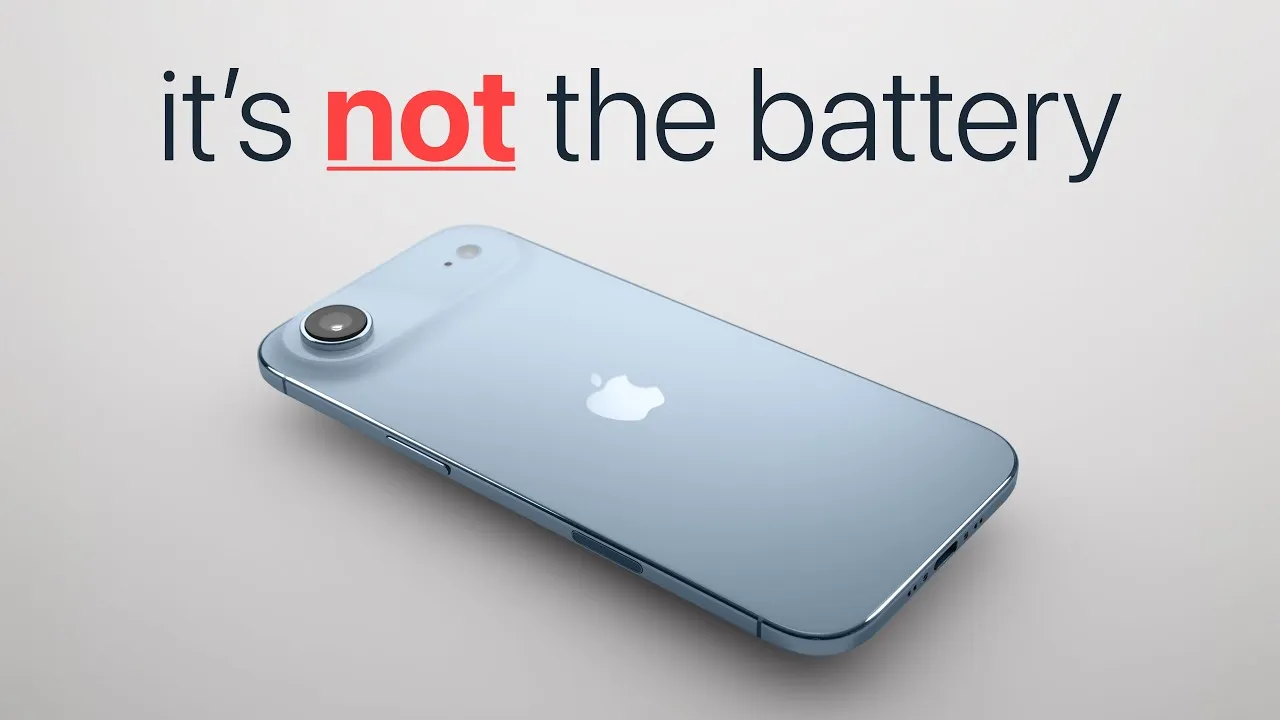
iPhone Air: Thinness Comes With Compromises
The allure of a device that prioritizes sleek design and ultra-portability is undeniable. For those who value a slim profile above all else, the latest iPhone Air might seem like the dream device. With its striking design and impressive durability, it certainly captures attention. However, after spending time with Apple’s most interesting iPhone in years, it’s clear that this commitment to thinness introduces several pain points, with one standing out as a potential dealbreaker for many.
Battery Life: A Day’s Work, If You’re Careful
In an era where smartphones boast incredible battery longevity, the iPhone Air’s endurance might raise eyebrows. Compared to high-end flagships with massive batteries, its lifespan is noticeably shorter. However, when measured against a typical 3-4 year old smartphone, the Air delivers a respectable full day of use. Apple’s focus on efficiency means that for regular, moderate tasks, users can comfortably get through a day without reaching for a charger. Gamers and heavy users, however, will find themselves needing a mid-day top-up, as the device is optimized for lighter workloads.
For those seeking extended power, Apple offers a MagSafe battery pack. This accessory provides approximately a 65% charge but, unfortunately, negates the phone’s slim advantage, turning it into a thicker, more conventional-sized device during use.
Camera: Simplicity That Might Suffice
The iPhone Air features a single-lens camera system, and for many, it’s more than capable. It performs well, even in low light, and excels at video recording, as expected from an iPhone. Over two weeks of testing, the absence of telephoto or ultra-wide lenses wasn’t keenly felt for everyday snapshots. The reviewer found that the majority of their camera roll consisted of photos taken with the main lens anyway.
The decision to opt for the Air hinges on your photographic habits. If you frequently travel, attend concerts, or find yourself needing those extra focal lengths often, you might miss the versatility. A quick audit of your own camera roll – counting the percentage of photos taken with secondary lenses – can offer a clear indication of whether the Air’s camera setup will meet your needs.
The front-facing camera, shared across all iPhone models this year, is a significant improvement and performs admirably.
Performance and Thermals: Pushing the Limits
Equipped with 12GB of RAM and the Pro chip, the iPhone Air boasts impressive internal specs. However, its thermal management is a notable drawback. Unlike the Pro model, which benefits from a vapor chamber and aluminum chassis, the Air’s glass back and titanium frame struggle to dissipate heat effectively. Under sustained heavy loads, such as intensive 3D gaming or video editing on the go, the iPhone Air is prone to performance throttling due to overheating.
While the average user might not encounter these issues during daily tasks, power users who intend to push the device’s limits will find the Pro model a more suitable choice for consistent, long-term performance.
The Speaker: A Quiet Concern
The most significant point of contention for the iPhone Air is its single, mono speaker. It’s been eight years since a mainstream phone shipped with such a setup, and the compromise is palpable. In portrait mode, the mono sound emanates from the top, but in landscape, it’s confined to a single side. The thin driver struggles to produce any meaningful bass, leading to a generally underwhelming audio experience for media consumption or gaming.
The real issue, however, is volume. Measurements reveal a significant 10dB difference – nearly double the perceived loudness – compared to the iPhone 17. While the Air’s speaker is functional, it’s considerably quieter than most modern smartphones. This became starkly apparent during a FaceTime call in a moderately noisy backyard environment, where the conversation was barely audible. Similarly, while cooking with kitchen appliances running, the reviewer had to turn off the fan and stove to hear a phone call on speakerphone.
This limitation is particularly problematic for users who regularly rely on speakerphone or FaceTime in environments with ambient noise, especially when multiple people are involved. While not every user will be impacted, those who depend on clear, loud audio in such situations will undoubtedly notice the deficit.
The Verdict: Is Thinness Worth the Trade-Off?
While each of the four identified issues – battery life, camera limitations, thermal throttling, and the mono speaker – can be managed or may not affect every user, their cumulative effect, combined with the waning novelty of the phone’s thinness, is worth considering. The initial wow factor of holding an incredibly thin device does fade, and users might find themselves adjusting their usage patterns to circumvent these compromises.
The iPhone Air is designed for a specific user: one who prioritizes extreme portability and is content with moderate performance, a capable but basic camera, and the ability to charge frequently. If these compromises don’t faze you, and you can overlook the quieter speaker in noisy environments, the Air offers a unique, albeit compromised, experience. However, for most users, the trade-offs might outweigh the aesthetic and ergonomic benefits, making a different iPhone model a more practical choice for daily use.
Specs & Key Features
- Display: (Specifics not detailed in transcript)
- Processor: Pro chip
- RAM: 12GB
- Rear Camera: Single lens system
- Front Camera: Improved, same as other iPhone models
- Battery: Full day for light to moderate use; requires mid-day charging for heavy use/gaming. Optional MagSafe battery pack available.
- Audio: Single mono speaker
- Build: Glass back, titanium frame
- Durability: High resistance to bending
- Connectivity: MagSafe compatible
Source: My Biggest Issue With The iPhone Air (YouTube)