From Basement Hobby to Entrepreneurial Empire: A 3D Printing Transformation
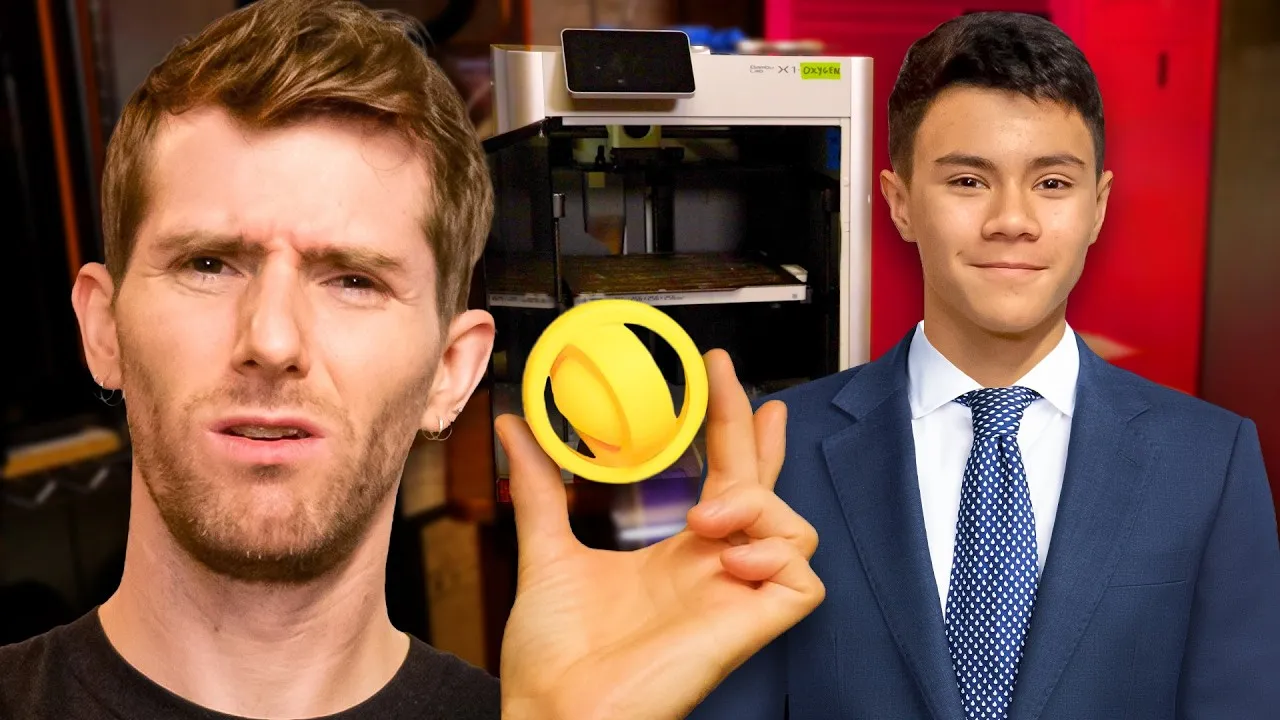
What started as a simple Christmas gift has blossomed into a full-blown entrepreneurial venture for one family, transforming a cluttered basement into a burgeoning 3D printing business. What began with a single 3D printer for the kids has rapidly expanded, leading to a surprising demand for more machines and a critical need for organization and efficiency. The journey from printing toys to generating significant revenue at school entrepreneur fairs highlights the unexpected power of accessible technology and the ingenuity of young minds.
The Unexpected Success Story
A year ago, a 3D printer was gifted with the hope of sparking an interest in technology. The plan was to encourage learning about 3D printing and modeling, fostering curiosity about how things work. This hope was quickly surpassed by reality. The children not only embraced the technology but turned it into a successful business, selling 3D printed fidgets and gadgets to classmates. One child even reported earning $200 at a recent entrepreneur fair, bringing their total earnings to a remarkable $500. The popularity has extended beyond peers, with teachers reportedly becoming avid customers for the most popular items.
Scaling Pains: More Than Just Printers
The success, however, brought its own set of challenges. The influx of new 3D printers, including a Prusa Core i1 sent for evaluation, quickly overwhelmed the existing workspace. The mechanical room, once a simple hobby space, became an “entrepreneurial hurricane.” The lack of organization became immediately apparent, exacerbated by a critical incident: a destroyed print head on the original Bambu P1S machine, a casualty of an attempt to remove filament with a torch that melted a temperature probe. This incident, blamed on sibling rivalry, highlighted the need for proper maintenance and a deeper understanding of printer components.
Upgrading and Optimizing: The Panda Revo Hotend and Beyond
To address the immediate repair needs and future-proof the operation, the team turned to the BQ Panda Revo hotend. This upgrade promises faster nozzle changes and introduces obsidian nozzles, ideal for abrasive materials, alongside brass options in various sizes, including a fine 0.25mm for detailed prints. The hotend, priced around $75 per nozzle, represents a significant investment, prompting a discussion about the business’s cost-sharing model. While the parents are providing equipment, consumables like filament are expected to be reimbursed by the children. The cost of advanced hotends like the Panda Revo, however, falls into a gray area, blurring the lines between equipment and consumable.
Consumables and Filament Management
The rapid pace of printing also highlighted the importance of filament management. Running out of red filament became a recurring issue, underscoring the need for better inventory tracking. A new solution for filament storage emerged with Wiser Dry rechargeable silica gel desiccant packs. These packs, which change color when saturated and can be recharged via microwave, oven, or filament dryer, offer a sustainable and effective way to keep filament dry, whether in AMS units or vacuum-sealed bags. The necessity of proper filament storage was further emphasized by the discovery of moist, likely old desiccant in the AMS, and the revelation that children were only reimbursing filament based on the weight of finished prints, not accounting for the substantial waste generated during the printing process.
Workspace Overhaul: From Chaos to Order
With the business scaling, the cramped and disorganized mechanical room became untenable. The arrival of three retired Bambu X1C printers from an office print farm necessitated a complete spatial reevaluation. The process involved clearing out existing storage, building new shelving, and strategically arranging the printers. A key consideration was making the space accessible and safe for the children, particularly the younger one, influencing the placement of AMS units and tools. The transformation involved not just physical organization but also addressing environmental concerns, with the introduction of an air purifier to mitigate potential fumes from printing materials like PLA and PETG.
Print Bed Adhesion and Best Practices
Print failures, even on reliable machines like the Core i1, became a point of concern. Addressing bed adhesion issues required a deeper dive into best practices. For textured beds, a switch from isopropyl alcohol to a mild detergent and water solution was recommended for cleaning, ensuring the removal of oils and contaminants. For smooth beds, while isopropyl alcohol is acceptable, new Super Tac Cool plates were introduced, promising the ability to print at lower temperatures, saving time and reducing the risk of part warping from hot bed removal. The strategy of swapping print plates post-print allows for continuous printing while the removed plate cools. Other adhesion aids discussed include running the first layer hotter, ensuring the auxiliary fan is off, and using PVA glue sticks as a bonding agent, which also simplifies print removal and reduces the need for frequent cleaning.
Optimizing Multi-Color Printing: Reducing Filament Waste
A significant challenge with multi-color printing via AMS systems is the substantial filament waste generated by purging and retraction towers. The team explored methods to mitigate this, including enabling long retraction and purging into infill. Crucially, reducing the flushing multiplier from the default setting to 0.5 was identified as the biggest factor in cutting waste by approximately half. This optimization is not just about efficiency; it directly impacts the children’s reimbursement costs for filament, aligning their financial responsibility with the business’s operational efficiency.
The Future of the Print Farm
While the current setup represents a significant improvement, the vision for the future includes further enhancements. Potential upgrades include a filament queuing system for drying, transitioning from vacuum bags to more convenient containers, and exploring automated print removal solutions. Technologies like AutoFarm3D (a subscription service) or OctoPrint’s continuous printing plugin (though incompatible with Bambu Lab printers) offer pathways to mass production. The exploration of different hotends for the Core printers, such as higher-flow or hardened nozzle options for printing with more exotic materials, is also on the horizon.
Sponsor Spotlight: Meta PCs
The article also features a segment on Meta PCs, highlighting their Night Reaper pre-build. This powerful machine boasts an AMD 9800X3D CPU and an RTX 5080 GPU, making it a top-tier option for gaming and demanding workloads. Meta PCs, established in 2020 with extensive industry experience, emphasizes quality, consistency, and user-friendliness, offering custom builds and lifetime support. Readers are encouraged to use code ‘LTT’ for discounts.
Specs & Key Features
- BQ Panda Revo Hotend: Mix of brass and obsidian nozzles, fast nozzle changes, suitable for abrasive materials. Priced around $75 per nozzle.
- Wiser Dry Desiccant Packs: Rechargeable silica gel packs for filament moisture control, usable in AMS units and storage bags.
- Bambu Lab X1C Printers: Three retired units added to the print farm, known for their speed and multi-color capabilities with AMS.
- Prusa Core i1: Another printer in the expanded fleet, noted for reliable bed adhesion.
- Meta PCs Night Reaper: Custom PC build featuring AMD 9800X3D CPU and RTX 5080 GPU.
- Print Bed Adhesion Solutions: Textured bed cleaning with mild detergent/water; Super Tac Cool plates; PVA glue sticks.
- Filament Waste Reduction: Long retraction, purge into infill, reduced flushing multiplier (e.g., 0.5) for AMS systems.
Who Should Care?
This story will resonate with parents looking to foster technological interest in their children, aspiring young entrepreneurs, and anyone involved in the 3D printing hobby. It provides practical insights into scaling a 3D printing operation, optimizing workspace, managing consumables, and troubleshooting common printing issues. For those interested in the latest in 3D printing hardware and best practices, the discussion on hotends, print beds, and filament management offers valuable information.
Availability and Pricing
- BQ Panda Revo Hotend: Available for purchase, with nozzles costing approximately $75 each.
- Wiser Dry Desiccant Packs: Available for purchase.
- Meta PCs Night Reaper: Available for purchase, with discounts offered using code ‘LTT’.
- Bambu Lab X1C and Prusa Core i1: These printers are generally available from their respective manufacturers.
Source: My Kids Started a Business in my Basement (YouTube)