Longevity Doctor’s Controversial Ties and Health Claims Examined
Dr. Peter Attia, a prominent figure in the longevity and health science community, is facing scrutiny over his past associations and the scientific basis of some of his widely promoted health claims. Investigations into the Jeffrey Epstein files have revealed extensive communication between Attia and Epstein, raising questions about the nature and extent of their relationship. Concurrently, a closer look at Attia’s prominent health recommendations, particularly regarding VO2 max and cholesterol management, suggests potential oversimplification and a departure from nuanced scientific understanding.
Connections to Jeffrey Epstein
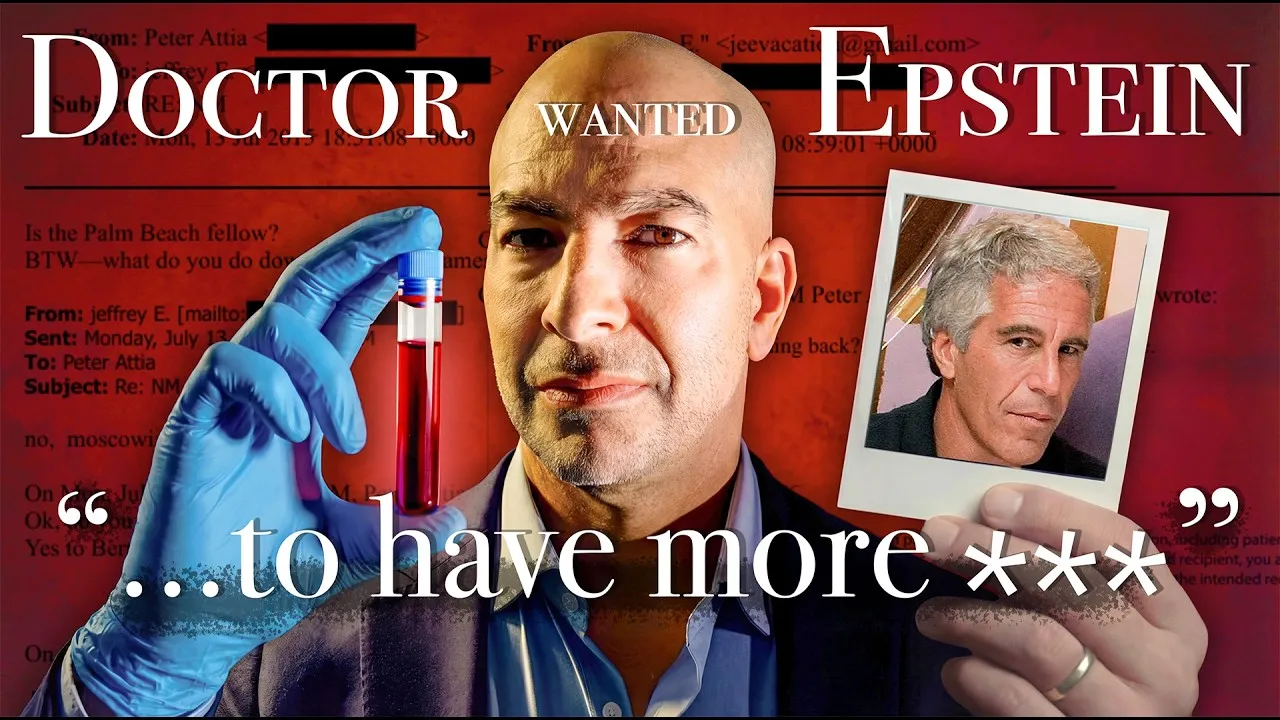
Newly surfaced information from the Jeffrey Epstein files includes over 1,700 documents mentioning Peter Attia. These documents detail a series of communications, including emails, that suggest a more involved relationship than previously acknowledged. One email from July 2017 shows Attia confirming a meeting with Epstein for the following day. This occurred just one day after Attia’s wife reportedly rushed their infant son to the hospital for breathing and cardiac arrest, with Attia stating he was in New York for important work.
Attia’s initial interactions with Epstein reportedly began in 2015, with Attia describing Epstein as “one of the most interesting people I’ve ever met” and highlighting his own perceived talent for identifying intelligent individuals. Despite Epstein’s 2008 conviction for sex trafficking of a minor, Attia continued to communicate with him. Emails reveal Attia offering to add “5 years or more” to Epstein’s life, even for the purpose of having “more sex,” and expressing difficulty in discussing Epstein’s “outrageous” life due to its sensitive nature.
Further correspondence indicates Attia’s presence at Epstein’s properties, including inquiries about visiting Epstein’s infamous Little St. James Island and discussions about meetings in Palm Beach. The nature of their interactions extended to seeking advice on unspecified “little quote situations” and discussing social events. Attia was also present at a dinner party hosted by Epstein that included high-profile individuals, and he continued to communicate with Epstein for months after the 2018 Miami Herald exposé detailing Epstein’s crimes.
Attia has stated he never visited Epstein’s island or ranch, though a plane ticket was booked for him to visit Epstein’s ranch in August 2015, which was subsequently canceled. While Attia claims his continued contact after the exposé was to hold Epstein accountable, the majority of the emails reportedly involved scheduling meetings.
Questioning VO2 Max as the “Single Most Powerful Marker”
A cornerstone of Peter Attia’s longevity advice, as detailed in his book and public appearances, is the emphasis on VO2 max, which he has described as the “single most powerful marker for longevity” and “the single greatest predictor of lifespan.” VO2 max measures the maximum amount of oxygen the body can utilize during intense exercise.
However, experts like Chris Masterjohn, PhD, have raised significant concerns about the scientific basis for this claim. Masterjohn points out that the studies Attia often cites to support his VO2 max assertion do not, in fact, measure VO2 max. Instead, these studies typically measure an individual’s ability to perform on a progressively difficult exercise test (like a treadmill or cycling test), with the duration of exercise being the key predictor of longevity. The crucial distinction is that participants in these studies often stop exercising due to fatigue, pain, or other physical limitations long before reaching their physiological VO2 max limit.
Attia’s presentation of data, including a table used in his book and on television appearances, has been criticized for mislabeling or recontextualizing data to specifically highlight VO2 max, even when the original studies did not focus on it. Furthermore, the recommendation to measure VO2 max annually in an exercise science lab for around $200 is questioned, especially when the actual predictive factor identified in studies is simply the duration of maximal effort exercise, which can be achieved with basic equipment like a treadmill.
The implication that high VO2 max is the primary driver of longevity overlooks the broader benefits of diverse physical activity. Research suggests that athletes in disciplines requiring a wide range of functional movements, such as gymnastics and pole vaulting, exhibit longer lifespans, indicating that a varied approach to fitness, encompassing balance, coordination, and strength, is crucial for overall health and longevity, rather than solely focusing on aerobic capacity.
Concerns Regarding Cholesterol Management and Statin Recommendations
Peter Attia advocates for aggressive cholesterol lowering, particularly for LDL cholesterol (or ApoB), suggesting that individuals should aim for levels as low as possible, potentially starting in their 20s and aiming for levels close to those of a child or even approaching zero for maximal heart disease prevention.
This stance has drawn criticism for potentially downplaying the risks associated with potent lipid-lowering therapies, including statins. While statins are effective at reducing LDL cholesterol, research indicates they can also lead to adverse effects such as increased blood sugar, insulin resistance, reduced GLP-1 hormone levels, and impaired mitochondrial function. Some studies suggest a correlation between statin use and negative impacts on gut health.
Attia’s approach has been contrasted with findings from studies and experiments that highlight the complexity of cholesterol metabolism. For instance, research discussed by Dr. Nick Norwitz suggests that statins can negatively affect GLP-1 levels, which are important for glucose regulation. Conversely, some experiments, like the “Oreo vs. Statin” study, have shown that dietary interventions can significantly lower LDL cholesterol, sometimes more effectively than statins, challenging the notion that aggressive pharmaceutical intervention is always the optimal or sole solution.
Furthermore, Attia’s emphasis on the causal link between LDL/ApoB and atherosclerosis, while scientifically valid, has been criticized for being presented in a way that may oversimplify the risk-benefit analysis for individuals, particularly younger people. Critics argue that focusing solely on a causal factor without a thorough consideration of the potential side effects and individual variability in response to treatment can lead to inappropriate medical recommendations. The assertion that individuals should aim for ApoB levels below 60 mg/dL, or even lower, is considered by some to be an overly aggressive target that may not be suitable for everyone and places an undue burden of proof on the individual to demonstrate harm.
The discussion around cholesterol management also touches upon Attia’s approach to scientific discourse. Critics point to instances where Attia has appeared dismissive of alternative viewpoints or research that challenges his established positions. His interactions on podcasts, where he has been observed interrupting guests extensively and characterizing opposing theories as “brain damage,” suggest a potential lack of openness to nuanced debate, which is crucial for scientific progress.
Overconfidence and Dismissal of Nuance
A recurring theme in the critique of Peter Attia’s communication is an alleged overconfidence and a tendency to dismiss or oversimplify complex scientific issues. This is seen in his strong pronouncements on topics like Bluetooth headphone safety, where he stated “no evidence whatsoever” of health damage, despite some observational studies suggesting potential links between prolonged use and health concerns like thyroid lumps.
His rigorous definition of scientific proof, while seemingly precise, has been contrasted with his own confident, definitive statements on other health matters. This perceived inconsistency raises questions about his application of scientific rigor. The handling of the VO2 max data and the aggressive stance on cholesterol management are presented as examples where a less nuanced, more absolute approach may obscure important details and individual considerations.
Attia’s engagement in debates, such as the one on seed oils, where he expressed strong personal opinions despite initially positioning himself as a neutral judge, further illustrates this tendency. The criticism suggests that while Attia aims to simplify complex health information, his approach sometimes leads to the “majoring in the minor and minoring in the major”—focusing intensely on a causal factor while overlooking broader implications and potential harms.
Key Health Takeaways
- Scrutinize Health Claims: Be critical of definitive statements about single “most powerful” health markers or longevity predictors. Look for evidence-based research that acknowledges complexity and nuance.
- Understand VO2 Max Nuances: While improving cardiovascular fitness is beneficial, VO2 max might not be the sole or primary driver of longevity. A diverse fitness regimen incorporating strength, balance, and coordination is also vital.
- Cholesterol Management: Discuss cholesterol-lowering strategies thoroughly with your doctor, considering both the benefits and potential risks of medications like statins. Individual responses to treatments can vary significantly.
- Seek Balanced Information: Favor health communicators who present information in a nuanced way, acknowledging uncertainties and different perspectives, rather than those who offer absolute pronouncements.
- Due Diligence on Associations: Be aware of the associations and potential influences on health advice provided by public figures.
Disclaimer: This article is for informational purposes only and does not constitute medical advice. Always consult with a qualified healthcare professional for any health concerns or before making any decisions related to your health or treatment. The information presented here is based on an analysis of publicly available information and does not imply any endorsement or refutation of specific individuals or their practices.
Source: Hidden Data: How the Top Longevity Doctor tricked us all (YouTube)