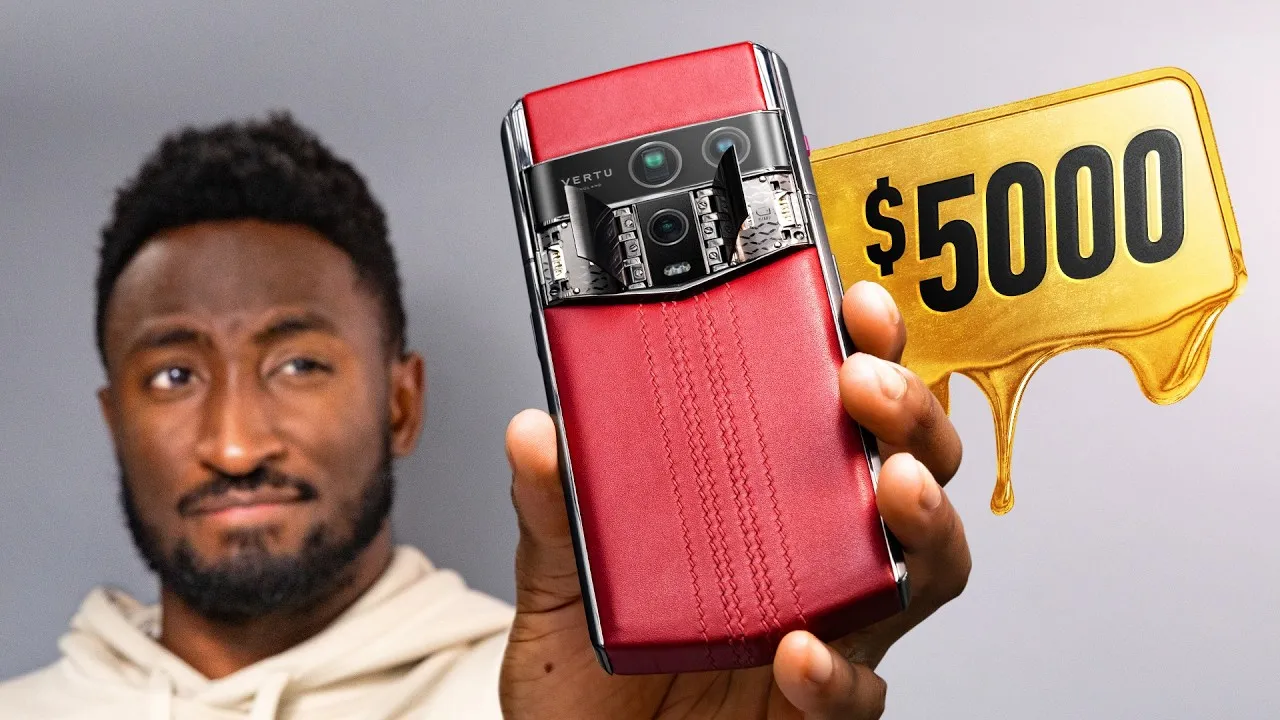
Luxury AI Phone Fails to Justify $5,000 Price Tag
In a market saturated with increasingly capable smartphones, a new contender, the Vertu Agent Q, attempts to carve out a niche by blending ultra-luxury materials with ambitious AI features. However, a recent deep dive reveals that this $5,380 device, marketed as the “world’s first AI agent phone for entrepreneurs,” falls significantly short of its lofty promises, raising questions about its true value and the authenticity of its advertised innovations.
The Allure of Exclusivity and AI
The Vertu Agent Q enters the market with a compelling narrative: a fusion of “inspiration,” “craftsmanship,” and “cognitive clarity” designed for discerning entrepreneurs. Its unboxing experience is elaborate, featuring drawers, a leather case, and a separate box for the charger, aiming to evoke a sense of premium luxury. The phone itself boasts a distinctive design with a V-shaped motif, wine-red calfskin leather, stainless steel rails, and unique “falcon wings” that conceal SIM card trays. These design choices, while visually striking, come with practical trade-offs, such as the relocation of the USB-C port and the absence of wireless charging or any IP rating for water resistance.
Specs vs. Hype: A Disconnect
Under the hood, the Vertu Agent Q is equipped with respectable, though not groundbreaking, specifications for its price point. It features a Snapdragon 8 Elite chip, 1TB of storage, 16GB of RAM, a 1080p 120Hz AMOLED display, and a 5,565 mAh battery with 65W fast charging. While these specs are on par with high-end smartphones, they are standard fare in the flagship market, which typically retails for a fraction of the Agent Q’s cost. The phone’s substantial weight is noted as a positive, contributing to a feeling of quality, but this alone does not justify the significant price premium.
Camera Claims Under Scrutiny
The camera system, comprising a 50MP main, 50MP ultrawide, and 64MP telephoto lens, is where Vertu’s marketing claims begin to unravel. The company touts features like the “world’s first true mechanical zoom lens” and a “real mechanical variable aperture” (f/1.59 to f/4). However, hands-on testing reveals these claims to be unsubstantiated. The zoom functionality appears to be standard digital zoom, and the advertised variable aperture is, in reality, a software-based blur effect that mimics depth of field changes without altering the actual aperture. The EXIF data attempting to reflect these changes is found to be misleading, as shutter speed and ISO remain unchanged, and the resulting images are virtually identical.
Perhaps the most impressive camera feature noted is the adaptive watermark, which intelligently changes color based on the background contrast. The main camera sensor, a Sony IMX906, is also found in more affordable devices like the Samsung A55 and Honor 200, further questioning the justification for the Agent Q’s premium pricing based on camera hardware.
The “AI Agent” Experience: More Human Than Artificial
The core differentiator for the Vertu Agent Q is its integrated AI agent, accessible via a dedicated ruby key. This feature promises a 24/7 concierge/butler service designed to cater to every request. The accompanying Vertu Life app categorizes services into “Vitality” (health), “Vision” (business insights), and other lifestyle-oriented categories like “Victory” and “Vantage.” Users can initiate a chat with either an AI or a human assistant.
In testing, a request to order a t-shirt from mkbhd.com resulted in a surprisingly elaborate, albeit inefficient, process. The agent, initially presenting itself as AI, ultimately engaged in a lengthy text conversation, requested screenshots of payment, and quoted an incorrect price ($20.30 instead of $29). The payment process involved manual PayPal transfers and screenshots, a more convoluted method than simply ordering directly from the website. Furthermore, the agent requested to complete the transaction at a specific Beijing time, suggesting a human operator working unconventional hours, a suspicion later confirmed when the agent, when asked if it was human, responded with a hesitant “It’s real, man.”
The mention of “USD” as a payment option, which auto-corrects to USDT (a cryptocurrency), adds another layer of ambiguity and potential red flags. The overall experience with the concierge service was characterized by typos, delays, and a sense of dealing with pre-written scripts combined with hastily typed responses, strongly indicating that the “AI agent” is, in fact, a human-powered service operating with significant limitations.
Vertu’s Shady Origins and “AI Slop” Marketing
The article delves into Vertu’s history, noting its origins as a luxury sub-brand of Nokia before being sold and eventually relocated to China. This transition has apparently led to a less transparent business model. The company’s website is criticized for its excessive use of buzzwords and what is described as “AI slop” – content seemingly optimized for search engines rather than providing genuine information. The presence of non-existent chip names like “Snapdragon 8 Elite Supreme” further highlights the company’s questionable marketing practices and potential misrepresentation of its products.
Why This Matters
The Vertu Agent Q case serves as a cautionary tale in the burgeoning market of AI-integrated luxury goods. It highlights the dangers of inflated marketing claims and the potential for companies to exploit consumer desire for exclusivity and cutting-edge technology without delivering genuine innovation. The disconnect between the advertised capabilities and the actual user experience, particularly regarding the AI agent and camera features, suggests a strategy of capitalizing on hype rather than offering tangible value.
For consumers considering high-priced tech products, this situation underscores the importance of rigorous research and skepticism towards unsubstantiated claims. The Vertu Agent Q, despite its premium materials and ambitious AI narrative, ultimately appears to be a standard Android phone skinned with luxury aesthetics and a misrepresented AI service, priced at an exorbitant level that preys on a misunderstanding of technology and value.
Availability and Pricing
The Vertu Agent Q is available through Vertu’s official website. The reviewed model was purchased for $5,380, with other models on their site ranging from $7,000 to $50,000. The pricing does not include a subscription fee for the concierge service, which is presented as an infinite, 24/7 offering included with the phone purchase.
Source: The Problem with this “Ultra Luxury” Smartphone (YouTube)