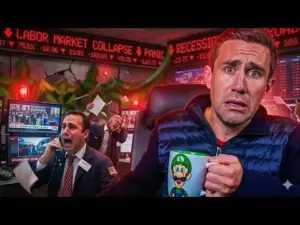
Market Rallies on Potential Mideast De-escalation
The stock market experienced its best trading day in years, snapping a four-week losing streak, following news of potential peace talks between the United States and Iran. President Trump announced on Truth Social that “very good and productive conversations” had occurred regarding a “complete and total resolution of our hostilities in the Middle East.” This announcement sent ripples through global markets, causing stocks to rally rapidly.
The positive sentiment extended beyond equities, with oil prices also falling. Investors interpreted the de-escalation as a sign that major economic concerns, including recession fears, inflation worries, and the risk of a prolonged conflict in the Middle East, were easing.
Historical Echoes and Investor Concerns
This sudden market shift comes about a month after the United States initiated an attack on Iran, which had previously caused oil prices to surge and heightened anxieties about a recession and inflation. The initial expectation was that the conflict would be short-lived, lasting only a couple of weeks. The current discussions suggest a potential end to hostilities, which could alleviate pressure on oil prices and, consequently, on inflation and economic growth concerns.
The specter of the 1970s looms large in the minds of some investors. During that decade, an oil crisis exacerbated existing inflation problems. In response, the Federal Reserve aggressively raised interest rates, leading to a recession and a prolonged economic slowdown. High mortgage rates, sometimes reaching 15-20%, were a stark reminder of the economic pain caused by such aggressive monetary policy.
The Fed’s Tightrope Walk
Before the recent Middle East developments, the prevailing expectation was that the Federal Reserve would begin cutting interest rates in 2026. These cuts were intended to stimulate a slowing economy and support the job market, which has faced challenges due to advancements in technology and artificial intelligence (AI).
However, the conflict in the Middle East complicated this outlook. The risk of rising oil prices threatened to worsen inflation, leading the Fed to reconsider rate cuts and even contemplate rate hikes. Raising interest rates during an already slowing economy could deepen a recession and negatively impact jobs and the stock market. This uncertainty was a significant factor behind the recent market sell-off.
Gold prices also suffered as investors anticipated a stronger U.S. dollar, driven by potential Fed rate hikes. A stronger dollar typically makes gold less attractive to foreign buyers.
Market Volatility and Sector Divergence
The market is currently characterized by extreme volatility, making it risky for investors to trade based solely on headlines. The current environment is marked by a significant divergence between different sectors of the stock market, with the performance gap being the widest seen since 2002.
For example, energy stocks have surged by 33%, while software stocks have fallen by 20%. Financial stocks are down 11%, and semiconductor stocks have gained around 13%. This wide disparity highlights the influence of factors like artificial intelligence, which is a major driver for some sectors, while others face different pressures.
What Investors Should Know
Emotional Investing vs. Financial Discipline: Market movements can be heavily influenced by emotions, especially during times of uncertainty. President Trump’s announcement, for instance, caused a rally even before concrete agreements were finalized. Investors are urged to base decisions on financial fundamentals rather than emotional reactions. As the saying goes, “Emotions are the enemy of profits.”
The Power of Long-Term Investing: Predicting short-term market movements is nearly impossible. History shows that investors who panic sell during downturns often miss out on significant recovery opportunities. The strategy of “Always Be Buying” (ABB), or drip buying, where investors consistently purchase assets during market dips, has historically proven effective in building wealth over the long term.
Historical Precedents: The COVID-19 pandemic in 2020 saw the fastest stock market sell-off in history, followed by a rapid recovery. Similarly, in 2022, despite fears of an economic collapse, markets eventually rallied. In 2025, the market experienced three crashes due to tariff announcements, yet by the end of the year, it reached new record highs. These events underscore the importance of staying invested through volatility.
Recessions and Crashes Are Normal: Recessions and market crashes are cyclical and have occurred regularly throughout economic history. Over the last 100 years, there have been 16 recessions and 25 market crashes (defined as a 20% drop). Panicking during these events leads to losses, while those who buy during periods of fear often achieve superior long-term returns by acquiring assets at discounted prices.
Due Diligence is Crucial: While a consistent buying strategy can be beneficial, it’s essential to invest in sound assets. Investors should conduct their own research and due diligence, rather than blindly following trends or advice. Investing always carries risk, and losses are a possibility.
Looking Ahead
The current market environment remains uncertain, with unpredictable events capable of causing rapid shifts. While the prospect of peace in the Middle East has provided a significant boost, ongoing geopolitical developments and economic data will continue to shape market sentiment. Investors are reminded that long-term wealth building is often achieved through discipline, patience, and a clear investment strategy, especially when navigating periods of heightened volatility and uncertainty.
This article is for informational purposes only and does not constitute financial advice. Investing involves risk, and you may lose money. Always conduct your own due diligence.
Source: Trump Just Flipped The Stock Market (Again) – Don't Miss This (YouTube)