How to Master Deep Skills: Follow This Structured Learning Plan
Learning a new, complex skill can feel overwhelming. Many people think they can quickly pick up skills like coding by watching short videos or completing a few basic exercises. However, truly mastering a deep skill requires more than just memorizing syntax or passing simple tests. This guide will show you how to build a structured approach to learning, ensuring you gain lasting knowledge and avoid common frustrations.
What You’ll Learn
This article will guide you through the importance of a structured learning path. You’ll understand why a clear goal and a step-by-step process are crucial for success. We’ll cover how to identify the right starting point and build foundational knowledge before tackling advanced topics. You will learn to approach skill acquisition with patience and persistence, leading to genuine mastery.
Prerequisites
- A desire to learn a new, complex skill.
- Access to learning resources (online courses, books, tutorials).
- Patience and willingness to repeat concepts.
Step 1: Define a Specific Goal
Before you start learning, know exactly what you want to achieve. Simply saying “I want to learn to code” is too broad. Instead, set a concrete goal, like “I want to build a simple website” or “I want to create a basic mobile app.” A specific target helps you focus your efforts and measure your progress effectively.
Step 2: Start with the Fundamentals
Many people try to jump into advanced topics too soon. This often leads to confusion and frustration. For example, trying to learn complex programming concepts without understanding basic HTML and CSS is like trying to teach a child calculus before they know simple addition. Always begin with the absolute basics to build a strong foundation.
Example: Learning to Code
If your goal is to learn programming, start with foundational languages and concepts. For web development, this means beginning with HTML for structure, then CSS for styling, and finally JavaScript for interactivity. Trying to start with Android programming or advanced data science without this base is a common mistake that slows down learning.
Step 3: Find a Structured Curriculum
Information is readily available, but without a clear structure, it’s hard to know what to learn next. Look for learning resources that offer a step-by-step curriculum. This could be a well-organized online course, a book series, or a coding bootcamp with a defined learning path. A good curriculum guides you logically from one topic to the next.
FreeCodeCamp’s curriculum, for instance, is structured to guide learners from basic web development to more advanced topics. It ensures that you learn concepts in the right order, building upon previous knowledge. This sequential approach is vital for deep learning.
Step 4: Embrace Repetition and Practice
Mastering a skill takes time and consistent effort. You will need to repeat concepts and practice them over and over. Don’t get discouraged if you don’t grasp something immediately. Repetition helps solidify your understanding and build muscle memory for practical application.
Think of learning a musical instrument. You don’t just play a song once and become a master. You practice scales, chords, and difficult passages repeatedly until they become second nature. The same applies to any deep skill.
Step 5: Be Patient and Persistent
Learning complex skills is a marathon, not a sprint. It will likely take longer than you expect, and there will be moments of frustration. Many people give up when they encounter difficulties, especially after seeing short videos claiming rapid learning. True mastery requires persistence through challenging phases.
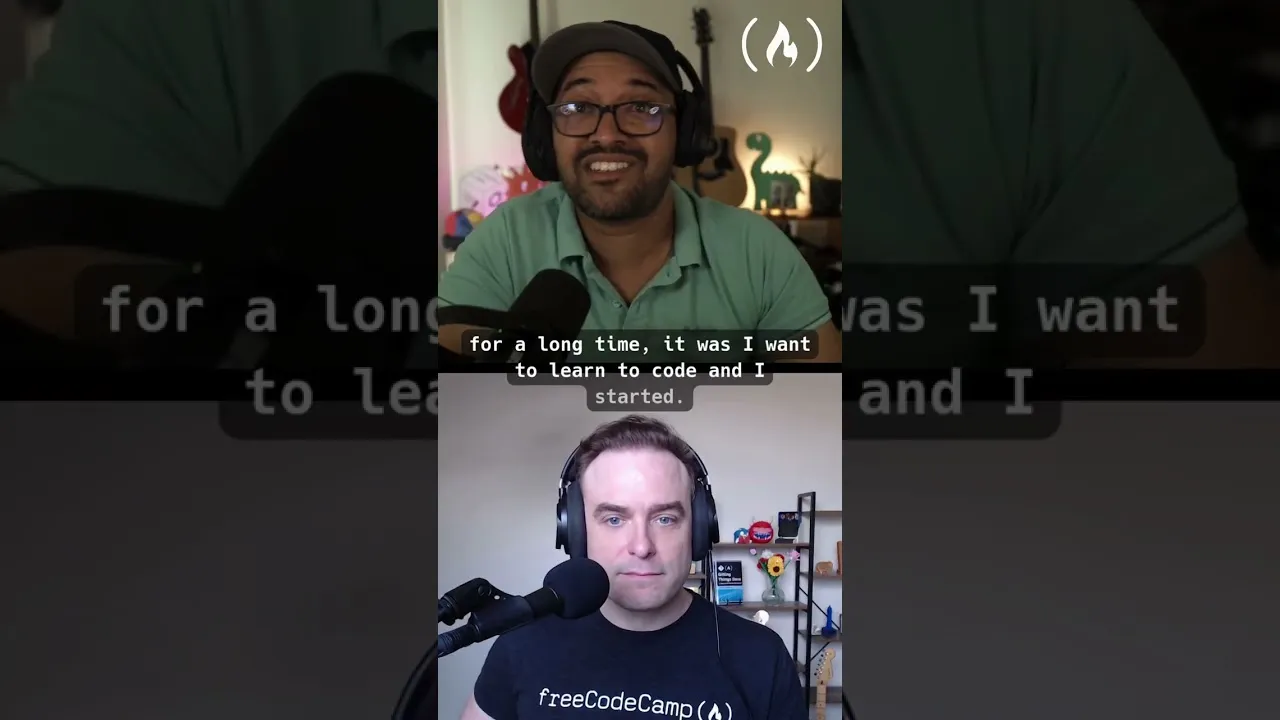
It took one individual two attempts over two years to learn programming, switching between languages and fields like Java and data science without success. It was only by starting over with the fundamentals (HTML, CSS, JavaScript) and following a structured path that they finally began to make progress. This journey highlights the importance of patience and sticking with the process, even when it feels slow.
Step 6: Understand the Value of Foundational Knowledge
Don’t underestimate the importance of foundational knowledge. It’s the bedrock upon which all advanced learning is built. Without a solid understanding of the basics, trying to learn complex topics will be like building a house on sand – it’s unstable and likely to collapse.
Just as you need to understand arithmetic before tackling algebra or calculus, you need to master the initial building blocks of any skill. This foundational step is often the most overlooked but is arguably the most critical for long-term success and true expertise.
Source: When you're trying to learn a new deep skill, a structured approach is everything. (YouTube)