Master TypeScript: When and How to Specify Return Types
TypeScript’s type inference is a powerful feature, especially for automatically determining function return types. This saves you from writing verbose type annotations. However, there are crucial scenarios where explicitly defining return types leads to higher quality, more robust, and maintainable code. This guide will walk you through when and why specifying return types in TypeScript is beneficial, helping you avoid common pitfalls and write more effective TypeScript code.
Why Specify Return Types?
While TypeScript’s inference is excellent, it has limitations. In certain situations, relying solely on inference can lead to unexpected behavior, broken code, and difficulties in understanding or refactoring your codebase. Explicitly defining return types provides clarity, enforces contracts, and catches errors early.
When You MUST Specify Return Types
There’s one primary scenario where TypeScript *requires* you to specify the return type: recursive functions.
- Recursive Functions: When a function calls itself, TypeScript cannot infer the return type because it doesn’t yet know the final output of the function.
Example: Consider a Fibonacci function. Without a specified return type, TypeScript defaults to any, which is not helpful and can lead to errors. You must explicitly define the return type (e.g., number).
function fibonacci(n: number): number {
  if (n <= 1) {
    return n;
  }
  return fibonacci(n - 1) + fibonacci(n - 2);
}
When Specifying Return Types Improves Code Quality
Beyond the mandatory cases, several situations benefit greatly from explicit return type declarations:
1. Preventing Accidental Changes to Function Signatures
As your codebase evolves, you might modify a function’s internal logic. If you don’t have an explicit return type, these changes can alter the inferred return type, potentially breaking other parts of your application that rely on the original signature.
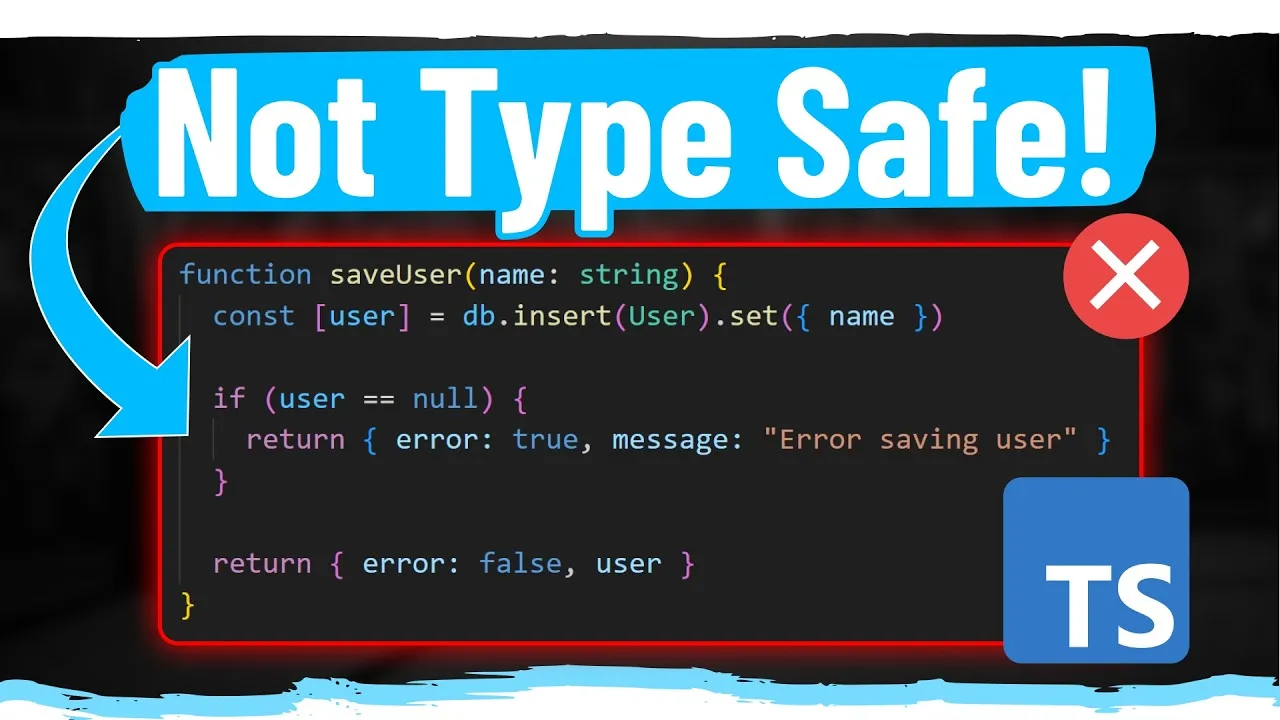
Scenario: Imagine a saveUser function that interacts with a database. Initially, it might return either a User object or null.
interface User {
  id: number;
  name: string;
  age: number;
}

function saveUserDB(user: User): User | null {
  // Imagine database logic here
  if (Math.random() > 0.5) {
    return user;
  } else {
    return null;
  }
}

function saveUserService(user: User): User | null {
  if (user.age < 0) {
    console.error('Invalid age');
    // Forgot to return null here!
    return undefined; // Implicitly returns undefined
  }
  return saveUserDB(user);
}

// Usage might break if it expects User | null, but gets User | null | undefined
const newUser = { id: 1, name: 'Alice', age: 30 };
const savedUser = saveUserService(newUser);

// If the code below expects only User or null, it might break
if (savedUser) {
  console.log(`User ${savedUser.name} saved.`);
}
In the example above, adding the age validation and returning undefined (implicitly) changes the function’s return type to User | null | undefined. If other parts of your code expect only User | null, they will break.
Solution: Explicitly define the return type.
interface User {
  id: number;
  name: string;
  age: number;
}

function saveUserDB(user: User): User | null {
  // Imagine database logic here
  if (Math.random() > 0.5) {
    return user;
  } else {
    return null;
  }
}

function saveUserService(user: User): User | null { // Explicit return type
  if (user.age < 0) {
    console.error('Invalid age');
    return null; // Must return null to match signature
  }
  return saveUserDB(user);
}

const newUser = { id: 1, name: 'Alice', age: 30 };
const savedUser = saveUserService(newUser);

if (savedUser) {
  console.log(`User ${savedUser.name} saved.`);
}
By specifying User | null, TypeScript will immediately flag the error when you try to return undefined, ensuring your function adheres to its contract.
2. Writing Libraries or Public APIs
If you are developing a library or a module intended for use by others, explicit return types are essential. They act as a stable contract, preventing breaking changes in future versions even if internal implementations change.
3. Creating Reusable Helper Functions within Large Projects
Functions that are called from many different parts of a large application serve a similar role to library functions. They are effectively internal APIs. Specifying their return types helps maintain consistency and prevents unintended consequences when these helpers are modified.
Expert Note: The key consideration is whether the impact of a change to the function’s return type is easily visible and manageable. If a function is used widely, explicit return types are highly recommended.
4. Functions Used Locally (Where Explicit Types are Less Necessary)
For small, self-contained helper functions used only within a single file or a very limited scope, relying on TypeScript’s inference is often sufficient. If you make a mistake, the impact is localized and easy to spot.
// No explicit return type needed here, as it's a local helper
function formatGreeting(name: string) {
  return `Hello, ${name}!`;
}
5. Enhancing AI Code Generation
When using AI tools for code generation, explicit return types can help the AI understand the function’s purpose and expected output more accurately, leading to better suggestions and less need for manual correction.
6. Returning Specific Tuple Types or Discriminated Unions
TypeScript’s inference might not always capture the precise structure you intend, especially with tuples or complex conditional returns.
Scenario A: Tuples
Consider a function returning a pair of values, like a number and a string.
// Without explicit return type, inferred as (string | number)[]
function getCoordinates() {
  return [10, "North"];
}

// With explicit tuple type
function getCoordinatesTyped(): [number, string] {
  return [10, "North"];
}

const [x, direction] = getCoordinatesTyped();
// x is inferred as number
// direction is inferred as string
Using as const can achieve a similar result but often results in readonly types, which might not always be desired. Explicit tuple types offer more control.
Scenario B: Discriminated Unions / Conditional Returns
When a function can return different types based on input, explicit return types clarify the possible outcomes, especially when the return types share some properties.
interface SuccessResponse {
  success: true;
  data: string;
}

interface ErrorResponse {
  success: false;
  error: string;
}

// Without explicit return type, inference can be messy
function processRequest(input: string): SuccessResponse | ErrorResponse {
  if (input.length > 5) {
    return {
      success: true,
      data: "Processed successfully."
    };
  } else {
    return {
      success: false,
      error: "Input too short."
    };
  }
}

// With explicit return type, the structure is clear
const result = processRequest("hello");

if (result.success) {
  console.log(result.data);
} else {
  console.log(result.error);
}
Explicit types prevent ambiguity and make it easier to work with the different return possibilities.
When to Avoid Specifying Return Types (Default Behavior)
For most internal, non-exported functions, especially simple ones or those within a small scope, letting TypeScript infer the return type is often the most practical approach. This reduces boilerplate and keeps your code concise.
Default Rule of Thumb: Start without explicit return types. Introduce them when you encounter issues related to signature stability, library development, complex return structures, or widespread function usage.
Conclusion
Understanding when to explicitly define function return types in TypeScript is key to writing robust and maintainable code. While inference is powerful, recognizing the scenarios where explicit types are necessary—recursive functions, public APIs, widely used helpers, and complex return structures—will significantly improve your TypeScript development practices.
Further Learning: For a deeper dive into advanced TypeScript concepts and utility types, consider exploring a comprehensive TypeScript utility types cheat sheet.
Source: Stop Writing TypeScript Code Like This (YouTube)