Harness Your Feelings: You Have More Control Than You Think
Many people believe that emotions are something we are simply given, beyond our control. However, emerging theories in psychology suggest that we actually create a significant portion of our emotional experiences. This means you have the power to change how you feel, even in challenging situations.
The Theory of Constructed Emotion
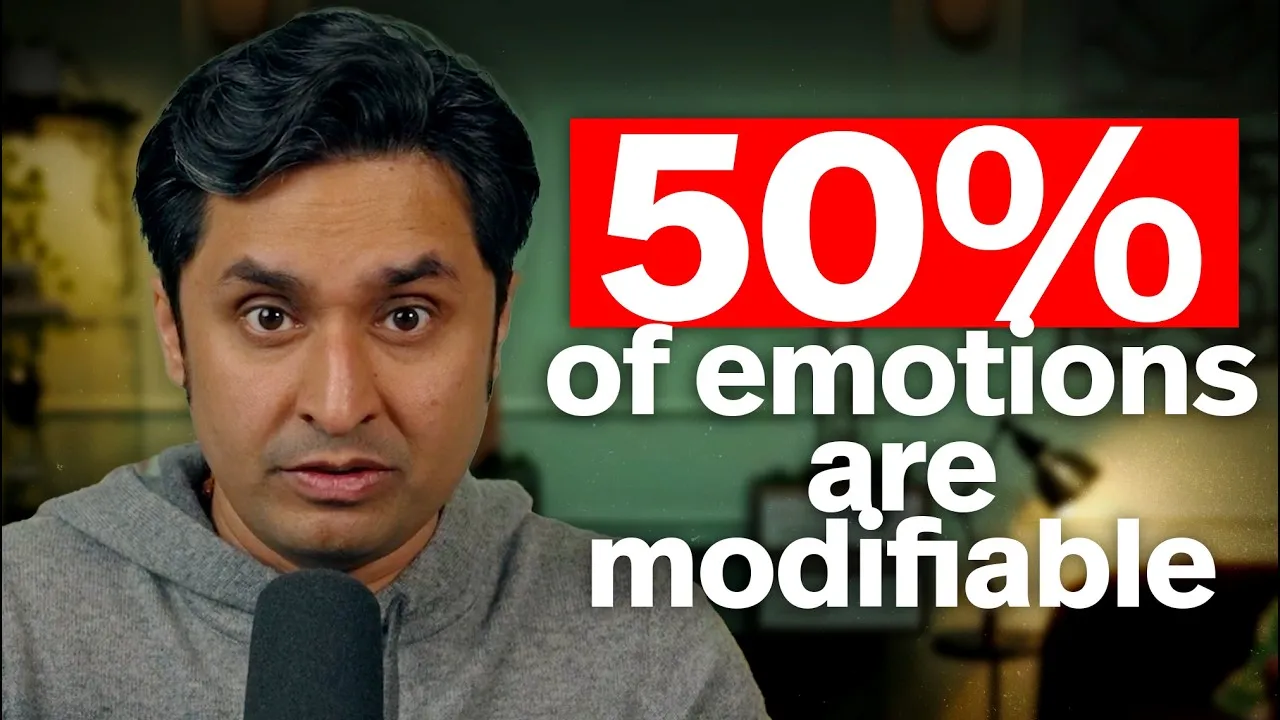
The theory of constructed emotion proposes that up to 50% of the emotions we feel are actually constructed by us. This idea challenges the common belief that our feelings are fixed and unchangeable. We often go through life thinking our emotions are simply happening to us, rather than being something we can influence.
This can lead to a cycle where we feel powerless over our emotional state. While it’s true that emotions serve important evolutionary purposes – like anger signaling danger or anxiety warning of threats – this doesn’t mean we are passive recipients of these feelings.
Challenging the “Accept Your Feelings” Mantra
You might have heard advice to simply accept your feelings, no matter what they are. While acknowledging your emotions is important, the idea that you should never try to change or control them can be counterproductive. This perspective often suggests that while the *consequences* of an emotion, like acting aggressively when angry, might be wrong, the feeling itself is beyond your influence.
However, this view doesn’t align with how mental health treatments work or with ancient wisdom traditions. For example, in psychiatry, treatments for conditions like generalized anxiety disorder often involve helping patients change their emotional responses to everyday situations. Therapists work to alter the baseline emotional reactions that individuals experience.
How You Can Influence Your Emotions
The key insight is that you can learn to generate different emotional responses. This isn’t about suppressing feelings, but rather about actively shaping your emotional experience. Think of it like training a muscle; the more you practice, the stronger your ability becomes.
One powerful way to do this is through cognitive reframing. This involves consciously thinking about a situation in a different way. For instance, if you’re dealing with someone who is difficult, like a bully, try to understand their perspective. What might be going on in their life that leads them to act that way?
By shifting your perspective, you can change the emotion that arises. This process requires practice and conditioning, similar to how neuroplasticity works – the brain’s ability to reorganize itself by forming new neural connections. The first time you try to think differently, it might feel difficult. But with repeated effort, this new way of thinking and feeling can become more automatic.
Learning from Ancient Wisdom
Ancient traditions like Buddhism offer valuable frameworks for cultivating positive emotions. Instead of just accepting all feelings as they are, Buddhism teaches practices to actively cultivate emotions like compassion and equanimity. This suggests a proactive approach to emotional well-being, focusing on developing desirable emotional states.
Understanding Imposter Syndrome
Imposter syndrome provides a clear example of how we construct our emotional reality. People experiencing imposter syndrome often attribute their successes to luck or external circumstances, while attributing the successes of others to their talent and hard work. This leads them to feel fear or anxiety even when they achieve something positive.
When they succeed, they might feel panic, which then drives them to work even harder to avoid being exposed as a fraud. This cycle demonstrates how internal thought patterns directly create specific emotional responses. By changing how we interpret our successes and failures, we can alter these ingrained emotional reactions.
Near-Death Experiences and Shifting Values
Research on near-death experiences (NDEs) offers another fascinating perspective. Studies, such as one involving survivors of NDEs, have shown that these experiences can lead to significant shifts in personal values. Individuals who have had NDEs often place less importance on material possessions and social success compared to control groups.
Interestingly, these experiences don’t necessarily lead to increased valuing of self-actualization, altruism, or spirituality. Instead, the primary change appears to be a detachment from the pursuit of external validation like wealth and social status. This detachment can reduce the desire to die and foster a greater appreciation for life itself.
Finding a Protective Factor in Near-Death
While not a recommended path, the intense experience of nearly dying can sometimes spark a profound passion for life. When individuals survive a life-threatening event, they often report a renewed zest for living. This can stem from a realization of what truly matters, leading to a reduced focus on things like money or being liked.
This perspective suggests that even extreme circumstances can highlight our capacity to re-evaluate what is important and, in turn, influence our emotional outlook. The drive to live can emerge even when facing immense challenges, showing the deep-seated resilience within us.
Key Health Takeaways
- Your emotional experiences are not entirely fixed; you can actively shape and change how you feel.
- Challenging the idea that you must passively accept all emotions can empower you to cultivate more positive states.
- Cognitive reframing – changing how you think about a situation – is a powerful tool for altering your emotional responses.
- Practicing new ways of thinking and responding can, over time, make positive emotional reactions more automatic.
- Ancient wisdom traditions, like Buddhism, offer methods for actively cultivating desirable emotions such as compassion.
- Understanding how thought patterns contribute to feelings, as seen in imposter syndrome, can help you identify areas for change.
- Experiences that shift perspective, like near-death experiences, can lead to a decreased focus on material success and an increased appreciation for life.
Disclaimer
This article is for informational purposes only and does not constitute medical advice. If you are experiencing severe emotional distress, suicidal thoughts, or any mental health concerns, please seek professional help immediately. Contact a crisis hotline, mental health professional, or emergency services.
Source: "Accepting Your Feelings" Is Making It Worse (YouTube)