Musk Pivots AGI Ambitions to Tesla with Digital Optimus
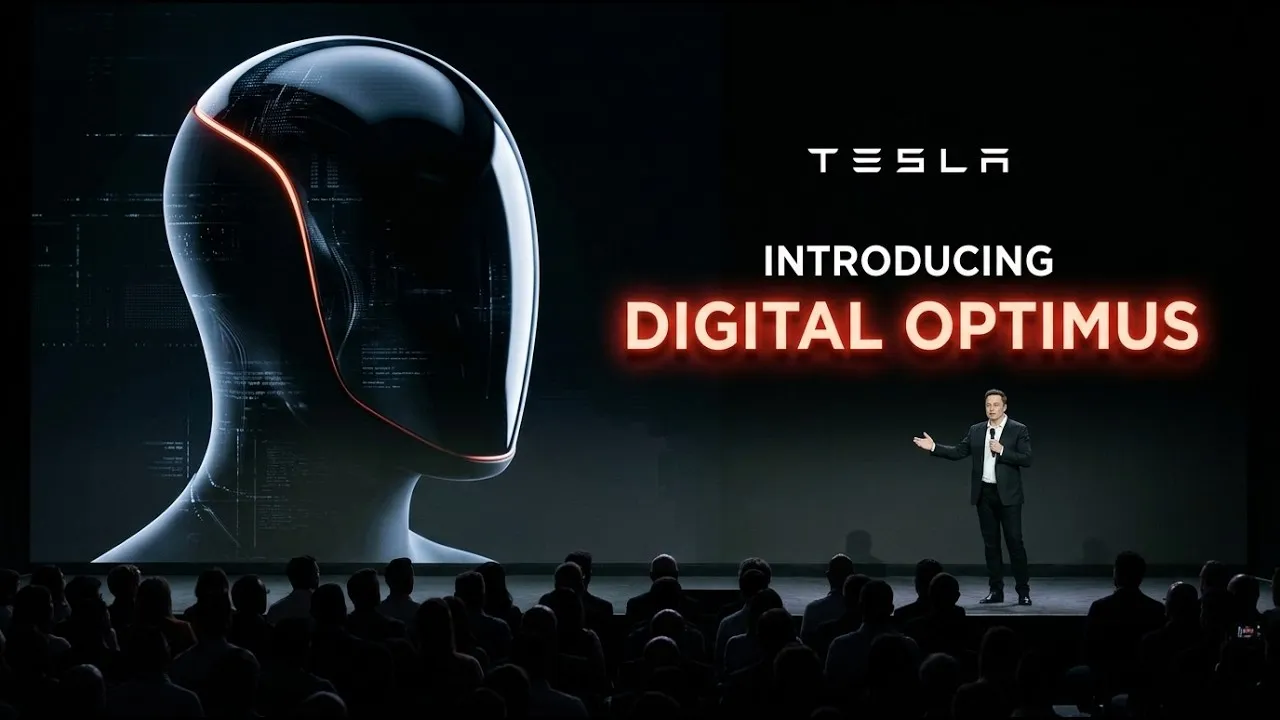
Elon Musk has reignited the conversation around Artificial General Intelligence (AGI) with a bold new vision, introducing “Digital Optimus” and the concept of “Macrohard.” While the name “Macrohard” is a deliberate, tongue-in-cheek jab at Microsoft, the underlying technology described by Musk presents a significant shift in how AI agents might operate, potentially emulating entire companies.
Understanding Macrohard and Digital Optimus
Musk describes Macrohard as an AI capable of interacting with a computer like a human office worker – viewing a screen, using a keyboard and mouse to perform tasks such as typing, filling spreadsheets, and managing data. This concept is framed using Daniel Kahneman’s “Thinking, Fast and Slow” model, dividing AI into two systems:
- System 1 (Fast): This is represented by Digital Optimus, which processes the last five seconds of screen activity in real-time. It acts as the AI’s “hands,” reacting instantly to visual cues. This system is powered by Tesla’s $650 AI4 chip, the same hardware used in Tesla vehicles for self-driving.
- System 2 (Slow): This is the “thinking brain,” embodied by Grok X AI’s chatbot. Grok provides context, understands the overall goal, and directs System 1. It’s likened to Google Maps providing directions, while Digital Optimus is the hands on the steering wheel.
Musk’s ambitious claim is that this system could emulate the functions of entire companies, including accounting, customer service, and data entry, directly challenging Microsoft’s software dominance.
A New Approach to AI Agents
The core innovation lies in Digital Optimus’s processing method. Unlike many current AI agents that operate on static screenshots (a “click, look, think” cycle akin to stop-motion animation), Digital Optimus processes a continuous, real-time video stream of the computer screen. This approach, drawing parallels to Tesla’s experience with processing real-time video from its car cameras, aims for faster and more natural interactions.
This method leverages Tesla’s extensive experience training AI on over 10 billion miles of driving data from its fleet. The architecture is designed for cost-efficiency, with the fast processing handled by the affordable AI4 chip on a user’s desk, and the more computationally intensive reasoning by Grok in the cloud, only invoked when necessary.
The Embodied AGI Vision
The announcement gains deeper significance when viewed in the context of Tesla’s broader Optimus initiative. Musk has described Digital Optimus internally as the “superset of everything except physical Optimus.” This means that while the physical Optimus robot handles physical labor and real-world tasks, Digital Optimus is intended to handle all computer-based work.
This dual approach aims to cover the full spectrum of human work. Crucially, both the physical and digital Optimus systems share the same core hardware (Tesla’s AI4 chip) and AI methodology, including real-time video processing and reinforcement learning, adapted for different environments.
This aligns with Musk’s recent statements suggesting Tesla would be among the first to develop AGI, possibly in a humanoid form. His vision of AGI appears to be “embodied” – existing and acting simultaneously in both the digital and physical realms, controlled by a unified intelligence like Grok.
Leveraging Tesla’s Distributed Computing Power
A key enabler for this AGI vision is Tesla’s vast network of vehicles. With over 5 million Tesla cars on the road, each equipped with an AI4 chip, Musk envisions utilizing these vehicles as a distributed computing network. Even a fraction of these parked cars could provide significant computational power for training and running AI agents, a scale that Musk claims no other company can match.
This potential distributed supercomputer, combined with Tesla’s decade of visual processing data from its Autopilot and Full Self-Driving systems, provides a unique advantage. The experience gained in teaching cars to perceive and react to the road is directly transferable to teaching an AI to perceive and react to a computer screen.
Challenges and Pivot Amidst Reporting
Despite the grand vision, the announcement comes amidst reports from Business Insider detailing significant struggles within XAI’s “Macrohard” project. Internal sources suggest the project had stalled, faced leadership chaos, and seen its team depleted, with numerous engineers leaving or transferring.
The project, initially announced in August of last year, reportedly shuffled leaders, failed to scale, and experienced high turnover, including a co-founder quitting just 16 days after being put in charge of fixing it. The departure of an XAI engineer shortly after discussing the project’s reliance on unused Tesla vehicles for computing power also raises questions.
The timing of Musk’s announcement, reframing Macrohard as a joint XAI and Tesla effort under the “Digital Optimus” banner, has led to speculation that it may represent a pivot or an emergency response to the reported collapse of the XAI version, rather than the culmination of a long-standing plan.
Why This Matters
Musk’s Digital Optimus initiative, if successful, could fundamentally alter the landscape of AI agents and enterprise software. The technical approach of real-time video processing and the system one/system two architecture are genuinely interesting advancements. The cost-effective hardware strategy and Tesla’s unique data and compute advantages are significant.
However, the project faces considerable hurdles. Its previous failures at XAI, ongoing team instability, and the need for a pivot raise concerns about product readiness. Competitors like Anthropic (Claude Co-work) and OpenAI are already shipping autonomous computer task products.
The ultimate success of Digital Optimus remains to be seen. Whether it fulfills Musk’s ambitious AGI vision or becomes another in a line of ambitious, yet unfulfilled, promises will depend on overcoming the significant challenges and translating the grand vision into a functional, scalable product.
Source: Introducing Digital Optimus: Elon Musk’s Bold New AGI Vision (YouTube)