New AI Tech Boosts Data Accuracy Dramatically
Getting AI to correctly understand and use your company’s private data is a major challenge. New research highlights a breakthrough in how AI connects to data, showing that a better method can drastically improve accuracy. This advancement is crucial for businesses wanting to use AI tools for real work.
AI agents and tools can connect to internal company data, like reports or customer records. However, these tools are useless if they pull the wrong information or misunderstand what the data means. A new report from a company called Catata introduces a solution called Model Context Protocol, or MCP.
What is Model Context Protocol (MCP)?
MCP is essentially the system that lets AI models connect to your data sources. Think of it like a translator or guide that helps the AI understand information from places like your customer relationship management (CRM) software, project management tools, or data warehouses. This connection allows the AI to use your data to answer questions and perform tasks.
A Big Gap in Accuracy Revealed
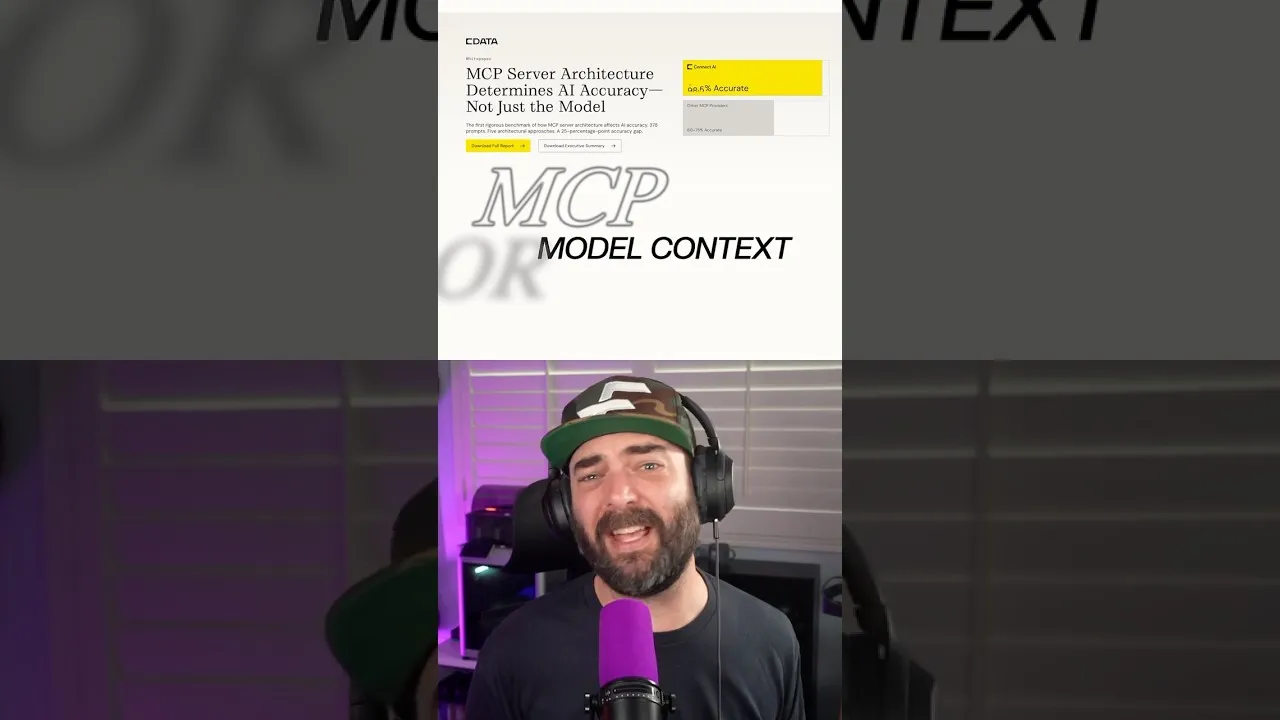
The new benchmark report from Catata uncovered a significant accuracy problem with current MCP methods. Depending on how the MCP system is set up, there can be a 25% difference in how accurately the AI uses the data. Catata’s own approach achieved an impressive 98.5% accuracy.
In contrast, other common MCP approaches only managed to get between 65% and 75% accuracy. This huge difference isn’t because the AI models themselves are bad. Instead, the problem lies in the ‘architecture’ – the way the system is built between the AI model and the data it needs to access.
How Different MCP Systems Work
Some existing systems simply try to turn your spoken or typed requests (prompts) directly into commands the data sources can understand. This works fine for simple questions. But when requests become more complicated, these systems can easily get confused.
They might misunderstand specific instructions, like filtering data, or even pull information from the wrong place entirely. Imagine asking for sales figures from last quarter, but the AI pulls data from two years ago because the system got the request wrong. This leads to errors and unreliable AI outputs.
Catata’s Solution: Semantic Context
Catata’s approach is different. It uses a standardized way to connect to data, called a relational interface, combined with something called ‘semantic context’. Semantic context helps the AI understand the *meaning* behind the data, not just the raw numbers or labels.
This gives the AI a much clearer and more consistent way to interpret your company’s information. It’s like giving the AI a detailed map and a guide book for your data, rather than just a set of basic directions. This structured understanding helps the AI make fewer mistakes.
Why This Matters
For businesses, getting AI data access right is essential for putting AI into real-world use. When AI tools can accurately understand and act on company data, they can automate tasks, provide better insights, and help employees make smarter decisions. Errors in data interpretation can lead to costly mistakes, lost time, and a lack of trust in AI systems.
This breakthrough means companies can rely more on AI for critical business functions. Whether it’s analyzing sales trends, managing customer support, or streamlining operations, accurate data processing is key. Catata’s findings suggest that choosing the right MCP architecture is as important as choosing the AI model itself.
Availability and Further Information
The Catata report provides detailed methodology for those interested in the technical aspects. The company encourages anyone concerned with AI accuracy and data integration to review the findings. More information and the full report can be found through the link provided in the video caption.
Source: How AI Gets Data Wrong (and how to fix it) (YouTube)