OpenAI Agent Builder Integrates with n8n for Expanded Automation
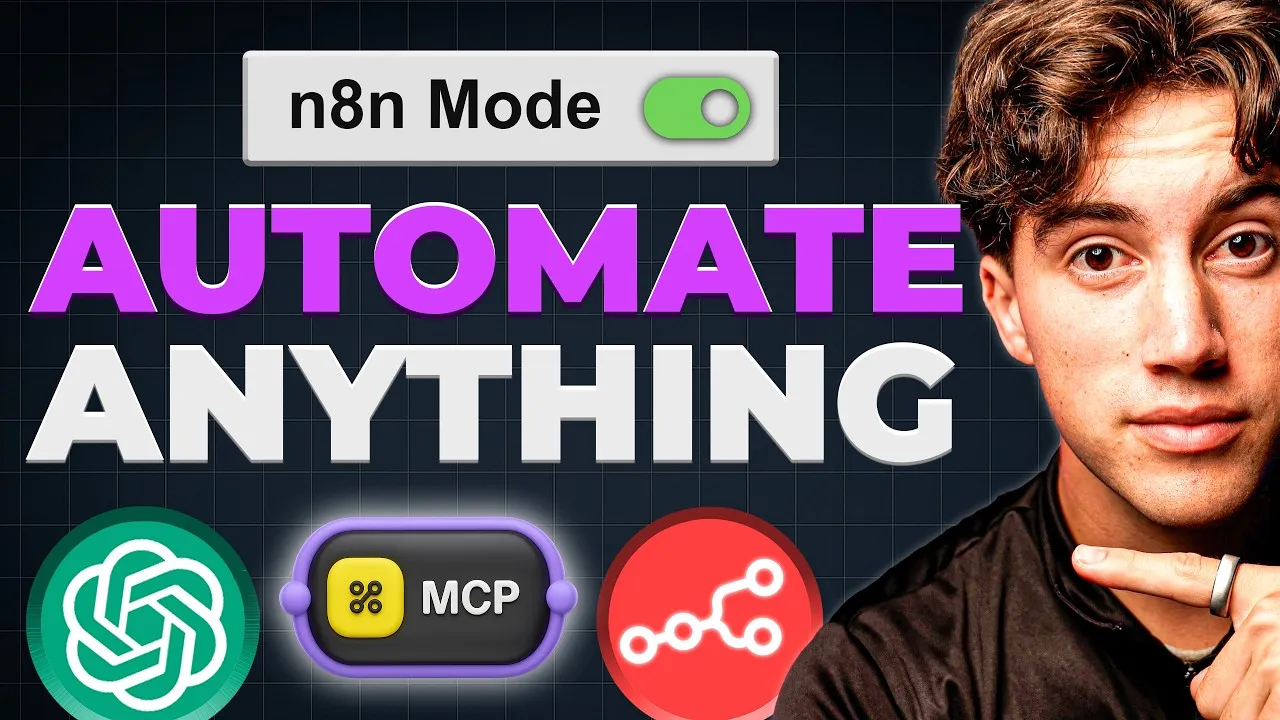
A significant development in the AI automation landscape has emerged with the successful integration of OpenAI’s Agent Builder and the popular workflow automation platform, n8n. This new capability allows users to leverage the extensive toolset and existing automations within n8n directly from within OpenAI’s Agent Builder canvas, dramatically expanding the potential applications for AI agents.
Bridging the Gap: Agent Builder Meets n8n
OpenAI’s Agent Builder provides a visual, canvas-based environment for creating sophisticated AI agents. However, its native toolset, while growing, can be limited. n8n, on the other hand, has been a robust platform since 2019, offering access to over 500 different tools and a vast library of pre-built workflows and agents. The integration, facilitated by n8n’s Model Context Protocol (MCP), acts as a bridge, enabling Agent Builder to call upon n8n’s extensive capabilities.
The core of this integration lies in n8n’s MCP tool. By exposing n8n workflows as an MCP server endpoint, Agent Builder can now interact with them. This means an AI agent built in OpenAI’s platform can be instructed to perform actions that were previously only possible within n8n. For instance, an agent can now be tasked with retrieving data from a YouTube video transcript, a function demonstrated through a specific n8n workflow.
How the Integration Works
The process involves setting up an MCP server trigger within n8n. This trigger acts as a gateway, allowing external applications like Agent Builder to access n8n’s functionalities. Users can then define specific n8n workflows or tools that they want to expose. For example, a workflow designed to extract YouTube transcripts from a given URL can be configured as an n8n tool.
In OpenAI’s Agent Builder, users can then add this n8n MCP server as a tool. This is done by pasting the production URL of the n8n MCP server into the Agent Builder’s tool configuration. Once connected, the agent can be instructed to use this tool, providing it with the necessary inputs, such as a YouTube video URL. The agent sends the request, which is then processed by the n8n workflow, returning the desired output—in this case, the video transcript.
The flexibility of this integration is a key highlight. While the initial demonstration focused on retrieving YouTube transcripts, the potential extends far beyond. Users can connect any n8n workflow or tool to their Agent Builder projects. This could include tasks like:
- Interacting with Google Calendar to create or manage events.
- Accessing and manipulating data in Notion or Airtable.
- Connecting to email services for automated responses.
- Executing complex, multi-step automations that are already built and tested within n8n.
Expanding Agent Capabilities
The integration allows for a dynamic expansion of an AI agent’s capabilities. An agent initially designed for one purpose, like summarizing YouTube videos, can be augmented to perform entirely different tasks by simply adding new tools from the n8n MCP server. For example, the same YouTube transcript agent can be instructed to create a Google Calendar event, demonstrating its newfound versatility.
While Agent Builder does offer native integrations for some services like Google Calendar, the n8n MCP integration provides a unified way to access a much broader spectrum of tools and custom workflows. The presenter noted that it’s often more efficient to use native integrations when available, but the power of n8n lies in its ability to connect to virtually anything and orchestrate complex processes that can then be leveraged by AI agents.
Why This Matters
This integration represents a significant step towards more powerful and versatile AI agents. By allowing AI agents to tap into the vast ecosystem of tools and automations already managed by platforms like n8n, developers can:
- Accelerate Development: Instead of rebuilding complex automations within Agent Builder, users can leverage existing n8n workflows.
- Enhance Functionality: Agents can perform tasks that go beyond simple text generation or information retrieval, interacting with external services and data sources.
- Democratize Automation: Users familiar with n8n can more easily integrate their existing automation knowledge into advanced AI agent development.
- Unlock New Use Cases: The combination opens doors for AI agents in areas requiring real-world data manipulation, scheduling, communication, and more.
Availability and Future Outlook
The integration is currently being demonstrated and explained, with the presenter announcing an upcoming comprehensive course on OpenAI’s Agent Builder, scheduled for release around October 17th. Early sign-ups for a waitlist offer a 50% discount on this course, which promises to cover agent building, deployment, and optimization.
The ability to connect OpenAI’s Agent Builder with n8n via MCP signifies a maturing of the AI agent landscape, moving beyond standalone models to integrated systems capable of complex, real-world operations. This synergy between AI model interfaces and robust automation platforms is likely to define the next generation of AI-powered applications.
Source: How to Connect NEW Agent Builder to n8n! (MCP integration) (YouTube)