Oppo Find N6 Achieves ‘Peak Foldable’ Status
For years, foldable phones felt like a gadget for tech enthusiasts, packed with compromises. Early models like the Galaxy Fold 1, released seven years ago, were exciting for their folding ability. However, they came with big bezels on the outer screen, weaker cameras and batteries, and questionable durability. The prominent crease in the middle was also a constant reminder it wasn’t a standard phone. Each year, companies have worked to fix these issues, making foldables thinner, with better hinges, smaller creases, and longer battery life.
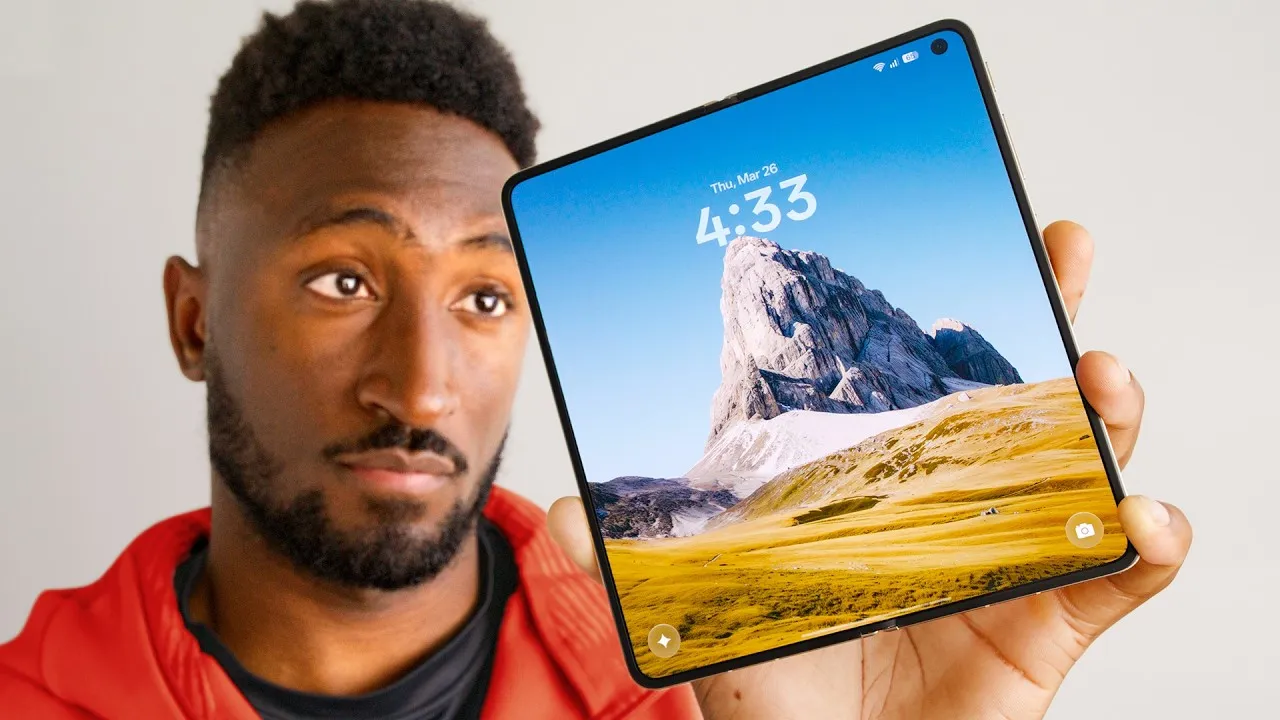
Now, the Oppo Find N6 appears to have reached a new milestone, offering a foldable experience with virtually no compromises. It’s so good, it might just be what we call ‘peak foldable’ for now.
A Normal Phone, Until You Open It
One of the biggest problems with older foldables was how awkward they were to use with one hand. They were often too thick, with bad outer screens, making them feel less useful than regular phones. The Oppo Find N6 changes this perception. From the front, it looks and feels like a regular smartphone. Its asymmetrical metal design, with rounded corners on one side and square ones on the hinge side, is the only clue it’s a foldable. But beyond that, it’s a normal-sized 6.6-inch phone.
Oppo has focused heavily on the materials and build quality. The phone is just under 9 mm thin and weighs around 230 grams, similar to an iPhone 17 Pro Max. This means it feels like a standard phone in your hand. You can use the outer screen for everyday tasks like texting or watching videos without feeling like you’re making a sacrifice. The keyboard is a good size, and the screen’s aspect ratio is normal, making it perfectly usable.
Flagship Powerhouse in a Folding Design
The challenge with folding phones has always been fitting powerful components into a thin, folding body. Previously, this meant weaker cameras and smaller batteries. The Oppo Find N6 tackles this head-on. It features advanced silicon carbon batteries, totaling 6,000 mAh, which is more than many standard phones. It also supports fast charging: 80-watt wired and 50-watt wireless.
Camera quality was another hurdle. Fitting large camera sensors into a thin foldable is difficult because of the limited depth. However, Oppo has used advanced, shallow-depth sensors. The Find N6 boasts a 200-megapixel main camera, the same as the S25 Edge, with optical image stabilization. It’s complemented by a 50-megapixel ultrawide and a 50-megapixel 3x telephoto lens. For processing power, it includes a modified Snapdragon 8 Elite Gen 5 chip, ensuring flagship performance. A new dedicated S1 chip also improves network performance.
The ‘No Feel Crease’ Breakthrough
The most significant innovation on the Oppo Find N6 is its display crease. For years, even the best foldables had a noticeable crease. While often not a major distraction, it could catch the light or be felt when swiping. Oppo’s new ‘no feel crease’ technology aims to eliminate this.
The phone features a large 8.1-inch inner display with the same high brightness and smooth 120Hz refresh rate as the outer screen. The key difference is the almost imperceptible crease. While a slight crease might be visible if you look extremely closely, it’s virtually unnoticeable during normal use. Oppo achieved this through complex engineering, including a new hinge design.
They laser scan each titanium hinge to map tiny variations. Then, they use a 3D-printed liquid polymer to fill in these micro-gaps, creating a perfectly smooth surface. This process reduces surface variations to less than half the thickness of a human hair. Combined with a slightly thicker top glass layer, this makes a huge difference in both appearance and feel. Oppo claims this design can withstand 600,000 folds without showing significant creasing.
Added Features and Future Outlook
Beyond the core foldable experience, the Oppo Find N6 includes support for a stylus, a feature often missing on foldables. A small case snaps onto the back, holding the pen and wirelessly charging it from the phone. The stylus works on both the inner and outer screens, offering over 4,000 levels of pressure sensitivity with minimal lag. It also has Bluetooth for use as a remote camera shutter.
With these advancements, the Oppo Find N6 represents a significant step forward. It addresses nearly every compromise associated with foldable phones, offering a flagship experience in a foldable format. The only remaining barrier for many might be the price.
What’s Next: The Apple Factor
The arrival of a mature foldable technology inevitably leads to questions about Apple’s potential entry into the market. Rumors suggest a foldable iPhone could launch by the end of the year. Apple often waits for new technologies to mature before entering, refining them with their own approach, much like they did with VR headsets (Vision Pro) and smart speakers (HomePod).
The challenge for Apple will be defining its unique offering in the foldable space. Typically, Apple integrates new products seamlessly with the iPhone. However, with a foldable iPhone, the strategy might differ. Potential features could include a specialized iPadOS for the larger screen or unique multitasking capabilities. One strong rumor suggests a different form factor: a smaller, passport-style 5.5-inch display when closed, unfolding into a wider, nearly 8-inch screen, similar to a portable iPad mini. This approach revisits earlier foldable designs that experimented with various shapes.
It remains to be seen how much of Oppo’s engineering – like the ‘no feel crease,’ thin build, advanced battery, and camera tech – will appear in a potential Apple foldable. As foldable technology reaches its peak, the market eagerly awaits Apple’s next move.
Source: So This is Peak Foldable (YouTube)