Powell Sees Stable Economy Amidst Global Tensions
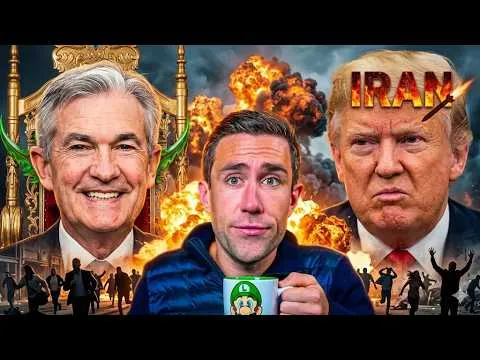
Federal Reserve Chair Jerome Powell recently spoke at Harvard, offering insights into the economy, inflation, and global events like the ongoing conflict in Iran. While Powell expressed optimism about the economy’s medium to long-term outlook, citing achievements like a “soft landing,” recent data and international developments present a more complex picture for investors.
Labor Market Signals Mixed
Before Powell’s remarks, Fed member Myron noted that the labor market is likely experiencing a negative demand shock. He believes interest rates are still too high, pointing to three years of a cooling labor market with no signs of reversal. This view contrasts with hopes that recent job numbers might signal a return to growth. For instance, February’s disappointing jobs report of only 92,000 new jobs tempered earlier optimism. Powell, however, suggested this report might be balanced by January’s figures, and new jobs data is expected soon.
This week’s upcoming economic reports include the Challenger layoffs, the JOLTS report (Job Openings and Labor Turnover Survey), and the BLS labor report. The JOLTS report for February is expected to show around 6.9 million job openings. The ADP employment report for April is projected to be around 40,000, indicating a stabilizing but not booming labor market. Non-farm payrolls are anticipated to be 60,000, with private payrolls at 75,000.
Inflation Expectations and Growth Concerns
Powell highlighted inflation break-even rates, specifically the 5-year break-even, which measures expected inflation over the next five years. This rate is currently around 2.6% and has not reached the high levels seen in early 2022. Powell suggests this indicates no urgent need to raise interest rates, as inflation expectations remain anchored. This aligns with his view that the Fed achieved a “soft landing” by 2024, with the economy growing at 2.5% and inflation just above 2%.
However, another metric, the 5-year forward break-even inflation rate (measuring inflation expectations five years from now for the subsequent five years), is falling sharply. This decline suggests a growing concern about economic growth rather than inflation. This trend, coupled with the ongoing conflict in Iran and rising oil prices, points to potential “demand destruction” – where higher fuel costs discourage consumer spending on travel and other activities, thereby slowing the economy.
Global Tensions and Market Signals
The conflict in Iran, now entering its second month, adds another layer of uncertainty. Powell acknowledged that the Federal Reserve is uncertain about the full economic effects of the war. Potential disruptions to oil supply through key shipping routes like the Strait of Hormuz and the Red Sea could lead to further inflationary pressures and impact global supply chains.
Market signals are also mixed. While some analysts believe the worst of the current geopolitical shock might be over, the bond market shows signs of worry. The spread between the 2-year and 10-year Treasury yields recently widened, a move some experts interpret as markets pricing in slower long-term growth due to the protracted conflict. There’s even a growing chance, over 40%, that the Federal Reserve might hike interest rates again by year-end, a stark contrast to earlier expectations of rate cuts.
Private Credit and AI’s Role
Despite these concerns, Powell noted that private credit markets are not showing systemic risks and appear to be stabilizing. This suggests that while there are corrections, the financial system is not facing a widespread crisis. He also expressed optimism about the long-term impact of artificial intelligence (AI), believing it will drive productivity and create new economic opportunities.
The potential for AI to boost productivity is significant. For example, in software development, AI has enabled companies to scale up operations, hire more developers, and create new products, indicating a positive force for future economic growth.
What Investors Should Know
- Mixed Economic Signals: While Fed Chair Powell sees a stable economy and a “soft landing,” upcoming labor reports and falling 5-year forward inflation expectations suggest potential growth concerns.
- Geopolitical Risk: The ongoing conflict in Iran and potential disruptions to oil supplies pose a risk of further inflation and economic slowdown.
- Bond Market Watch: Pay attention to the yield curve (the spread between 2-year and 10-year Treasury yields) for signals about future economic growth expectations.
- Private Credit Stability: The lack of systemic risk in private credit is a positive sign for financial stability.
- AI’s Long-Term Potential: Artificial intelligence is expected to be a significant driver of future productivity and economic opportunity.
The current economic environment presents a duality: the Federal Reserve’s successful management of inflation and growth in the medium term, contrasted with short-term risks from geopolitical instability and potential growth slowdowns. Investors should monitor key economic data and global events closely.
Source: Trump & Jerome Powell *JUST* Said THIS about Iran WAR & TROOPS!! (YouTube)