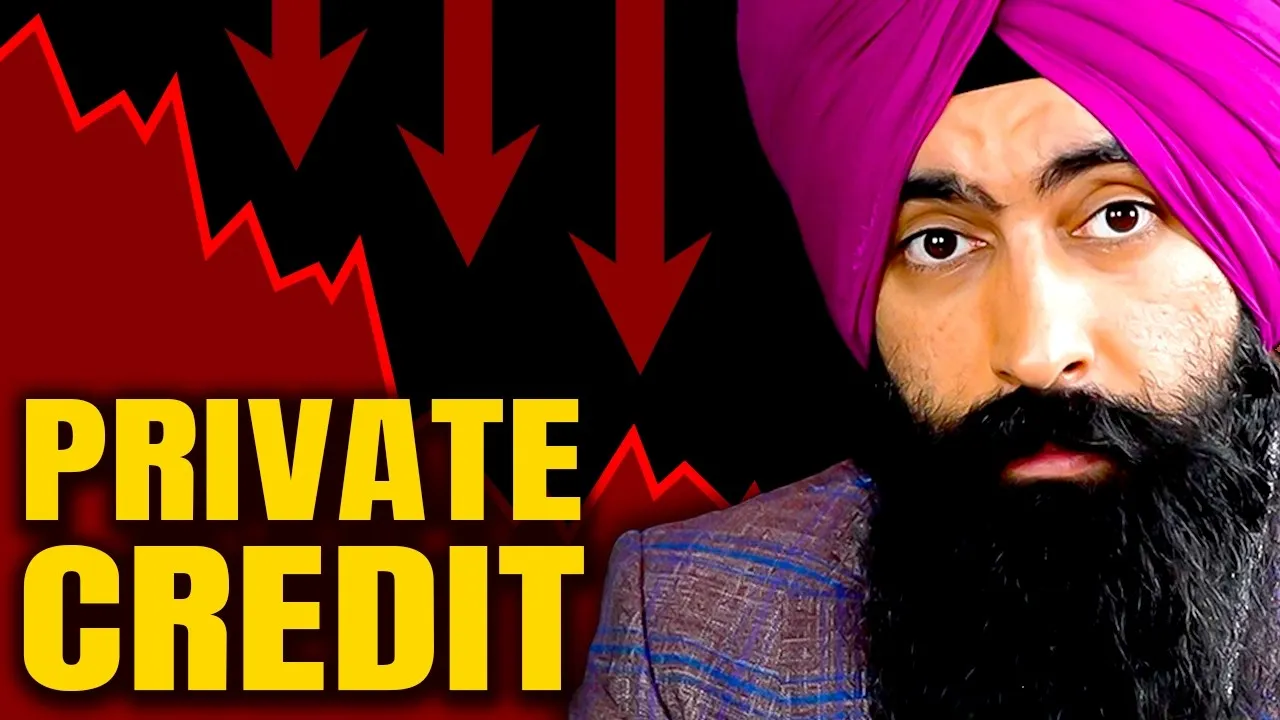
Private Credit Crisis Looms: 9% Default Rate Shakes Wall Street
Wall Street is facing its most significant upheaval since the 2008 financial crisis, but this time the threat isn’t from subprime mortgages. Instead, a growing crisis in the world of private credit is sending shockwaves through the financial system, potentially impacting everything from the stock market to housing prices and even your job.
Private credit, often described as a bank that doesn’t call itself a bank, has grown rapidly in the years following the 2008 recession. After stricter regulations were placed on traditional banks, private credit firms stepped in to offer loans, often to businesses, with fewer restrictions and higher potential returns for investors. These firms borrow money from investors, promising attractive interest rates – sometimes 7%, 8%, 9%, or even 10% annually – which far outpace the rates offered by traditional banks.
These private credit firms then lend this money out, typically to businesses, aiming to earn even higher returns. The model worked well when interest rates were near zero and the economy was booming. However, a combination of factors, including rising interest rates and a general economic slowdown, has led to a sharp increase in loan defaults. Businesses that borrowed cheaply in the past are now struggling to repay their loans, especially those in sectors like energy that are facing downturns.
The consequences are becoming starkly clear. Default rates on these private loans have climbed to nearly 9%, a level that historically signals serious trouble. For context, the U.S. housing market experienced significant distress in 2008 with an 8% default rate. Some analysts, like those at UBS, are projecting default rates in private credit to reach as high as 15%.
What is Private Credit?
Imagine needing money for a home renovation. You could go to a bank, but you’d need to prove your income and offer collateral. Alternatively, you might ask a wealthy relative for a loan. They might charge a higher interest rate than a bank, but they’d likely ask fewer questions and offer the money more readily. Private credit operates similarly, acting as a source of funding outside traditional banking channels.
Unlike stocks or bonds traded on public exchanges, private credit deals are often less transparent, sometimes described as “handshake deals” or “behind closed doors” transactions. This lack of public scrutiny has allowed the private credit market to balloon to over $1 trillion today, a massive increase from around $200 billion in 2010.
The Domino Effect: CLOs and Insurance
A key mechanism through which private credit risks are amplified is through Collateralized Loan Obligations, or CLOs. These are complex financial products where thousands of individual loans are bundled together into a single package. Then, different pieces of this package are sold off to investors. This process is similar to how mortgage-backed securities contributed to the 2008 crisis, but today, the underlying assets are bundles of corporate loans.
Adding another layer of complexity, many of these CLOs are insured. However, the insurance companies providing this coverage are often owned by the same private credit firms that issued the loans and created the CLOs. This creates a situation where a firm might issue loans, package them into a CLO, sell it to another firm, and then insure it through a subsidiary it owns. If the underlying loans default, the insurance company, which may lack sufficient capital, is expected to pay out.
This intricate web of self-dealing and interconnectedness means that if one major private credit firm stumbles, it could trigger a cascade of failures. Reports indicate that the failure of loans began to strain these structures at a 7% default rate, with a 9% rate potentially leading to “acute structural failure” where the system starts to collapse rapidly. Some firms, like Apollo, are already reporting default rates exceeding 11%.
Investor Concerns and Withdrawal Restrictions
As defaults rise, investors who placed their money with private credit firms are increasingly demanding their funds back. However, many of these firms are now imposing withdrawal restrictions, meaning investors cannot access all of their money. This is due to liquidity problems – they simply don’t have enough readily available cash on hand to meet withdrawal requests, especially as their underlying loans are not being repaid.
Major players like BlackRock, Blackstone, Apollo Global, and Blue Owl Capital have all acknowledged these withdrawal limitations. Investors who were promised easy access to their money are finding themselves locked out, with some, like those at Apollo, reportedly receiving only cents on the dollar when trying to pull funds.
Market Impact: Beyond Wall Street
The repercussions of a struggling private credit sector extend far beyond the financial industry itself.
- Stock Market: Volatility in financial markets is a given when major institutions face distress. Declines in the financial sector can easily drag down the broader stock market.
- Housing Market: Many large private credit firms are also significant owners of residential real estate. As these firms face financial pressure, they may be forced to sell off assets, including homes, potentially at discounted prices. This could increase the supply of homes for sale, putting downward pressure on housing prices, especially in areas where these firms hold large portfolios. A slowdown in housing prices can also impact consumer spending, as homeowners may feel less wealthy and reduce spending on renovations or other goods.
- Jobs and Economy: While government stress tests suggest traditional banks are stable, the interconnectedness of the financial system means that widespread failures in private credit could still have broader economic consequences, potentially impacting jobs and overall economic growth. Furthermore, many retirement funds, like 401(k)s and pension plans, have poured money into private credit seeking higher yields, meaning everyday investors may be exposed to these risks without realizing it.
What Investors Should Know
The current situation in private credit is a complex web of rising defaults, liquidity crunches, and intricate financial engineering. While a full-blown 2008-style banking collapse is not currently projected by regulators, the sheer size of the private credit market – now over $1 trillion – means its distress cannot be ignored. The lack of transparency and the interconnectedness through CLOs and self-owned insurance companies create significant risks.
Investors should be aware that their seemingly diversified portfolios might have hidden exposure to private credit through broad market funds or retirement accounts. The Federal Reserve faces a difficult balancing act: lowering interest rates could ease pressure on private credit but might conflict with inflation concerns, especially with rising oil prices. Without lower rates, the path for private credit looks increasingly challenging, potentially leading to further defaults and broader market instability.
While major firms like BlackRock may be resilient due to their vast assets, smaller players could be more vulnerable. The current stance from the Treasury is that a government bailout is off the table, suggesting that losses may be borne by investors and the market.
Source: The #1 Biggest Threat To The US Economy Since 2008 – Most Are Missing This (YouTube)