Raspberry Pi AI Hat Plus 2 Promises On-Device Intelligence
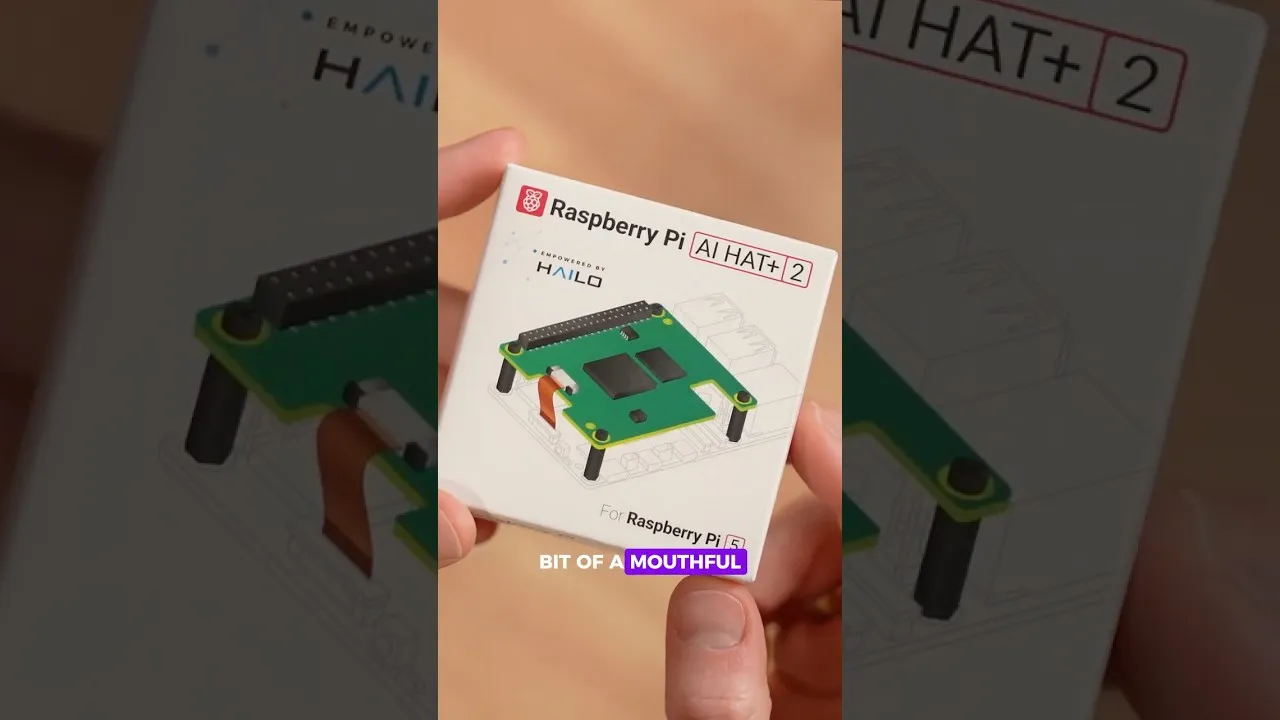
The Raspberry Pi Foundation has unveiled its latest innovation, the Raspberry Pi AI Hat Plus 2, a significant upgrade aimed at bringing powerful, on-device artificial intelligence capabilities to its popular single-board computers. This new hardware promises to overcome the limitations of its predecessor, enabling users to run larger AI models locally without reliance on cloud services.
Bridging the Gap: From Limited to Capable AI
The original Raspberry Pi AI Hat was, by many accounts, a modest offering. Its primary drawback was the complete absence of onboard RAM. This meant the AI accelerator had to siphon precious memory directly from the host Raspberry Pi, severely restricting its performance and the types of AI tasks it could handle. Consequently, its utility was largely confined to camera-based applications like object detection and simple image recognition – capabilities that now feel dated in the rapidly evolving AI landscape.
Enter the Raspberry Pi AI Hat Plus 2. This successor represents a substantial leap forward. Visually, while maintaining a similar form factor, the new hat is more robust. Its most critical upgrade is the inclusion of 8GB of dedicated onboard RAM. This dedicated memory is crucial for running more complex and larger AI models, a feat impossible with the previous generation.
Power and Performance: A Double-Edged Sword
The increased capability of the AI Hat Plus 2 comes with a notable consequence: it draws more power and consequently generates more heat. To manage this, the new hat comes equipped with a heatsink right out of the box. While this might seem like a minor detail, it underscores the enhanced processing power packed into this compact accessory. The ability to run AI models entirely locally, directly on the Raspberry Pi hardware, is a key selling point, offering privacy and independence from external servers.
Installation and Setup: A Hands-On Experience
Getting the AI Hat Plus 2 up and running involves a few steps. The process begins with attaching the heatsink to the main chip. For demonstration purposes, the AI Hat Plus 2 was installed on a Raspberry Pi 5 with 16GB of RAM. This involved mounting standoffs and a GPIO riser, followed by carefully aligning the hat’s pins and securing it with screws. While the initial physical installation can be a bit fiddly, the subsequent software setup is described as straightforward.
The recommended setup involves flashing a fresh Raspberry Pi OS image and installing the necessary Halo software, which serves as the interface for the AI Hat Plus 2. After installing Docker, users can start the Halo AI service. This integration allows the Raspberry Pi to recognize the hat as a dedicated local AI accelerator. The true power is unlocked when users can download and run large language models (LLMs) directly onto the hat itself. This means no cloud dependency, no need for API keys, and all processing happens on the local device.
Interacting with Local AI: Beyond the Terminal
While direct interaction through the terminal is possible – allowing users to send prompts and receive responses from the AI model – this might not appeal to everyone. For a more user-friendly experience, the setup can be extended by running Open Web UI in a separate Docker container. This provides a familiar, ChatGPT-style chat interface accessible via a web browser, making it easier for users to engage with the locally hosted AI model.
Why This Matters: The Future of Edge AI
The Raspberry Pi AI Hat Plus 2 represents a significant stride in the democratization of powerful AI. By enabling robust, on-device AI processing on affordable hardware, it opens up a world of possibilities for developers, hobbyists, and even businesses looking for private and efficient AI solutions.
- Privacy and Security: Running AI models locally eliminates the need to send sensitive data to the cloud, enhancing user privacy and data security.
- Offline Capabilities: AI applications can function even without an internet connection, making them suitable for remote or connectivity-limited environments.
- Reduced Costs: Eliminating reliance on cloud-based AI services can significantly reduce operational costs, especially for projects with high computational demands.
- Innovation in Edge Computing: This development fuels innovation in edge computing, allowing for more sophisticated AI applications to be deployed directly on devices, from smart home gadgets to industrial sensors.
- Accessibility for Developers: The Raspberry Pi ecosystem is known for its accessibility. The AI Hat Plus 2 lowers the barrier to entry for experimenting with and deploying advanced AI models.
The Raspberry Pi AI Hat Plus 2, coupled with the powerful Raspberry Pi 5, offers a compelling platform for running advanced AI tasks locally. While specific benchmark figures and pricing details were not provided in the initial announcement, the implications for the future of edge AI are substantial.
Source: NEW Raspberry Pi AI Hat Is a Massive Upgrade (YouTube)