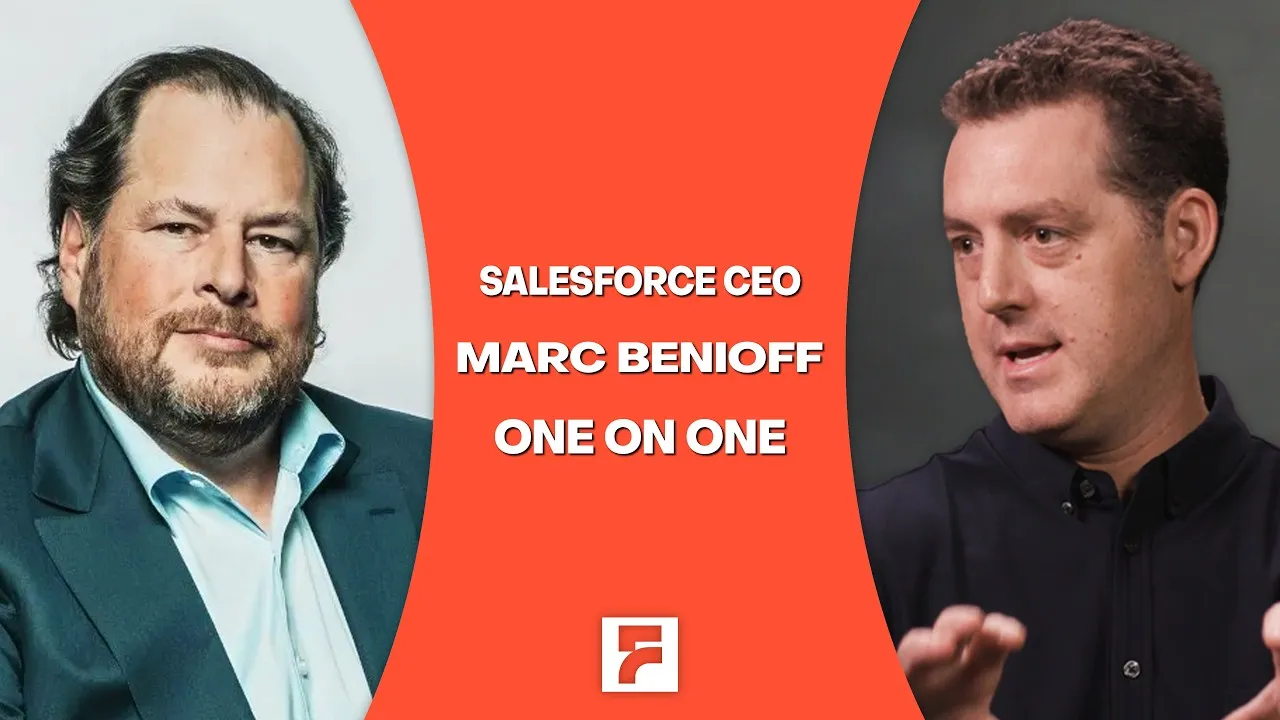
Salesforce CEO Marc Benioff Charts AI’s Future for Business
Marc Benioff, the CEO of Salesforce, recently shared his company’s vision for integrating artificial intelligence into the business world. He spoke about how AI is not just a new technology but a fundamental shift in how companies will operate and serve their customers.
AI as a Core Business Tool
Benioff emphasized that AI is becoming essential for businesses of all sizes. He sees AI as a way to help companies understand their customers better and provide more personalized experiences. This means AI will handle many tasks that are currently done by people, freeing them up for more creative and strategic work.
Think of it like this: imagine a helpful assistant who can instantly sort through mountains of customer data to find exactly what a salesperson needs to know before a call. That’s the kind of power Benioff is talking about. It’s about making employees smarter and more effective.
Einstein GPT: Salesforce’s AI Assistant
At the heart of Salesforce’s AI push is their tool, Einstein GPT. This is essentially an AI assistant built into the Salesforce platform. It can help write emails, summarize customer conversations, and even suggest next steps for sales teams. It’s designed to work across different departments, from sales and marketing to customer service.
Before tools like Einstein GPT, a salesperson might spend hours researching a client or crafting a personalized follow-up email. Now, AI can help generate drafts in seconds. This doesn’t replace the human touch, but it makes the process much faster and potentially more consistent.
Data is Key to AI Success
Benioff stressed that the power of AI, especially for businesses, comes from data. The more information a company has about its customers and operations, the better AI can perform. Salesforce’s strength lies in its vast customer data platform, which allows its AI tools to be highly relevant.
It’s like teaching a student. If you give the student lots of good books and examples, they learn more effectively. Similarly, AI models learn and improve based on the quality and quantity of data they are trained on. For Salesforce, that data comes from its millions of business customers.
The Impact on Jobs and Skills
When asked about AI’s effect on jobs, Benioff acknowledged that roles will change. Some tasks may become automated, but new jobs will also be created. He believes that AI will augment human capabilities rather than replace people entirely. The focus will shift towards skills like critical thinking, creativity, and managing AI systems.
For example, a customer service agent might use AI to handle routine questions, allowing them to focus on complex issues that require empathy and problem-solving. This requires a different set of skills, but it can lead to more fulfilling work.
Why This Matters
Salesforce’s strategy highlights a major trend: AI is moving from a futuristic concept to a practical business tool. Companies that embrace AI can expect to see significant improvements in efficiency, customer satisfaction, and employee productivity. Benioff’s remarks suggest that integrating AI is becoming a necessity for staying competitive. Businesses need to start thinking about how AI can help them understand their customers better and streamline their operations. The companies that adapt first will likely gain a significant advantage in the marketplace.
Looking Ahead
The conversation with Benioff provided a clear picture of how major tech companies are positioning themselves in the age of AI. Salesforce is betting on AI to be the engine driving its future growth and helping its customers succeed. As AI technology continues to develop, its integration into everyday business processes will only become more profound.
Source: One on One with Marc Benioff (YouTube)